Registered Pharmacy100% OnlineNew here? Use code: WELCOME10 for 10% OFFFree Shipping Over £50Fully Inspected & Regulated ServicesApproved UK-licensed TreatmentsRegistered Pharmacy100% OnlineNew here? Use code: WELCOME10 for 10% OFFFree Shipping Over £50Fully Inspected & Regulated ServicesApproved UK-licensed Treatments
14 Sep 2026

9min read
Contents
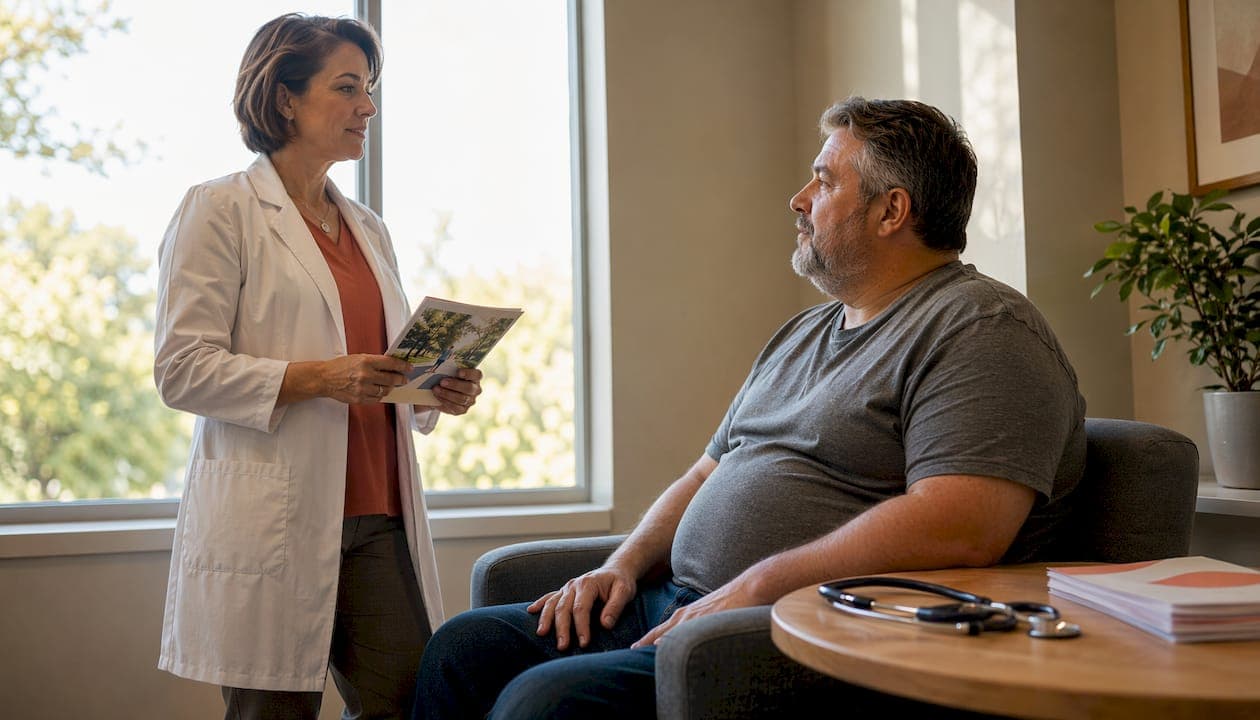
Obesity treatment is defined as a clinically supervised spectrum of interventions ranging from structured lifestyle programmes to prescription medication and bariatric surgery, matched to your individual health profile. The NHS follows a tiered care approach that starts with primary care advice and escalates to specialist services based on your BMI and related health conditions. This obesity treatment options list reflects the most current NHS and NICE NG246 guidance, so you can understand what is available, what you qualify for, and what actually works. No fads, no guesswork. Just a clear picture of your options.
Lifestyle intervention is the foundation of every obesity management pathway in the UK. The NHS typically starts here, and NICE guidelines confirm that structured programmes produce meaningful results when followed consistently.
The most accessible starting point is the NHS Digital Weight Management Programme, a free 12-week online course covering diet, physical activity, and behavioural change. It is available to adults with a BMI of 30 or above, or 27.5 or above for people from South Asian, Chinese, or Black African backgrounds. The programme is delivered by trained coaches and is entirely remote, which removes a significant barrier for many people.

Diet flexibility matters more than most people realise. NICE NG246 guidelines published in 2026 promote personalised dietary approaches that account for cultural preferences, comorbidities, and individual circumstances. That means low-carbohydrate, Mediterranean, and low-fat plans are all clinically valid. The best diet is the one you can sustain.
Behavioural support sits alongside dietary change in every effective programme. Cognitive behavioural therapy (CBT), motivational interviewing, and group-based psychological support all address the emotional and habitual patterns that drive overeating. Without this layer, most people regain weight within two years.
Key lifestyle-based options include:
Pro Tip: If you have tried lifestyle changes alone and not seen lasting results, that is not a personal failure. It is a clinical signal that you may need the next tier of support. Talk to your GP about escalating your care.
Prescription weight loss medications are not stand-alone solutions. They work as adjuncts to lifestyle change, amplifying results when diet and exercise alone are insufficient. The NHS approves three injectable treatments for obesity: liraglutide (Saxenda), semaglutide (Wegovy), and tirzepatide (Mounjaro).
All three are GLP-1 receptor agonists or dual-action hormonal therapies that reduce appetite and slow gastric emptying. That means you feel full sooner and stay full longer, which makes it easier to eat less without relying on willpower alone. You can read more about how these drugs work in this GLP-1 medication overview.
Access through the NHS is tightly controlled. Medications are prescribed only within specialist multidisciplinary teams, not through routine primary care. Eligibility typically requires a BMI of 35 or above, or 30 or above with a weight-related comorbidity such as type 2 diabetes or hypertension. Regional rollout is phased, so availability varies by Integrated Care Board area.
Approved pharmacological options include:
Pro Tip: If NHS waiting times are long in your area, a clinician-guided private service can provide safe, regulated access to the same approved medications with full medical oversight.
Bariatric surgery is the most effective long-term intervention for severe obesity, but it carries the strictest eligibility criteria of any treatment on this list. The NHS sets clear BMI thresholds for surgical referral: a BMI of 40 or above, or 35 or above with a significant comorbidity such as type 2 diabetes, sleep apnoea, or cardiovascular disease.
Before surgery is approved, you must demonstrate documented attempts at non-surgical weight loss through structured programmes. This is not a bureaucratic hurdle. It reflects the clinical reality that surgery works best when combined with lasting behavioural change, and the assessment process prepares you for that.
The three most common procedures are:
Surgery is delivered at specialist bariatric centres, often out of your local area. The pathway involves dietary assessment, psychological evaluation, and multidisciplinary team review before any procedure is approved. Risks include nutritional deficiencies, surgical complications, and the need for lifelong dietary adjustment.
No single treatment works for everyone. The right option depends on your BMI, your comorbidities, your previous treatment history, and where you live. NHS specialist services prioritise patients with the greatest medical risk, so clinical need drives the decision more than personal preference.
Your GP is the starting point for any formal pathway. They act as the gatekeeper, assessing your eligibility and referring you to the appropriate tier of care. Regional variations are real. Your local Integrated Care Board determines which services are funded and what the eligibility criteria are, so the same BMI can lead to different options depending on your postcode.
Factors that influence treatment selection include:
Pro Tip: Before your GP appointment, write down every weight loss attempt you have made, including dates, methods, and results. This documentation speeds up your referral and demonstrates clinical engagement.
Short-term interventions rarely produce lasting change. Weight management is a chronic condition that requires long-term behavioural support, not a one-off programme. The 2026 NICE guidelines make this explicit: sustained success depends on multidisciplinary, continuous care that addresses social, emotional, and physical factors together.
Multidisciplinary teams typically include dietitians, clinical psychologists, physical activity specialists, and specialist nurses. Each professional addresses a different layer of the condition. A dietitian adjusts your eating plan as your weight changes. A psychologist helps you manage emotional eating and prevent relapse. A physical activity coach adapts exercise to your capacity and confidence.
Digital and community support options extend this care between appointments. Apps, online communities, and telephone coaching all reduce the isolation that often accompanies long-term weight management. The NHS Digital Weight Management Programme includes ongoing digital access after the initial 12 weeks for this reason.
"Obesity is not a lifestyle choice that can be corrected by willpower alone. It is a complex, chronic condition shaped by biology, environment, and behaviour. Treating it requires the same long-term, multidisciplinary approach we apply to any other chronic disease." — NICE NG246, 2026
Relapse prevention is part of the plan, not a sign of failure. Weight regain is common after any intervention, including surgery. The most effective programmes build in regular check-ins, adjust treatment as needed, and treat setbacks as clinical data rather than personal shortcomings.
Effective obesity treatment combines lifestyle change, pharmacological support, and surgical intervention in a tiered, personalised pathway matched to clinical need and individual circumstances.
Point - Details
Lifestyle is the foundation
Structured programmes like the NHS Digital Weight Management Programme are the first step for most adults.
Medications require clinical criteria
GLP-1 treatments like Wegovy and Mounjaro are prescribed only within specialist services, not routine primary care.
Surgery has strict eligibility
Bariatric surgery requires a BMI of 40 or above, or 35 with comorbidities, plus documented non-surgical attempts.
Regional variation affects access
Your local Integrated Care Board determines which treatments are available and what the eligibility thresholds are.
Long-term support is non-negotiable
Sustained weight loss requires ongoing multidisciplinary care, not a single short-term intervention.
Working in this space, the most persistent myth I encounter is that obesity treatment is linear. People expect to try one thing, see results, and move on. The clinical reality is messier and more human than that.
The adults who see lasting results are not the ones who found the perfect diet. They are the ones who stopped treating every setback as proof that they cannot do it. Obesity is a biological and behavioural condition, not a character flaw. The science on this is clear, and the 2026 NICE guidelines finally reflect it in policy.
What I find genuinely encouraging is the shift toward flexible, personalised dietary approaches. The old "eat less, move more" instruction ignored the hormonal, psychological, and social drivers of weight gain. Telling someone with insulin resistance to follow a low-fat diet is not helpful. Matching the plan to the person is.
Medication has changed the picture significantly. GLP-1 treatments are not a shortcut. They are a clinical tool that makes the behavioural work more achievable. The people I see doing best are those who use medication alongside structured support, not instead of it. If you are considering this route, understanding why crash diets fail first will help you set realistic expectations and avoid the cycle of short-term loss and rebound.
— Lyv
If you are ready to move beyond lifestyle programmes alone, Lyvpharmacy offers clinician-led access to prescription GLP-1 treatments including Wegovy and Mounjaro. Every patient completes a full clinical assessment before any prescription is issued. There are no shortcuts, and no treatment is dispensed without medical oversight.
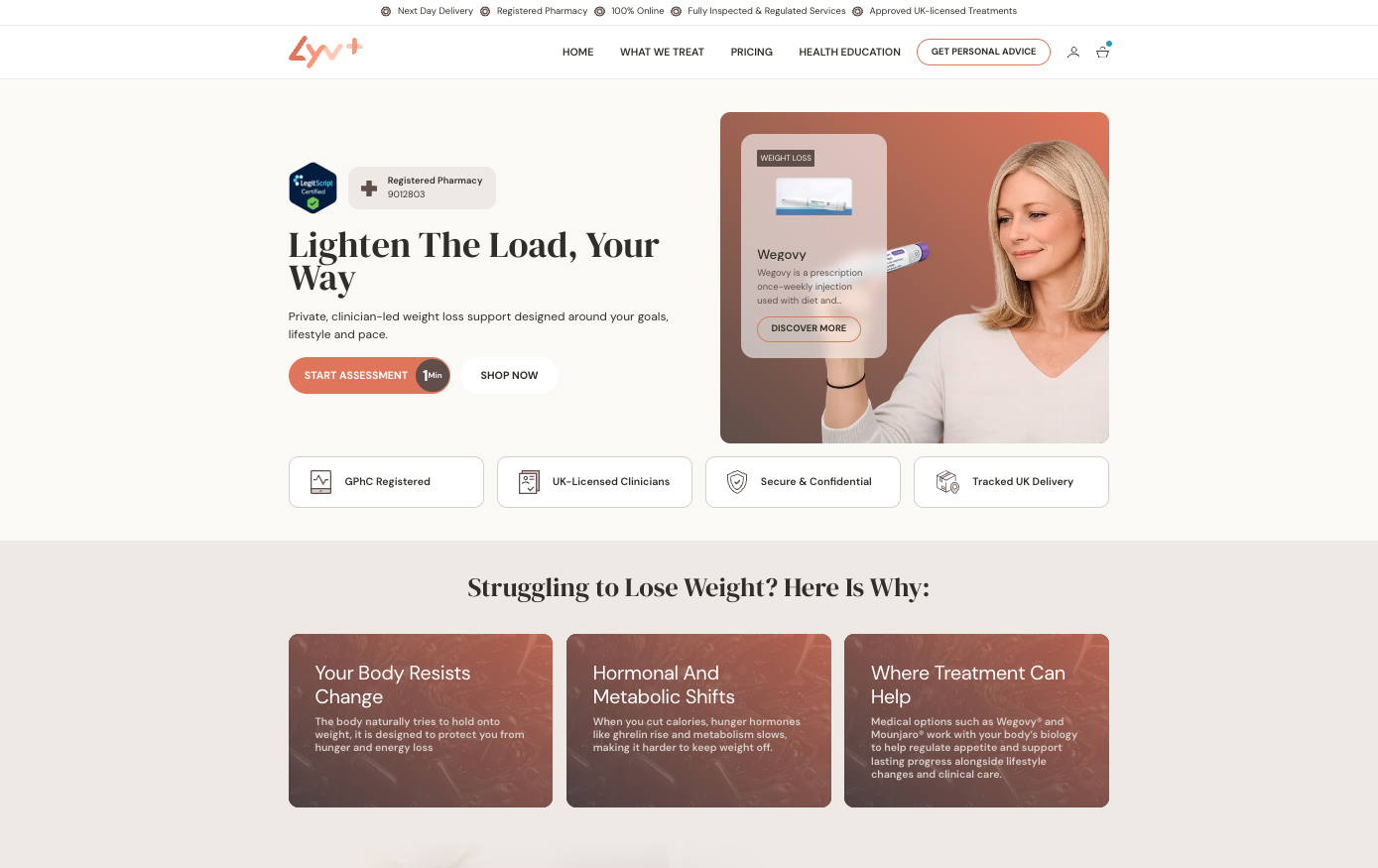
Lyvpharmacy is built for people who want medically proven results without the delays of traditional routes. From your first assessment to repeat prescriptions, the process is fast, discreet, and fully regulated. Browse the full range of weight loss treatments online and find out which option fits your clinical profile. If you want to understand what clinician-guided care actually involves before you commit, the safe weight loss guide is a good place to start.