Registered Pharmacy100% OnlineNew here? Use code: WELCOME10 for 10% OFFFree Shipping Over £50Fully Inspected & Regulated ServicesApproved UK-licensed TreatmentsRegistered Pharmacy100% OnlineNew here? Use code: WELCOME10 for 10% OFFFree Shipping Over £50Fully Inspected & Regulated ServicesApproved UK-licensed Treatments
19 Jul 2026

10min read
Contents

Obesity treatment terminology is defined as the standardised vocabulary used by clinicians, educators, and researchers to describe, classify, and communicate weight management interventions and outcomes. Understanding this language matters whether you are a GP reviewing prescribing guidelines, an educator designing a health curriculum, or someone researching your own treatment options. The field spans measures like BMI, clinical frameworks such as ABCD (adiposity-based chronic disease), pharmacotherapy classes including GLP-1 receptor agonists like semaglutide and tirzepatide, and surgical categories like bariatric and metabolic procedures. Precise language shapes every decision in obesity care, from eligibility criteria to how outcomes are recorded and communicated.
BMI, or body mass index, is the most widely used entry point in obesity classification. A BMI above 30 kg/m² is defined as obese in both public health and clinical settings, though treatment eligibility typically extends this to include comorbidity status. This distinction matters because two people with identical BMI scores may qualify for very different interventions depending on whether they have type 2 diabetes, hypertension, or sleep apnoea.
The ABCD framework, which stands for adiposity-based chronic disease, represents a significant shift in clinical vocabulary. Rather than focusing solely on weight reduction, ABCD guidelines frame excess adiposity as a chronic disease with associated health risks, supporting shared decision-making between clinician and patient. This reframing changes the language of goals: success is no longer just a number on a scale but a measurable improvement in metabolic, cardiovascular, or psychological health.

Treatment response terminology is equally specific. The AACE and ABCD guidelines categorise outcomes as follows:
Response category - Definition
Incomplete response
Weight loss of 5% or less from baseline
Good response
Weight loss greater than 5% and less than 15%
Excellent response
Weight loss of 15% or more from baseline
These staged weight loss targets guide clinicians in deciding whether to continue, adjust, or escalate treatment. A patient achieving only 3% weight loss on a first-line medication would be classified as an incomplete responder, prompting a review of the treatment plan.
Pro Tip: When reviewing clinical notes or guidelines, look for the term “ORCD” (obesity-related complications and diseases). This phrase signals that the document is using a comorbidity-centred framework rather than a weight-only approach, which affects eligibility criteria and treatment goals throughout.
Comprehensive lifestyle intervention is the formal term for the combination of dietary modification, increased physical activity, and behaviour therapy delivered as a structured programme. According to Endotext’s behavioural framework, these sessions typically run between 15 and 90 minutes and are delivered by trained specialists including dietitians, psychologists, and exercise physiologists. The term “comprehensive” is deliberate: it signals that no single component is sufficient on its own.
Behavioural therapy within this context has its own vocabulary. The key techniques used in clinical practice are:
Telehealth programmes have introduced additional terminology into this space. Terms like “remote behavioural counselling,” “asynchronous coaching,” and “digital therapeutic” now appear in clinical documentation alongside traditional session formats. Understanding weight management approaches in this context means recognising that the delivery method does not change the underlying clinical framework.
Pharmacotherapy and lifestyle intervention are not mutually exclusive categories. When a patient begins a GLP-1 receptor agonist, their behavioural programme adapts to include gastrointestinal side effect management and muscle preservation strategies. This integration is reflected in updated clinical notes and requires specific terminology beyond generic dietary advice.
Pro Tip:If you encounter the phrase “multicomponent behavioural intervention” in a guideline or research paper, it is functionally equivalent to comprehensive lifestyle intervention. Both terms describe the same three-pillar approach: diet, activity, and behaviour therapy.
Pharmacotherapy for obesity is categorised by mechanism of action and generation. The two primary classes in current clinical use are GLP-1 receptor agonists and dual GIP/GLP-1 receptor agonists. Key medications in these classes include semaglutide (marketed as Wegovy for weight management), liraglutide (Saxenda), and tirzepatide (Mounjaro), each with distinct receptor targets and efficacy profiles.
The distinction between first-generation and second-generation anti-obesity medications is clinically significant. First-generation drugs include older agents with more modest efficacy and broader side effect profiles. Second-generation drugs, particularly the incretin-based therapies, are characterised by their nutrient-stimulated hormone mechanisms, meaning they work by mimicking hormones released after eating to reduce appetite and slow gastric emptying.
Dose titration is a term you will encounter frequently in prescribing documentation. It refers to the gradual increase of a medication dose over several weeks to improve tolerability. For semaglutide, the titration schedule typically spans 16 to 20 weeks before reaching the maintenance dose. Long-term pharmacotherapy is formally defined as continuous use for at least six months, which is the threshold used in most clinical guidelines when evaluating sustained efficacy.
Step therapy is another key term in obesity management. AACE guidelines describe a tiered approach where treatment begins with first-generation medications and progresses to second-generation drugs if the response is incomplete. This framework ensures that prescribing decisions are guided by documented treatment response rather than arbitrary escalation.
Bariatric surgery and metabolic surgery are terms often used interchangeably, though they carry distinct emphases. Bariatric surgery refers broadly to weight loss procedures, while metabolic surgery specifically highlights the impact on metabolic conditions such as type 2 diabetes. Both terms appear in clinical documentation and guidelines, and understanding which is being used signals the primary treatment goal.
Surgical procedures are classified by their primary mechanism: restrictive operations reduce stomach volume to limit food intake, while malabsorptive procedures alter the digestive tract to reduce nutrient absorption. Combination procedures, such as Roux-en-Y gastric bypass, incorporate both mechanisms. Adjustable gastric banding is a purely restrictive procedure, while sleeve gastrectomy sits between the two categories.
Post-surgical terminology is equally specific:
The integration of surgical and pharmacological terminology is increasingly common in multidisciplinary care. A patient who experiences weight regain after sleeve gastrectomy may be described as a candidate for adjunct pharmacotherapy, with GLP-1 receptor agonists now recognised as an evidence-based option in this context. Bariatric surgery outcomes including revisional surgery and weight regain guide follow-up treatment decisions across the care team.
Person-first language is the recommended standard in obesity care communication. The phrase “person with obesity” is preferred over “obese person” because it separates the individual from the condition. ADA guidelines on weight stigma explicitly recommend this framing to reduce bias and foster collaborative clinical relationships.
The practical implications extend beyond individual word choices. Replacing “weight loss failure” with “treatment nonresponse” removes moral judgement from a clinical outcome. Describing a patient as having “excess adiposity” rather than being “overweight” shifts the framing from personal failing to physiological condition. These distinctions affect how patients engage with their care team and whether they feel supported enough to continue treatment.
“Terminology that centres the person rather than the condition is not just a matter of politeness. It is a clinical tool that directly influences patient engagement, adherence, and long-term outcomes.” — ADA guidelines on obesity stigma and language
Terms to avoid in clinical and educational settings include “morbidly obese,” “failed diet,” and “non-compliant.” Preferred alternatives are “class III obesity,” “treatment nonresponse,” and “adherence challenges.” Understanding clinician-guided weight management means recognising that language is part of the treatment itself.
Precise obesity treatment terminology is the foundation of effective clinical communication, equitable patient care, and evidence-based decision-making across all treatment modalities.
Point - Details
BMI plus comorbidities
Treatment eligibility uses BMI thresholds alongside comorbidity status, not BMI alone.
ABCD framework
Frames obesity as a chronic disease, shifting goals from weight loss to overall health improvement.
Pharmacotherapy classes
GLP-1 and dual GIP/GLP-1 receptor agonists are the current standard, with step therapy guiding escalation.
Person-first language
Using “person with obesity” and “treatment nonresponse” reduces stigma and improves patient engagement.
Surgical terminology
Restrictive, malabsorptive, and combination procedures each carry distinct follow-up and pharmacotherapy implications.
The shift from weight-only targets to holistic health frameworks is the most significant change I have observed in how obesity care is documented and communicated over the past decade. When clinicians started using ABCD language in notes and referrals, it changed what they were measuring, what they were reporting, and how patients understood their own progress. A patient who loses 8% of their body weight and resolves their sleep apnoea is not an “incomplete responder” in any meaningful clinical sense, yet older terminology would have labelled them exactly that.
What I find genuinely underappreciated is how much terminology shapes the patient’s internal narrative. When someone hears “your diet failed,” they hear a personal verdict. When they hear “this treatment did not produce the expected response,” they hear a clinical observation that has a next step. That distinction is not semantic. It determines whether someone re-engages with care or quietly withdraws.
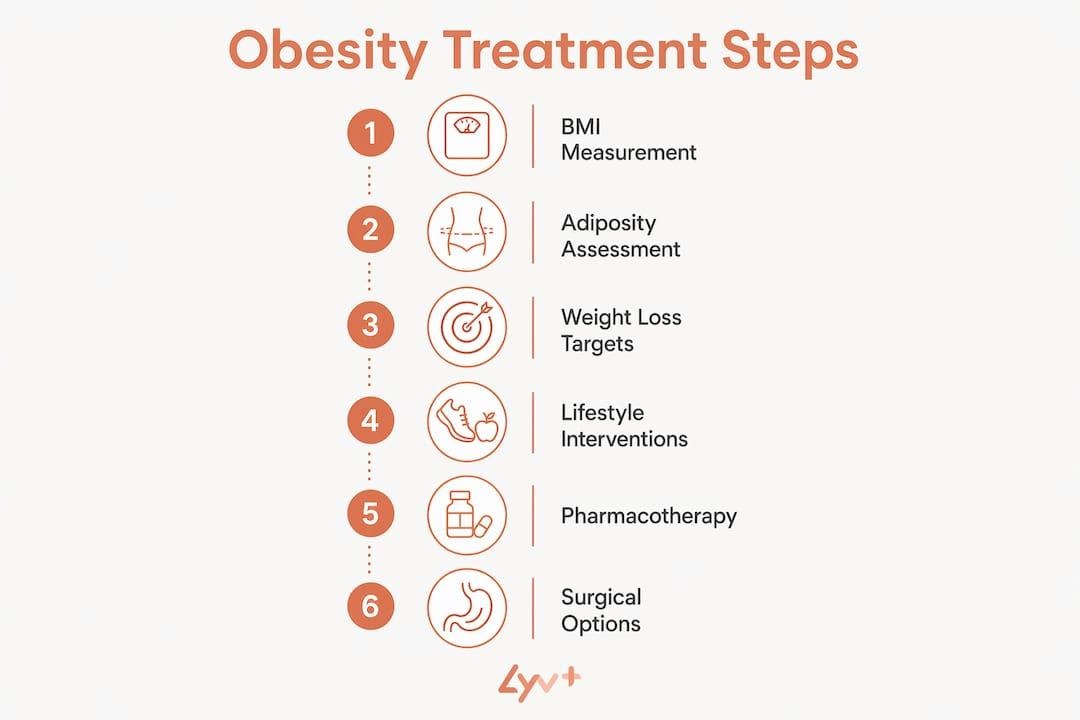
For educators and clinicians working to standardise their vocabulary, the practical starting point is the treatment ladder: lifestyle intervention, then pharmacotherapy, then metabolic surgery. Each rung has its own language, and using that language consistently reduces miscommunication across multidisciplinary teams. The truth about GLP-1 medications is a good example of how specialist terminology can be translated for a general audience without losing clinical accuracy.
The challenge is not learning the terms. The challenge is using them consistently enough that they become the default, even in informal conversations with patients.
— Lyv
If this article has clarified the clinical vocabulary around obesity care, the next step is understanding how these treatments work in practice.
Lyvpharmacy provides clinician-led access to prescription GLP-1 treatments including Wegovy and Mounjaro, with rapid assessments and discreet home delivery across the UK. Every prescription is backed by medical oversight, and the process is built around your health goals rather than a generic programme. Explore the full range of weight loss treatments available through Lyvpharmacy, or read the detailed guide to GLP-1 medications to understand exactly how these medicines work and what to expect.
Recommended