Registered Pharmacy100% OnlineNew here? Use code: WELCOME10 for 10% OFFFree Shipping Over £50Fully Inspected & Regulated ServicesApproved UK-licensed TreatmentsRegistered Pharmacy100% OnlineNew here? Use code: WELCOME10 for 10% OFFFree Shipping Over £50Fully Inspected & Regulated ServicesApproved UK-licensed Treatments
26 Aug 2026

9min read
Contents

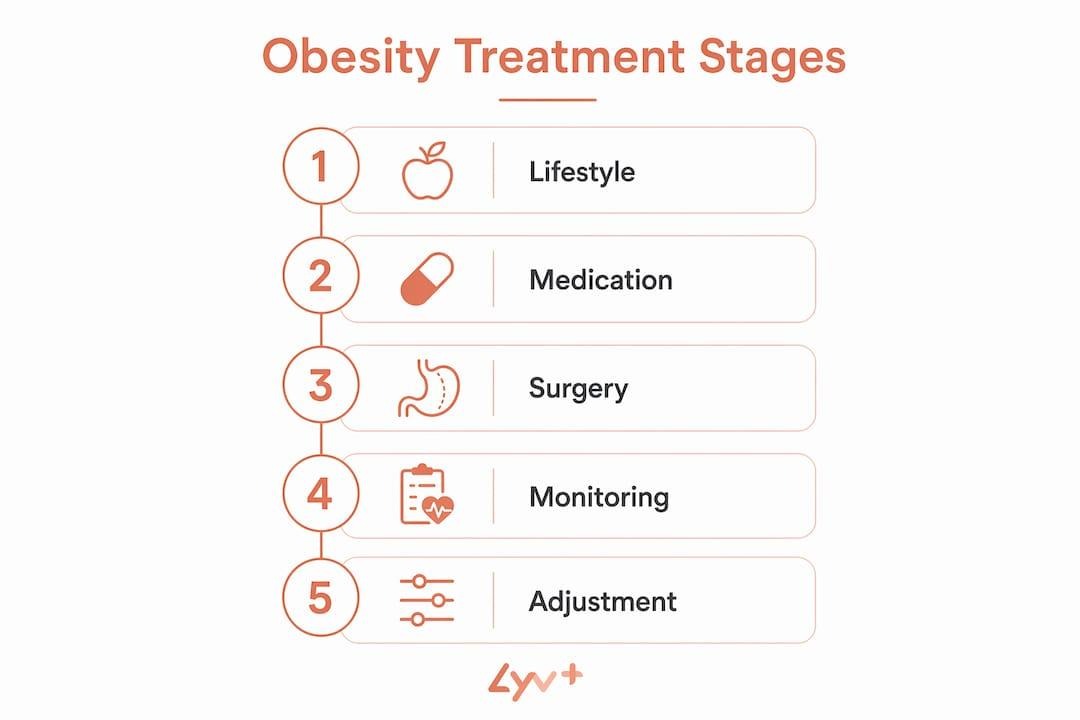
Obesity treatment is defined as a staged, personalised programme combining lifestyle changes, prescription medication, and surgical intervention to achieve sustainable weight loss and reduce health risks. The NIDDK describes this as a long-term approach that begins with healthy eating and increased physical activity, then adds medicines or surgery when further support is needed. Even a modest reduction of 5 to 10% of body weight produces meaningful improvements in blood pressure, blood sugar, and cholesterol. The right plan depends on your individual health profile, and no single method works for everyone.
Obesity treatment, clinically referred to as obesity management, is not a single intervention. It is a layered process that your clinician adjusts based on your progress, health status, and personal goals. The NIDDK confirms that multidisciplinary programmes combining diet, physical activity, behaviour therapy, medication, and surgery yield the best long-term outcomes. This matters because it means you are not expected to solve everything at once.
The process typically starts with lifestyle modification, which forms the foundation of every effective obesity management plan. If lifestyle changes alone do not produce sufficient results after a defined period, prescription medications are introduced as an adjunct. Bariatric surgery becomes an option only when other approaches have not worked and when specific clinical criteria are met. Understanding this staged structure helps you set realistic expectations from the start.

Lifestyle intervention is the starting point for virtually every adult seeking to treat obesity. It addresses the three pillars that drive sustainable weight loss: what you eat, how much you move, and how you think about both.
Here is what a structured lifestyle programme typically involves:
Pro Tip:Move away from the all-or-nothing mindset. Missing one workout or eating one unplanned meal does not undo your progress. Consistency over weeks and months is what produces results, not perfection on any single day.
When lifestyle changes alone are not enough, prescription medications become part of the plan. These are not quick fixes. They are clinical tools designed to work alongside diet and exercise, not instead of them.
The NIDDK lists several approved anti-obesity medications currently in use:
The Merck Manual notes that anti-obesity medications require rigorous screening for contraindications and interactions with other drugs before prescribing. Common side effects include nausea, digestive discomfort, and, in some cases, increased heart rate. These are managed through gradual dose escalation and regular clinical review.
You can read more about how GLP-1 treatments work and whether they might suit your situation.
Pro Tip:Think of medication as a support structure, not a solution. The best outcomes come when you use it alongside consistent dietary changes and physical activity. Stopping medication without a plan for maintaining lifestyle habits often leads to weight regain.
Bariatric surgery is the most effective intervention for severe obesity, but it is not the first step. It is recommended only when other treatments have not produced sufficient results and when specific clinical thresholds are met.
The eligibility criteria, as outlined by the NIDDK, are as follows:
The two most common procedures are gastric bypass and sleeve gastrectomy. Gastric bypass reroutes the digestive system to reduce both food intake and nutrient absorption. Sleeve gastrectomy removes a large portion of the stomach, significantly reducing its capacity. Both procedures produce substantial weight loss, often 25 to 35% of total body weight within the first two years.
Surgery is not without risk. Nutritional deficiencies, particularly in iron, vitamin B12, and calcium, are common after bariatric procedures and require lifelong supplementation. Multidisciplinary follow-up involving a surgeon, dietitian, and psychologist is standard practice. Surgery changes the mechanics of eating permanently, which is why ongoing lifestyle adherence remains non-negotiable.
Obesity treatment is not a set-and-forget process. Regular monitoring is what keeps the plan working safely and effectively over time.
StatPearls outlines a structured monitoring schedule that typically includes assessments at months 1, 3, and 6 after starting a medication or structured programme. Each review covers:
If a medication is not producing at least a 5% reduction in body weight after 12 weeks at the full therapeutic dose, the StatPearls guidance recommends reassessing whether to continue, adjust, or switch treatments. This is not a failure. It is the system working as intended.
Your clinician may also adjust the frequency of follow-ups based on how you are responding. Some people need monthly check-ins early on; others move to quarterly reviews once their plan is stable. The key is that monitoring is built into the process, not added as an afterthought.
Asking the right questions helps you get a treatment plan that actually fits your life. NovoCare recommends that patients come prepared with targeted queries to make the most of clinical consultations. Here are the most useful ones:
You can explore weight management basics to build a clearer picture before your first consultation.
Effective obesity treatment combines lifestyle change, medication, and surgery in a staged, personalised plan, with even a 5 to 10% weight loss delivering measurable health improvements.
Point - Details
Treatment is staged
Lifestyle changes come first, with medication and surgery added only when needed.
Modest weight loss matters
Losing 5 to 10% of body weight improves blood pressure, blood sugar, and cholesterol.
Medications are adjuncts
Drugs like semaglutide and tirzepatide work best alongside diet and exercise, not alone.
Surgery has strict criteria
Bariatric surgery requires a BMI of 35 or above, or 30 with serious comorbidities.
Monitoring drives results
Reviews at months 1, 3, and 6 allow timely adjustments to keep treatment on track.
One thing stands out after years of working in this space: the people who do best are not the ones who follow the most aggressive plan. They are the ones who understand that obesity treatment is a process, not a single decision.
The biggest mistake I see is treating medication or surgery as a shortcut that bypasses the need for lifestyle work. It does not. Semaglutide and tirzepatide are genuinely impressive tools, but they work because they reduce appetite enough for people to build better habits. The habit-building is still your job. The medication just makes it more manageable.
The second thing I would say is this: do not wait until you feel ready for a perfect plan. Start with what is available to you now, whether that is a structured eating plan, a conversation with your GP, or exploring a clinician-led service. Obesity treatment is personalised and adjusted over time, which means your starting point does not have to be perfect. It just has to be a start.
— Lyv
If you are ready to move beyond research and take a concrete step, Lyvpharmacy offers clinician-led access to prescription GLP-1 treatments including Wegovy and Mounjaro, with fast online assessments and discreet home delivery across the UK.
Every treatment at Lyvpharmacy is backed by medical oversight, meaning a qualified clinician reviews your health profile before any prescription is issued. There are no generic programmes here. You get a plan built around your needs, with ongoing support as your treatment progresses. Explore your prescription weight loss options and find out which treatments you may be eligible for today. You can also learn more about how clinician-guided care changes the outcome.
Recommended