Registered Pharmacy100% OnlineNew here? Use code: WELCOME10 for 10% OFFFree Shipping Over £50Fully Inspected & Regulated ServicesApproved UK-licensed TreatmentsRegistered Pharmacy100% OnlineNew here? Use code: WELCOME10 for 10% OFFFree Shipping Over £50Fully Inspected & Regulated ServicesApproved UK-licensed Treatments
30 Sep 2026

15min read
Contents

Wegovy (semaglutide 2.4 mg, once weekly) is a clinically proven, NICE-endorsed treatment for obesity that helps adults lose a meaningful amount of weight when combined with a reduced-calorie diet and increased physical activity. In the STEP clinical trials, participants lost around 15% of their body weight at 68 weeks, compared with roughly 2–3% in the placebo group. NICE recommends it for adults with a BMI of 35 or above, or 30–34.9 with specific comorbidities and lower thresholds apply for some ethnic backgrounds.
Before considering treatment, three decisions matter most:
Common early side effects, particularly nausea and loose stools, are worth knowing about upfront. They are usually temporary and most pronounced during the dose-escalation phase.
Wegovy's active ingredient is semaglutide, a GLP-1 receptor agonist. The same molecule is used in Ozempic and Rybelsus, but each product carries a different licence, dose and indication. Semaglutide is approved under distinct brand names for distinct purposes: Ozempic is licensed for type 2 diabetes management, Rybelsus is an oral tablet for the same indication, and Wegovy is the formulation specifically authorised for chronic weight management in adults with obesity or those overweight with weight-related comorbidities.
In the UK, Wegovy is licensed as an adjunct to a reduced-calorie diet and increased physical activity. The NHS medicines guidance for semaglutide covers all three brands but makes clear that switching between them is not appropriate without clinical review, since doses and titration schedules differ.
Key facts about Wegovy's formulation:
Semaglutide works through several overlapping mechanisms, which is part of why it tends to outperform older weight-loss medications that targeted only one pathway.

Appetite and reward modulation. GLP-1 receptors are present in the hypothalamus and brainstem, areas that regulate hunger and the reward value of food. Semaglutide activates these receptors, reducing appetite signals and making food feel less compelling. For people who have spent years fighting persistent hunger, this central effect is often the most noticeable change in the first weeks of treatment.
Slowed gastric emptying. Food moves more slowly from the stomach into the small intestine, which prolongs the feeling of fullness after meals and naturally reduces portion sizes. This effect is most pronounced early in treatment and tends to moderate over time.
Metabolic effects. Beyond weight loss itself, semaglutide improves insulin secretion, reduces LDL cholesterol and total cholesterol, and supports preferential loss of fat mass rather than lean muscle. One review noted a roughly 35% reduction in ad libitum energy intake in trial participants, which helps explain why the weight loss figures are substantially larger than those seen with lifestyle changes alone.
These mechanisms work together particularly well for people whose weight is driven by metabolic resistance or chronic hunger rather than simply overeating by choice.
Pro Tip: During the titration phase, eating smaller meals and avoiding high-fat or spicy foods can significantly reduce nausea. Many clinicians recommend eating slowly and stopping before you feel full, since the gastric-emptying effect means fullness signals arrive later than usual.
The STEP programme is the primary evidence base for Wegovy's use in obesity. Across the trials, adults taking semaglutide 2.4 mg weekly alongside lifestyle support achieved mean weight loss of approximately 15% at 68 weeks. That compares with roughly 2–3% in the placebo-plus-lifestyle arm, a difference that is clinically meaningful by any standard.
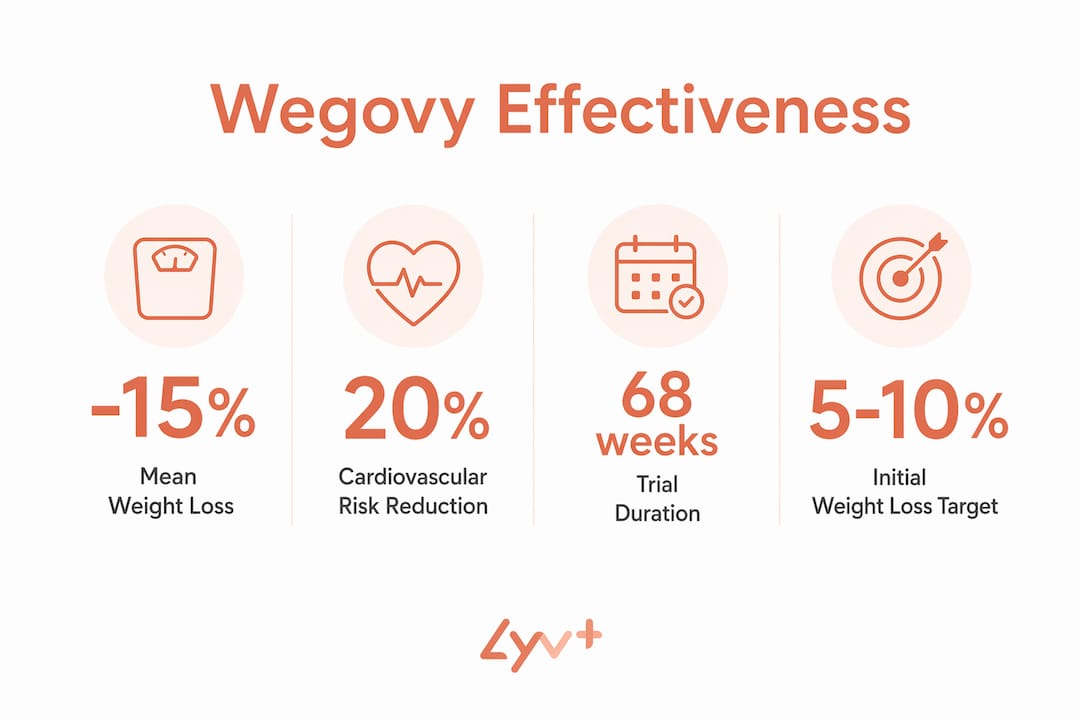
Beyond weight, the SELECT trial showed that Wegovy reduced major adverse cardiovascular events by around 20% in adults with established cardiovascular disease and overweight or obesity but without diabetes. That cardiovascular benefit has since influenced NICE's thinking on broader indications.
NICE concluded that Wegovy offers clinically meaningful benefit for eligible adults and recommended it within specialist weight management services. The guidance does note that the evidence base is primarily from trials with intensive lifestyle support, meaning results in routine clinical practice may vary.
Pro Tip: When setting personal targets, aim for 5–10% weight loss as a first milestone rather than fixating on the trial average of 15%. Even 5% reduction in body weight produces measurable improvements in blood pressure, blood glucose and joint load. Reaching that first milestone is a strong signal the treatment is working for you.
NICE TA875 sets out the eligibility criteria for Wegovy on the NHS, and they are more specific than many people realise.
Standard BMI thresholds:
Ethnicity adjustments. For people from South Asian, Chinese, Black African, or African-Caribbean backgrounds, the thresholds are typically reduced by 2.5 kg/m². This reflects evidence that metabolic risk accumulates at lower BMI values in these groups. In practice, it means a BMI of 32.5 kg/m² may qualify where 35 would otherwise be required.
Secondary criteria to consider:
Preparing for a referral or private assessment. Gather your most recent weight and height measurements, a list of current medications, any relevant blood test results (HbA1c, lipids, blood pressure), and a brief history of previous weight-management attempts. This information speeds up both NHS referrals and private clinical assessments considerably. You can also review how to qualify for weight loss medication for a practical checklist.
Wegovy's titration schedule is deliberately slow, spread over approximately 16–20 weeks, to give your body time to adjust and to reduce the severity of gastrointestinal side effects.
Typical dosing pathway:
If side effects are difficult to manage at any stage, your clinician may extend a dose level by four weeks before moving up.
What to expect and when:
Your clinician will monitor weight, blood pressure, and HbA1c (if relevant) at regular intervals. Dose adjustments or stopping may be considered if you experience serious side effects or if weight loss is insufficient after a reasonable trial period.
Practical adherence tips:
Most people starting Wegovy experience some gastrointestinal symptoms, particularly during dose escalation. Knowing what to expect makes them easier to manage.
Common side effects (usually transient):
Less common but serious risks:
Absolute contraindications:
Always review the full SmPC before starting, and report any unexpected side effects to the MHRA via the Yellow Card scheme. For a detailed breakdown of what to expect with different formulations, the Wegovy pill side effects page covers management strategies in more depth.
Questions to ask your clinician before starting:
Access to Wegovy through the NHS is real but constrained. NICE TA875 limits provision to specialist weight management services, with a usual maximum of two years' treatment within those services. Specialist capacity across the NHS is limited, and waiting times for referral can be substantial in many areas.
NHS route:
Private route:
Cost considerations. Medication costs vary depending on the dose and pen strength required at each titration stage. Consultation fees, prescription charges, and medication costs are typically bundled differently across providers. Demand for semaglutide rose sharply following obesity approvals, with prescriptions increasing dramatically in the years after regulatory approval, which has at times affected supply availability.
Documents to have ready for any assessment:
Pro Tip: If you are on an NHS waiting list, document every weight-management attempt you make in the interim, including dates, programmes used, and outcomes. This strengthens your case at assessment and may expedite the referral process.
Understanding how Wegovy compares with other options helps you have a more informed conversation with your clinician.

Wegovy sits in a meaningful middle ground: substantially more effective than lifestyle intervention alone, less invasive than surgery, and with a well-characterised safety profile. Dual-agonist treatments (a newer class) show higher average weight loss in trials, and your clinician may discuss these if you have specific metabolic needs or if semaglutide alone proves insufficient.
Surgery remains the most effective long-term option for severe obesity, but it carries procedural risks and requires permanent dietary changes. A clinician may recommend escalation to surgical assessment if pharmacotherapy does not achieve sufficient benefit.
Pros of Wegovy versus alternatives:
Cons to weigh up:
A few things consistently catch people off guard when starting Wegovy, and knowing them in advance makes a real difference.
The pace of weight loss is gradual. The 15% average from the STEP trials was achieved over 68 weeks, not 10. Many people expect dramatic early results and feel discouraged when the first month produces modest changes. The titration phase is about tolerability, not maximum effect.
Stopping means regaining. Discontinuing semaglutide frequently leads to partial or substantial weight regain. This is not a personal failing; it reflects the underlying biology of obesity. Before starting, it is worth discussing with your clinician what a long-term maintenance plan looks like, whether that means continuing treatment, transitioning to a different approach, or building in structured monitoring.
Multidisciplinary support improves outcomes. The STEP trials provided professional dietary and activity support alongside medication. Wegovy's best outcomes consistently come when the drug is part of a broader programme, not used in isolation. Involving a dietitian, and a diabetes nurse if relevant, is worth requesting.
Pro Tip: Inject on the same day each week and pair it with a small, low-fat meal. Keeping a brief food and symptom diary for the first eight weeks helps your clinician fine-tune your titration schedule and gives you concrete evidence of progress to stay motivated.
Practical adherence strategies:
Wegovy (semaglutide 2.4 mg weekly) is the most clinically supported pharmacotherapy for obesity currently available in the UK, producing approximately 15% mean weight loss in the STEP trials when combined with lifestyle support.
Point - Details
Who benefits most
Adults with BMI ≥35, or ≥32.5 for some ethnic backgrounds, with weight-related comorbidities.
Expected weight loss
Approximately 15% at 68 weeks in STEP trials; even 5% produces measurable health improvements.
Main risks to know
Nausea during titration, weight regain after stopping, and contraindications including MTC or MEN2.
NHS vs private access
NHS route is specialist-only with a two-year cap; private clinics offer faster access with out-of-pocket costs.
Lyvpharmacy
Offers clinician-led assessment, prescription where appropriate, and discreet home delivery for eligible adults in the UK.
The evidence for Wegovy is genuinely impressive. A 15% mean weight loss figure, cardiovascular risk reduction, and metabolic improvements across multiple large trials represent a step change from what was available a decade ago. But the clinical picture is more nuanced than the headlines suggest, and that nuance matters for anyone considering treatment.
The people who do best are those who go in with realistic expectations, a genuine commitment to dietary change, and a clinician who treats this as a long-term management plan rather than a short course. The weight regain data after stopping is not a reason to avoid Wegovy; it is a reason to plan for continuity from the outset. Treating obesity as a chronic condition, the way we treat hypertension or type 2 diabetes, changes how you approach both the medication and the lifestyle work alongside it.
There is also a real access problem in the UK that deserves honest acknowledgement. NHS specialist services are stretched, waiting lists are long in many regions, and the two-year cap creates a cliff edge for patients who are still benefiting. Private pathways fill a genuine gap, but they require careful selection of a regulated, clinician-supervised provider rather than a quick online order.
The question is not just whether Wegovy works. It clearly does, for the right person, with the right support. The question is whether you have the right plan around it.
If you meet the eligibility criteria and want to avoid a lengthy NHS waiting list, Lyvpharmacy offers a regulated, clinician-led route to Wegovy in the UK. The pathway is straightforward: complete an online clinical assessment, receive a prescription where appropriate, and have your medication delivered discreetly to your door.
Every assessment is reviewed by a qualified clinician, not an algorithm. Treatment is only prescribed where it is clinically appropriate, and the service includes ongoing support as you move through the titration schedule. There are no mandatory subscriptions; you order what you need, when you need it.
If you are ready to take a medically supervised step forward, you can start your assessment for Wegovy today, or explore the full range of weight loss treatments available through Lyvpharmacy. For a deeper look at how GLP-1 medications work before your consultation, the GLP-1 medication guide is a good place to start.
This article provides general health information and does not constitute medical advice. Always consult a qualified clinician or check current NICE guidance for advice specific to your situation.