Registered Pharmacy100% OnlineNew here? Use code: WELCOME10 for 10% OFFFree Shipping Over £50Fully Inspected & Regulated ServicesApproved UK-licensed TreatmentsRegistered Pharmacy100% OnlineNew here? Use code: WELCOME10 for 10% OFFFree Shipping Over £50Fully Inspected & Regulated ServicesApproved UK-licensed Treatments
11 Jun 2026

10min read
Contents

Dr Kyrollos Hanna is a medical doctor and digital health advisor with experience in virtual care, clinical governance, women’s health, and obstetrics and gynaecology. He holds an MBBS from Deakin University and a Bachelor of Science from the University of Melbourne. Dr Hanna is registered with the UK General Medical Council under registration number 7999455 and is also registered with the Australian Health Practitioner Regulation Agency. His work focuses on supporting safe, patient-centred digital healthcare services and improving clinical processes and patient outcomes.
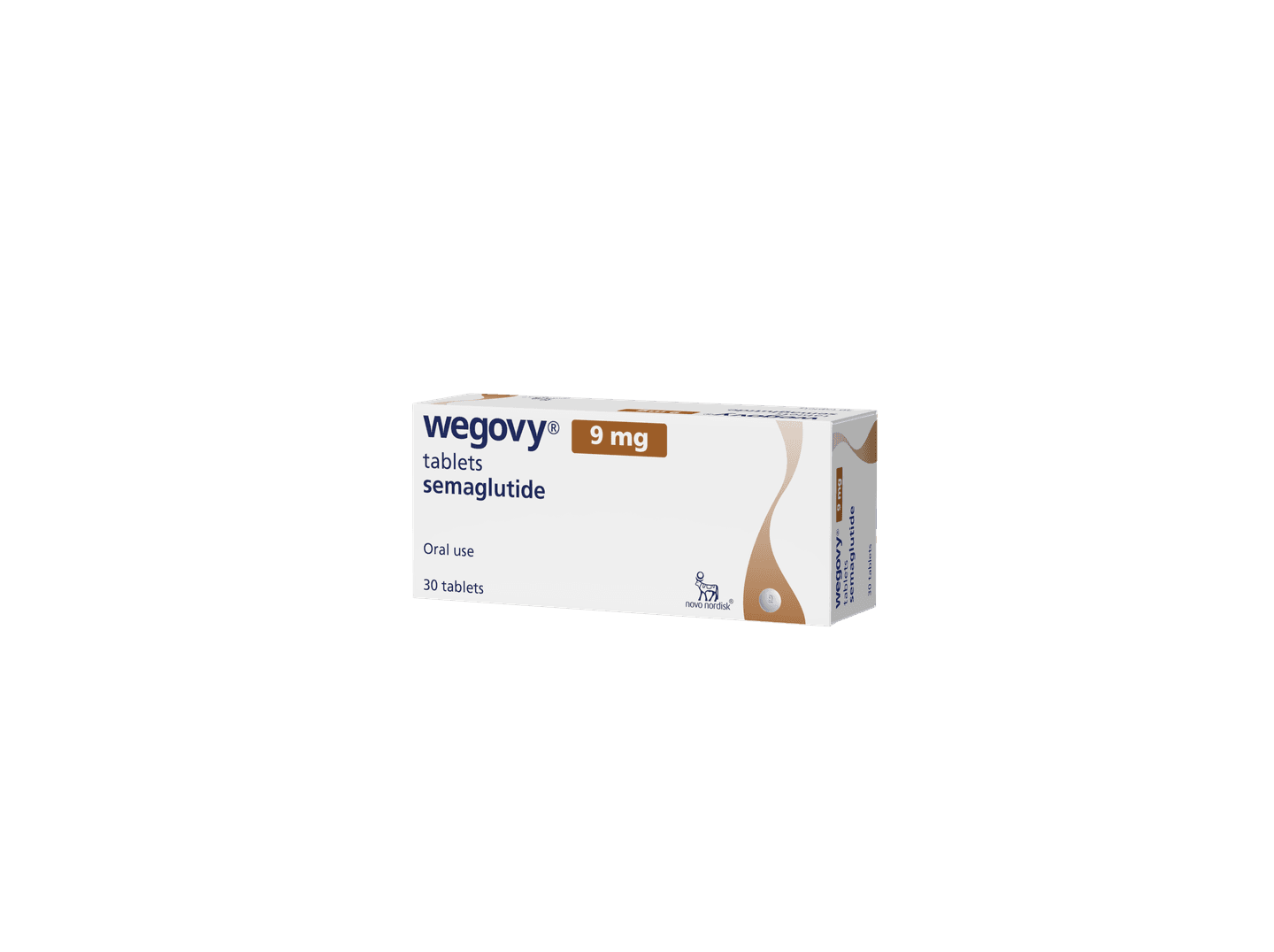
At the time of this update, Wegovy® tablets have been approved by the MHRA in the UK. Authorisation for the semaglutide tablet was granted on 11 June 2026 to Novo Nordisk. Availability, pricing, prescribing details and LYVlaunch timing should be confirmed once official product information and supply details are published.
For more than five years, the most effective weight-loss medicines available in the UK have all had one thing in common: a needle. Semaglutide, tirzepatide, liraglutide — all injectable, all weekly or daily. For some patients that has been a deterrent. For others it has been the deal-breaker.
The Wegovy® pill is a once-daily oral form of semaglutide, the same active ingredient as the Wegovy injection. It has now been approved in the UK as an oral GLP-1 option for weight management in eligible adults. For patients who could not or would not inject, this gives another option to discuss through a clinical assessment.
This guide explains what the Wegovy pill is, what the trial data shows, how it compares to the injection and to Mounjaro, who it is and is not designed for, and what to expect as UK access develops.
The Wegovy pill is a once-daily tablet containing semaglutide — the same active ingredient as the Wegovy injection. The molecule is identical; what differs is the delivery. Where Wegovy injection is administered subcutaneously once a week, the pill is swallowed every morning on an empty stomach.
Two things make this notable. First, it is the same medicine that has produced some of the strongest weight-loss results outside of bariatric surgery — semaglutide — now available without injection. Second, it is the first GLP-1 receptor agonist tablet approved in the UK specifically for weight management.
There is one important thing the Wegovy pill is not. It is not Rybelsus. Rybelsus is also an oral semaglutide tablet, but it is licensed only for type 2 diabetes and at lower doses. The Wegovy pill is a higher-dose formulation licensed specifically for weight management. Same molecule, different doses, different licences — and not interchangeable.
The pill is made absorbable using a delivery technology that allows the peptide to survive the stomach in measurable quantities. For a wider explanation of GLP-1 medicines and how they work, read LYV’s guide to GLP-1 medications and weight loss.
The molecule is the same; the experience is not.
The injection is taken once a week. The pill is taken once a day. The injection is administered subcutaneously into the abdomen, thigh or upper arm; the pill is swallowed with water. The injection requires refrigerated storage before use; the pill is expected to be stored more like a standard tablet, according to the official product information. The injection requires a pen, a needle and a cool bag for travel; the pill fits in a wash bag.
For some patients these differences are trivial. For others — patients with needle anxiety, frequent travellers, anyone who finds the weekly injection ritual a barrier to long-term adherence — they are decisive.
What does not differ is the active ingredient or the regulatory framework. Both formulations are prescription-only medicines. Both require a clinical assessment by a UK-registered prescriber. Both have very similar overall side-effect profiles, though the oral version may show a slightly different incidence pattern in the early weeks because the dose is taken daily rather than weekly.
The short version: same drug, different rhythm, broadly similar purpose.
Novo Nordisk's pivotal trial programme for high-dose oral semaglutide in obesity is the OASIS series. The most relevant trial for adults considering the medicine is OASIS-4.
OASIS-4 studied once-daily oral semaglutide 25 mg compared with placebo in adults with obesity or overweight with at least one weight-related comorbidity, alongside lifestyle intervention.
The primary endpoint was percentage change in body weight from baseline. Headline results from the OASIS-4 programme showed that oral semaglutide 25 mg produced clinically significant average weight loss compared with placebo over 64 weeks. Novo Nordisk reported 16.6% mean weight loss when treatment was adhered to.
For context: the Wegovy injection's pivotal STEP-1 trial showed roughly 14.9% mean weight loss at 68 weeks in adults with obesity, with 86% of participants reaching at least 5% weight loss. The numbers are not directly comparable — different populations, slightly different protocols — but the order of magnitude is similar, and that is the point. Oral semaglutide at high dose appears, on the trial data, to sit in the same efficacy league as the injection.
Three caveats matter. First, trial averages are not individual outcomes; some participants lose more, some less, and some do not respond. Second, weight loss tends to peak over time on treatment, and weight regain after stopping is well documented for the GLP-1 class. Third, the trial population was enrolled with strict inclusion criteria; real-world outcomes can differ from trial averages.
The official UK Summary of Product Characteristics and Patient Information Leaflet should be used for prescribing details once available. Patients should always follow the advice of their prescriber.
The Wegovy pill is expected to be used for adults with obesity, or adults who are overweight with at least one weight-related condition, subject to the final UK product information and clinical assessment. These criteria are broadly aligned with how prescription weight-management medicines are assessed in the UK.
It is not for:
A LYV pharmacist will review all of these factors during your clinical assessment. We will say no when no is the right answer. That is what being a pharmacy-led service rather than a tick-box service means.
You can learn more about LYV’s wider clinician-led weight-loss support on the weight-loss treatment page.
The exact UK dosing schedule should be followed according to the official Summary of Product Characteristics and the prescriber’s instructions. The structure is expected to involve a gradual step-up approach, starting at a lower dose while the body adapts, then increasing under clinical supervision until a suitable maintenance dose is reached.
The purpose of the step-up is to minimise gastrointestinal side effects, which are most common in the early weeks and at every dose increase.
The pill is taken once a day, every day, at the same time. Based on the way oral semaglutide is absorbed, it must be taken carefully:
These instructions are not advisory. The pill's absorption depends on a near-empty stomach, and any departure from this protocol can reduce how much of the drug gets into your bloodstream — which is why the dosing rules are stricter than for most tablets.
If you miss a dose, do not double up the next day unless your official patient information or prescriber specifically tells you to. Doubling up is more likely to cause gastrointestinal side effects than to recover lost efficacy.
For most patients considering weight-loss medication in the UK in 2026, the practical comparison is three-way: Wegovy injection, Wegovy pill, and Mounjaro.
The Wegovy pill versus Wegovy injection is a delivery comparison. Same molecule, broadly similar expected efficacy, different daily-versus-weekly cadence, different storage, different patient preference.
The Wegovy pill versus Mounjaro is a more substantial comparison. Semaglutide is a GLP-1 receptor agonist. Tirzepatide is a dual GIP/GLP-1 receptor agonist — it acts on two related hormonal pathways. In head-to-head trial comparisons of the injectable forms, tirzepatide has produced larger average weight loss than semaglutide. The pill-versus-Mounjaro comparison adds a delivery dimension to the molecular one.
For a fuller comparison, read LYV’s guide to Mounjaro vs Wegovy in the UK.
There is no single right answer. The right medicine for any patient depends on clinical history, side-effect tolerance, lifestyle and budget. The job of a pharmacist-led assessment is to find that match honestly.
The dominant side effects of oral semaglutide, like every GLP-1 receptor agonist, are gastrointestinal. The most common are nausea, vomiting, diarrhoea, constipation and abdominal discomfort. Most cases in clinical trials were mild to moderate and improved as the body adapted.
A small but important risk profile applies to the wider GLP-1 class:
A practical rule: side effects are minimised by following the dosing rules precisely, eating slowly and stopping when full, and reporting any new symptoms to your pharmacist promptly rather than discontinuing treatment unilaterally.
For practical side-effect advice on another GLP-1/GIP weight-loss medicine, read LYV’s guide to Mounjaro side effects and how to reduce them.
The Wegovy pill has now been approved by the MHRA in the UK. However, approval does not always mean immediate pharmacy availability. Patients still need confirmed supply, pricing, product information and a prescription from an appropriate UK-registered prescriber.
When the medicine is available at LYV, we will update this page, publish clear pricing and stock information, and open the standard LYV clinical assessment for Wegovy pill prescriptions, with a named GPhC pharmacist reviewing every order.
If you are comparing costs across weight-loss medicines, you can also review LYV’s transparent pricing page.
If you would like to be notified when the Wegovy pill becomes available at LYV. We do not share lists. We do not auto-enroll anyone in marketing.
Wegovy is a prescription-only medicine. The decision to prescribe is made by an independent UK-registered prescriber after a clinical assessment.
This article is general information for UK adults and is not a substitute for personalised medical advice. Prescription-only medicines mentioned are supplied only after a clinician-led consultation through a regulated pharmacy. If you have urgent symptoms or concerns about a medicine, speak to your GP, pharmacist, NHS 111 or emergency services as appropriate.