Registered Pharmacy100% OnlineNew here? Use code: WELCOME10 for 10% OFFFree Shipping Over £50Fully Inspected & Regulated ServicesApproved UK-licensed TreatmentsRegistered Pharmacy100% OnlineNew here? Use code: WELCOME10 for 10% OFFFree Shipping Over £50Fully Inspected & Regulated ServicesApproved UK-licensed Treatments
18 Aug 2026

8min read
Contents

A clinical weight loss programme is a physician-supervised, evidence-based approach combining medical assessments, personalised nutrition, exercise, behavioural coaching, and pharmacotherapy to treat obesity as a chronic health condition. You may also hear it called a medical weight management programme. Both terms describe the same structured, clinician-led model. Unlike commercial diet plans, this approach treats excess weight the way medicine treats any long-term condition: with proper diagnosis, tailored treatment, and ongoing monitoring. GLP-1 medications such as Wegovy and Mounjaro have become central to many of these programmes in 2026, and the clinical evidence behind them is substantial.
A clinical weight loss programme is built around one core principle: your body is not a simple equation of calories in versus calories out. Obesity is a chronic, often relapsing disease, and effective treatment requires addressing its biological, psychological, and lifestyle dimensions together.
Every programme starts with a thorough clinical assessment. This typically covers:
After assessment, the programme builds a personalised plan. This includes a nutrition strategy tailored to your metabolic profile, a physical activity plan suited to your fitness level and any physical limitations, and behavioural coaching to address habits and mindset. Where appropriate, prescription medications are added. GLP-1 receptor agonists such as semaglutide (Wegovy) and tirzepatide (Mounjaro) work by regulating hunger signals, reducing cravings, and increasing satiety. You can read more about how these treatments work in this guide to GLP-1 medications..
Ongoing monitoring is what separates a clinical programme from a self-guided diet. Your clinician adjusts your plan as your body responds, which is something no app or commercial plan can replicate.

Pro Tip: Ask your clinician for a full metabolic screening at your first appointment. Understanding your insulin sensitivity and thyroid function gives you a biological baseline that makes every subsequent decision more precise.
The evidence is clear. Intensive lifestyle interventions with medical oversight typically produce 5–10% body weight loss, while GLP-1 therapies often enable losses of 10–15% or more over several months. That may sound modest in percentage terms, but a 10% reduction in body weight for someone at 100kg is clinically significant.
The reason clinical programmes outperform self-directed dieting comes down to biology. Medications target the brain's weight set point, the internal thermostat your body uses to defend a certain weight. Willpower alone cannot override this mechanism. Clinical treatment can.
Beyond the scale, the benefits are broader than most people expect. Medically supervised weight loss is linked to improvements in heart failure risk, insulin sensitivity, and sleep apnoea, often before large-scale weight changes even occur. That means your health starts improving before you reach your target weight.
"Clinical weight loss should be viewed as disease-modifying therapy with a focus on long-term maintenance, not quick fixes." — The Lancet Diabetes & Endocrinology, 2026
Weight regain after loss is also common and biologically expected. Only around two-thirds of patients achieve significant loss, and maintaining that loss requires ongoing support. This is not failure. It is how chronic disease management works.
Pro Tip: Set goals beyond the number on the scales. Tracking energy levels, blood pressure, and sleep quality gives you a fuller picture of progress and keeps motivation grounded in real health gains.
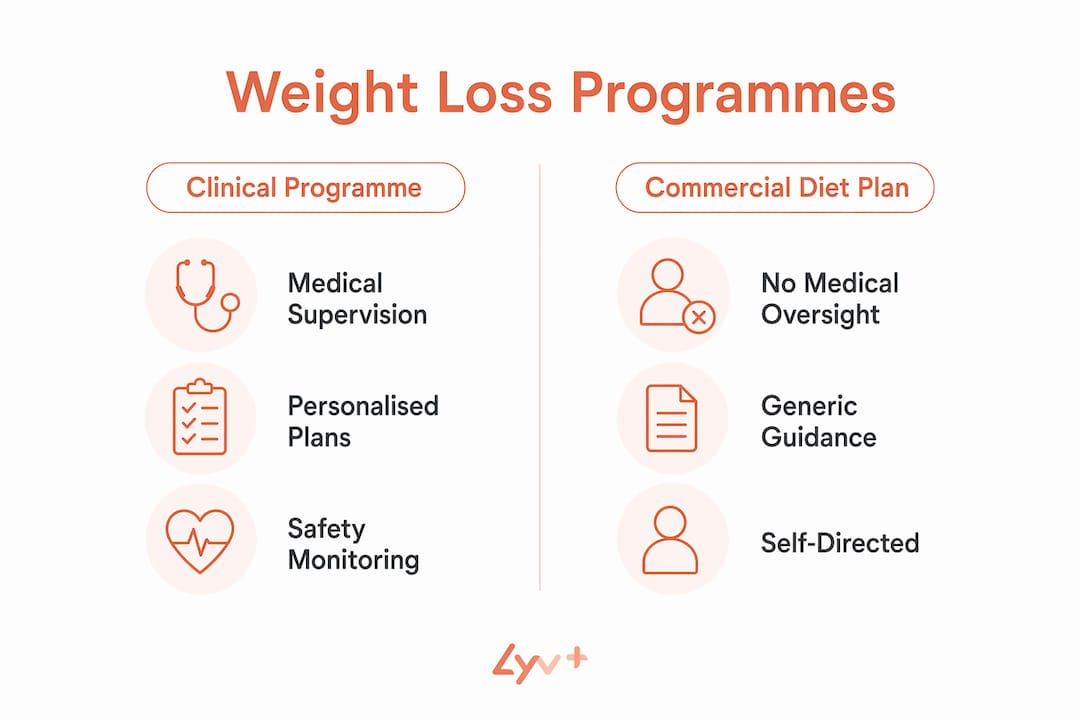
The most important distinction between a clinical programme and a commercial diet plan is medical personalisation. A commercial plan gives everyone the same rules. A clinical programme starts with your individual biology, your medications, your metabolic markers, and your history, then builds from there.
Medical weight loss programmes differ from dieting by combining doctor-led supervision, tailored plans, safety monitoring, and accountability for long-term success. That combination is what makes them structurally different, not just more expensive versions of the same thing.
Safety is a particularly important factor. Before any prescription treatment begins, your clinician reviews your full medication list, cardiovascular risk, and metabolic profile. This protects you from interactions and contraindications that a commercial plan would never catch. If you want to understand what clinician-guided weight loss actually involves in practice, the distinction becomes very clear very quickly.
The psychological dimension also sets clinical programmes apart. Behavioural coaching addresses the thought patterns and emotional triggers that drive overeating. Commercial plans rarely include this. Without it, even the best nutrition strategy tends to break down under stress.
Starting a clinical weight loss programme follows a clear sequence. You do not need a GP referral for many private providers, including online clinics, but the process is structured regardless of where you access it.
Cost varies considerably. Private clinical programmes in the UK range from consultation fees to ongoing prescription costs, depending on the treatment chosen. GLP-1 medications such as Wegovy carry a monthly cost, but many patients find the clinical outcomes justify the investment compared with years of unsuccessful self-directed attempts.
If you are unsure whether you qualify for prescription weight loss medication, Lyvpharmacy offers a straightforward online assessment that covers the key eligibility criteria. You can also explore how to qualify for weight loss medication before booking a consultation.
The most important thing you can do is start with an honest assessment. The biology of weight is complex, and the reasons you have struggled before are likely physiological, not personal. Understanding that is the first step toward a plan that actually works.
A clinical weight loss programme is the most effective evidence-based option for sustainable weight management because it combines medical supervision, personalised treatment, and pharmacotherapy in a way no commercial diet plan can replicate.
Point-Details
Definition and scope
A clinical programme combines medical assessment, personalised nutrition, behavioural coaching, and prescription medication where appropriate.
Clinical effectiveness
GLP-1 therapies within supervised programmes can produce 10–15% or more body weight loss, outperforming self-directed dieting.
Health benefits beyond weight
Improvements in insulin sensitivity, heart failure risk, and sleep apnoea begin before significant weight loss occurs.
Key difference from dieting
Medical supervision, safety monitoring, and prescription access make clinical programmes structurally distinct from commercial plans.
Long-term approach
Weight regain is biologically expected; clinical programmes include maintenance phases and ongoing support to manage this.
People come to clinical weight loss programmes expecting a stricter version of a diet. What they find is something fundamentally different. You are not handed a meal plan and sent away. You are treated as someone with a medical condition that has a biological basis, a treatment pathway, and a long-term management strategy.
The hardest thing to accept, in my experience, is that weight regain reflects biological set point dynamics, not a lack of discipline. Most people who have struggled with weight for years have been fighting their own neurobiology without knowing it. That framing matters. It removes the blame and opens the door to treatment that actually addresses the root cause.
I also think the focus on scale weight is the single biggest obstacle to long-term success. Patients who track energy, sleep quality, blood pressure, and metabolic markers alongside weight tend to stay engaged longer. They see progress even on weeks when the scales do not move. Setting goals beyond weight is not a consolation prize. It is clinically smarter.
The other thing worth saying plainly: these programmes are not quick fixes. GLP-1 medications are powerful tools, but they work best within a structured programme that includes behavioural support and regular clinical review. Treating them as a standalone shortcut tends to produce short-term results and long-term disappointment.
If you are considering a clinical programme, go in with realistic expectations and a willingness to engage with the full process. The results, when the programme is followed properly, are genuinely life-changing.
— Lyv
If you have read this far, you are probably ready to move beyond generic advice and explore what a properly supervised programme could do for you.
Lyvpharmacy offers clinician-led assessments, rapid prescription approvals, and discreet home delivery of regulated GLP-1 treatments including Wegovy and Mounjaro. Every patient goes through a thorough medical review before any treatment is prescribed. There are no shortcuts on the clinical side, but there is no unnecessary friction either. You can browse the full range of clinically approved weight loss treatments available in the UK, or read more about how GLP-1 medications work before taking the next step.
Recommended



.jpg)