Registered Pharmacy100% OnlineNew here? Use code: WELCOME10 for 10% OFFFree Shipping Over £50Fully Inspected & Regulated ServicesApproved UK-licensed TreatmentsRegistered Pharmacy100% OnlineNew here? Use code: WELCOME10 for 10% OFFFree Shipping Over £50Fully Inspected & Regulated ServicesApproved UK-licensed Treatments
02 Jul 2026

6min read
Contents
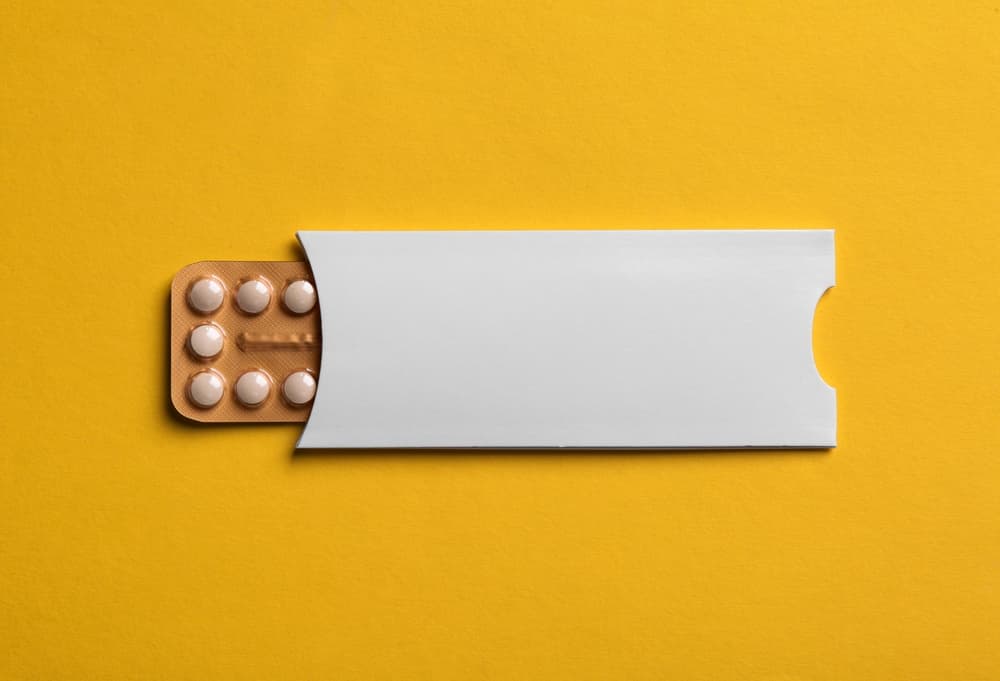
If you take the contraceptive pill and you're considering - or already using - a weight-loss injection, there's an important question to ask: could one affect the other? It's a question that genuinely matters, and the honest answer is that it depends which medicine you're taking. The two most talked-about treatments behave differently here, so it's worth getting the facts straight.
This article explains the key difference, what the current guidance says, and what it means for you. As always, it's general information - your own prescriber is the right person to advise on your specific situation.

Some medicines can affect how well the oral contraceptive pill works. With weight-loss injections, the concern centres on a particular effect: slowed stomach emptying. Because the combined pill is absorbed through your gut, anything that changes how quickly your stomach empties could, in theory, affect how much of the hormone is absorbed - and therefore how reliably the pill protects against pregnancy. The important detail is that this effect is far more relevant to one medicine than the other.

Mounjaro, whose active ingredient is tirzepatide, can reduce the effectiveness of the oral contraceptive pill - particularly when you first start it and each time your dose is increased. This is because the slowing of stomach emptying is most pronounced early on. UK regulators (the MHRA) have issued specific advice for people using oral contraception with tirzepatide.
If you take the combined pill and use Mounjaro, the guidance is to either switch to a non-oral method of contraception (such as an implant, injection, coil or patch), or add a barrier method (such as condoms) for four weeks after starting the medicine and for four weeks after each dose increase. This is a temporary, precautionary measure during the periods when absorption is most likely to be affected.
Wegovy, whose active ingredient is semaglutide, is different. Current evidence does not show that semaglutide meaningfully reduces the effectiveness of the oral contraceptive pill. Studies looking at semaglutide and the combined pill found it did not significantly reduce absorption of the contraceptive hormones, so the same barrier-method precaution advised for Mounjaro is not currently considered necessary for Wegovy.
In short: although Mounjaro and Wegovy are both weight-loss injections, they are different medicines and the contraception advice is not the same. This is exactly the kind of detail that's easy to get wrong if you assume all weight-loss injections behave identically - they don't.
Quite apart from weight-loss medicines, it's worth understanding the contraceptive pill's own risk profile. The combined pill (which contains oestrogen) carries a small increased risk of blood clots, and a slightly raised risk of heart attack and stroke. For most healthy women the absolute risk remains low, but it's higher for some - including women who smoke and are over 35, who have high blood pressure, who have had blood clots before, who have certain types of migraine, or who have a higher BMI.
This matters in a weight-management context because BMI is part of the picture. UK guidance notes that at a BMI of 35 or above, the risks of the combined pill can begin to outweigh its benefits for some women, and an alternative method may be safer. The encouraging flip side is that losing weight can move you into a lower-risk category over time. None of this is cause for alarm - it's simply a reason to have an open conversation with a clinician about the safest contraception for you.

A lot of confusion comes from treating 'weight-loss injections' as a single thing. In conversation, and even in some online articles, Mounjaro and Wegovy get lumped together - but they contain different active ingredients (tirzepatide and semaglutide respectively), work in slightly different ways, and carry different guidance. Advice you read about one does not automatically apply to the other. If a friend on Mounjaro tells you to use extra contraception precautions, that's correct for her - but it doesn't necessarily mean you need the same approach if you're on Wegovy, and vice versa.
This is also a fast-moving area. Guidance is updated as new evidence emerges, which is another reason to rely on your prescriber and official sources rather than older articles or social-media posts. If you're ever unsure, a quick check with a pharmacist is the safest way to get advice that reflects both the current guidance and your personal circumstances.

If any of this applies to you, the single most useful step is to talk it through with a pharmacist or prescriber before making changes. Don't stop your contraception or your weight-loss treatment on your own, and don't assume advice for one injection applies to another. A short conversation can make sure you're both protected against pregnancy and using the safest options for your health.
Two further points are worth bearing in mind. First, if you experience significant vomiting or diarrhea while taking any oral contraceptive - something that can happen with the digestive side effects of weight-loss injections, especially early on - the pill may not be fully absorbed, and extra precautions may be needed for a short time. This is true regardless of which medicine you are on, so it is always worth knowing the standard advice for missed or poorly absorbed pills.
Second, contraception is not only about preventing pregnancy while on treatment - it is also important because weight-loss medicines are generally not recommended during pregnancy. If you are planning to try for a baby, this is an important conversation to have with your prescriber, who can advise on stopping treatment safely and the right timing. Reliable contraception while on a weight-loss medicine is part of looking after yourself, not an afterthought.




.jpg)