Registered Pharmacy100% OnlineNew here? Use code: WELCOME10 for 10% OFFFree Shipping Over £50Fully Inspected & Regulated ServicesApproved UK-licensed TreatmentsRegistered Pharmacy100% OnlineNew here? Use code: WELCOME10 for 10% OFFFree Shipping Over £50Fully Inspected & Regulated ServicesApproved UK-licensed Treatments
12 Jul 2026

10min read
Contents

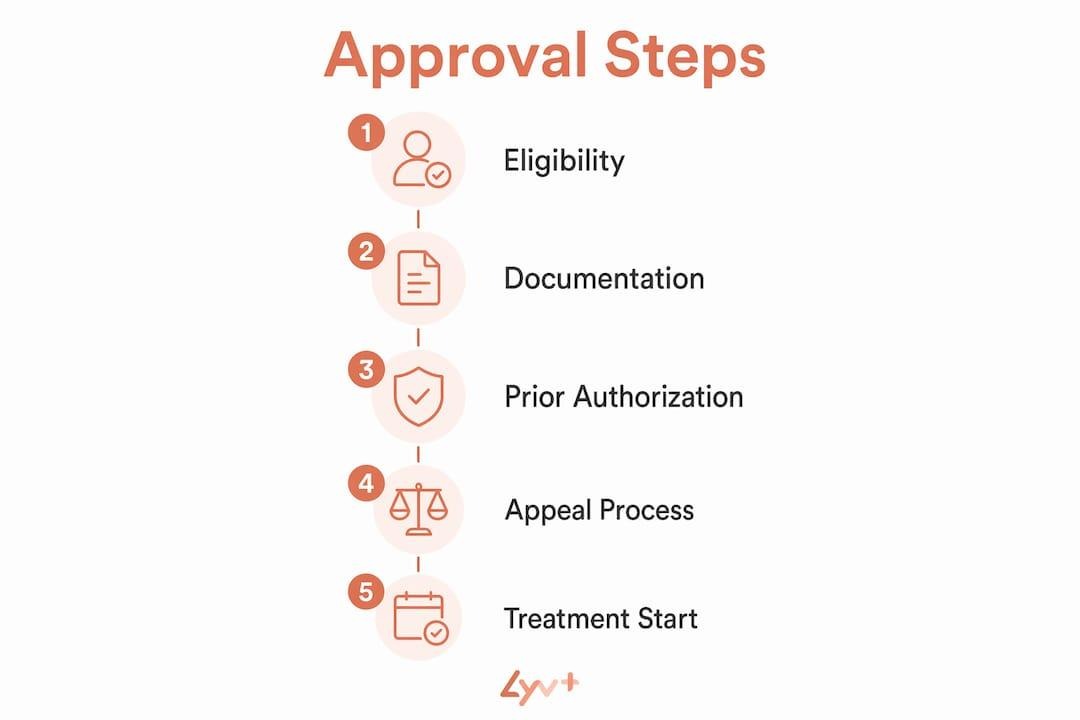
Medical weight loss approval is the process by which your eligibility, clinical documentation, and insurer review align to grant access to prescription weight loss treatments. For adults in the UK seeking medications like Wegovy (semaglutide) or Mounjaro (tirzepatide), understanding how to get medical weight loss approval means knowing exactly what clinicians and insurers need to see before they say yes. The process has three distinct gates: clinical candidacy, prescription, and insurer prior authorisation. Clearing the first two is usually straightforward. The third is where most people stall.
Medical weight loss eligibility rests on two core criteria: your BMI and your health history. Clinical eligibility requires a BMI of 30 or above, or a BMI of 27–29.9 alongside at least one weight-related health condition. That second threshold matters because many adults in their 40s and 50s carry significant metabolic risk without reaching a BMI of 30.
The most common conditions that support medical weight loss eligibility include:
These are not minor footnotes. Insurers and prescribers treat each one as a clinical reason to act. If you have one of these conditions, your case for treatment approval becomes considerably stronger.
Beyond BMI and comorbidities, you must show at least six months of documented lifestyle modifications. This means recorded attempts at dietary change, increased physical activity, or behavioural therapy. The key word is documented. A verbal account of trying to eat better does not satisfy this requirement. Your GP or clinician needs written records with dates and outcomes.
Your prescriber will also need a metabolic baseline before approving treatment. Effective weight loss management includes HbA1c testing, lipid panels, and dietary analysis. These results form the clinical foundation for your treatment plan and are reviewed again at one, three, and six months to assess progress.
Eligibility factor - What is required
BMI threshold
≥30, or 27–29.9 with a qualifying comorbidity
Comorbidity evidence
Documented diagnosis of type 2 diabetes, hypertension, or similar
Lifestyle history
Minimum six months of recorded diet, exercise, or behavioural attempts
Metabolic tests
HbA1c, lipid panel, and baseline dietary assessment
Understanding GLP-1 eligibility criteria before your consultation saves time and avoids surprises at the clinical review stage.
The quality of your documentation decides the outcome more than almost any other factor. Approval depends more on the structure and completeness of submitted records than on patient characteristics alone. That is a significant insight. You can meet every clinical criterion and still be denied if the paperwork is incomplete.

Your documentation of previous weight loss attempts must be specific. Vague references to “trying diets” will not pass insurer scrutiny. Explicit documentation must include:
This level of detail transforms a vague history into a credible clinical record. Your prescriber builds this record with you, but you can speed the process by bringing any relevant notes, app data, or previous GP letters to your consultation.
Insurers use specific diagnostic codes to process prior authorisation requests. ICD-10 codes like E66.01 (morbid obesity) must match the patient’s clinical notes precisely. If your prescriber submits a code that does not align with the insurer’s pharmacy benefit manager checklist, the request is automatically rejected, even when you clinically qualify. This is one of the most common and most avoidable causes of denial.
Your prescriber must also submit a structured letter that directly addresses the insurer’s checklist. Generic letters fail. The letter needs to reference your BMI, your comorbidities, your lifestyle history, and the clinical rationale for the specific medication requested.
Many insurers require patients to try a cheaper medication first, such as phentermine, before approving a GLP-1 receptor agonist like Wegovy or Mounjaro. This is called step therapy. Step therapy can be bypassed with a detailed medical necessity letter that explains why cheaper alternatives are contraindicated for you. This shortens the approval timeline considerably. If your clinician does not raise this option, ask directly.
Pro Tip:Ask your prescriber to confirm which ICD-10 codes they plan to submit before the prior authorisation request goes in. A five-minute check at this stage can prevent a weeks-long delay.
Patients often stall at prior authorisation because they treat it as a single step rather than a multi-gate process. Understanding the timeline and the appeals route removes much of the anxiety.
The initial prior authorisation decision typically arrives within 3–10 business days. A fast-track clinician review can come through in 24–48 hours, but that is the exception rather than the rule. Appeals extend the timeline to 21–45 days in more complex cases.
Around 30–40% of initial prior authorisation requests for GLP-1 weight loss medications are denied. That figure sounds discouraging, but roughly half of those denials are reversed on appeal. The most common reasons for denial include:
“23% of insurance plans exclude anti-obesity medications entirely, regardless of documentation quality.” — GLP Chart, 2026
That last point is worth sitting with. If your plan is among the 23% that exclude these medications outright, no amount of documentation will change the outcome. Knowing this early lets you explore alternative funding routes, including private prescriptions or clinician-led online providers.
If your initial request is denied, your prescriber can request a peer-to-peer review. This is a direct conversation between your clinician and the insurer’s medical reviewer. It is one of the most effective tools available. Additional supporting documentation, including updated metabolic results or specialist letters, strengthens the appeal further. Persistence matters here. A well-structured appeal with complete records succeeds far more often than a resubmission of the original request.
You are not a passive participant in this process. The steps you take before and during your consultation directly affect the outcome.
Prepare before your appointment. Gather any records of previous weight loss attempts, including app data, GP letters, or receipts from commercial programmes. The more specific you can be, the better your prescriber can build your case.
Ask your insurer the right questions. Before your consultation, contact your insurer and ask:
Work closely with your prescriber. Clinician-guided weight loss means your prescriber does more than write a prescription. They build the clinical record, select the correct diagnostic codes, and write the prior authorisation letter. Choose a prescriber with experience in obesity medicine. Their familiarity with insurer requirements makes a measurable difference.
Do not give up after a first denial. Given that roughly half of denied requests are reversed on appeal, a denial is not a final answer. Treat it as a request for more information, and respond with exactly that.
Pro Tip:Keep a personal log of your weight, dietary changes, and exercise habits from today. Even a few weeks of consistent records strengthens your lifestyle modification history for future consultations.
Understanding how to qualify for weight loss medication in the UK context also helps you frame your case correctly from the start.
Medical weight loss approval requires meeting clinical BMI criteria, providing detailed lifestyle documentation, and navigating insurer prior authorisation with precisely coded, structured records.
Point - Details
BMI and comorbidity criteria
You need a BMI ≥30, or 27–29.9 with a qualifying condition like type 2 diabetes or hypertension.
Documentation quality decides outcomes
Detailed records of prior weight loss attempts, with dates and outcomes, drive approval more than patient factors alone.
ICD-10 codes must match exactly
Mismatched diagnostic codes cause automatic denials even when clinical criteria are fully met.
Appeals reverse roughly half of denials
A structured appeal with peer-to-peer review and additional evidence succeeds far more often than resubmission.
Step therapy can be bypassed
A medical necessity letter explaining contraindications to cheaper alternatives can shorten the approval timeline.
What strikes me most about this process is how much of it comes down to paperwork rather than clinical need. I have seen patients who clearly meet every medical criterion wait months because their prescriber submitted a generic letter or used the wrong diagnostic code. That is genuinely frustrating, and it should not happen.
The uncomfortable truth is that the approval system was not designed with patients in mind. It was designed to manage cost. That does not mean it cannot be navigated, but it does mean you need a clinician who understands the system as well as they understand medicine. A prescriber who specialises in obesity medicine knows which codes trigger automatic reviews, which insurers require step therapy, and how to write a letter that addresses every item on the checklist.
The other thing I would push back on is the idea that medication is the whole answer. Ongoing clinical monitoring of metabolic markers at one, three, and six months is not a bureaucratic formality. It is how you and your clinician know the treatment is working and adjust if it is not. Patients who engage with that monitoring process consistently do better than those who treat the prescription as the finish line.
If you are in the middle of this process and feeling stuck, know that the system is genuinely difficult. It is not a reflection of whether you deserve treatment. The path forward is preparation, the right clinical partner, and the willingness to appeal if the first answer is no.
— Lyv
Lyvpharmacy offers clinician-led online consultations for adults seeking access to prescription weight loss treatments, including Wegovy and Mounjaro, without the delays of traditional routes.
The clinical team at Lyvpharmacy is experienced in assessing eligibility, preparing the documentation needed for approval, and supporting patients through ongoing monitoring. Consultations are completed online, and treatments are delivered discreetly to your door. If you are ready to take the next step, visit the weight loss treatments page to find out which options are available and whether you are likely to qualify. The process is straightforward, and the clinical team is there to guide you at every stage.
Recommended