Registered Pharmacy100% OnlineNew here? Use code: WELCOME10 for 10% OFFFree Shipping Over £50Fully Inspected & Regulated ServicesApproved UK-licensed TreatmentsRegistered Pharmacy100% OnlineNew here? Use code: WELCOME10 for 10% OFFFree Shipping Over £50Fully Inspected & Regulated ServicesApproved UK-licensed Treatments
01 Sep 2026

11min read
Contents

Appetite suppressants are substances or strategies that reduce hunger signals, making it easier to eat less without relying purely on willpower. They work across a spectrum, from the food on your plate to clinically prescribed injections, and understanding the differences between them is the first step to choosing what fits your situation.
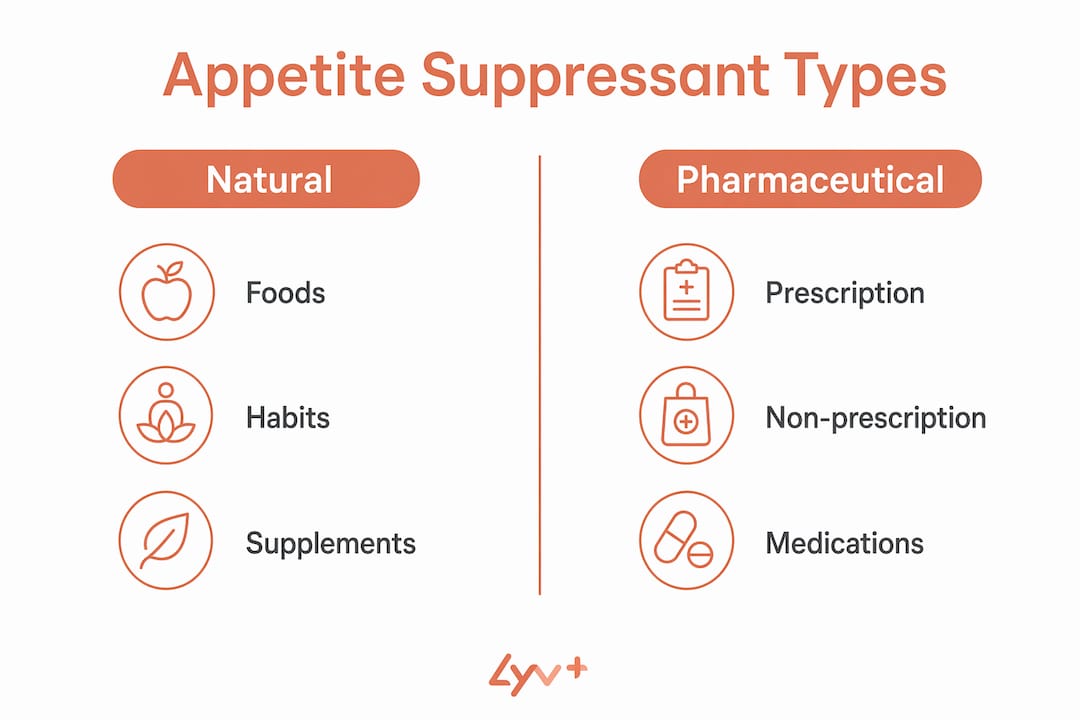
The main categories are:
None of these work in isolation. NHS England is clear that even the most effective prescription medications are prescribed alongside a reduced-calorie diet and increased physical activity. Think of appetite suppressants as tools that make the lifestyle changes more manageable, not replacements for them.
Hunger is not simply a feeling. It is a cascade of hormonal signals that your gut, brain, and fat tissue send back and forth throughout the day. Appetite suppressants intervene at different points in that cascade.
The key hormones involved are:
Research shows that protein and fibre increase GLP-1 and PYY secretion, which is why a high-protein breakfast genuinely keeps you fuller than a bowl of cereal. Prescription GLP-1 receptor agonists like Wegovy and Mounjaro take this a step further by directly mimicking or amplifying these hormonal signals at a pharmacological level.
The brain's appetite centres, particularly the hypothalamus, receive these hormonal messages and adjust hunger accordingly. Pharmaceutical treatments do not simply dull your desire to eat through sedation or mood suppression. They recalibrate the biological signals that drive hunger in the first place. That distinction matters for understanding why medications like Mounjaro, a dual GIP/GLP-1 receptor agonist, can produce weight loss that diet alone rarely achieves.

Pro Tip: If you want to test the hormonal effect of protein and fibre before committing to anything else, try eating 20–30g of protein at breakfast for two weeks and track how your hunger changes by mid-morning. The shift is often noticeable within days.
Food-based appetite control is the foundation of any weight management plan, and the science behind it is more solid than most people realise. The key is knowing which foods actually move the needle.

Eating a protein and fibre preload before a meal reduced total energy intake significantly in one clinical study, with a significant increase in GLP-1 secretion compared to a carbohydrate-matched control. That is a meaningful effect from something as simple as adjusting what you eat first.
Foods with strong evidence for appetite reduction include:
The honest caveat here is that natural methods produce modest effects. They work best as consistent habits rather than one-off interventions. A systematic review of food-based appetite suppression found results are variable and depend heavily on individual factors like age, dietary restraint, and baseline eating patterns. If you are managing significant excess weight, natural methods alone are unlikely to be sufficient, but they remain genuinely useful as part of a broader plan.
Pro Tip: Eating a small portion of protein and fibre 20–30 minutes before your main meal, such as a handful of nuts or a small pot of Greek yoghurt, can reduce how much you eat at that meal without requiring any calorie counting.
The supplement market for appetite control is crowded, and the gap between marketing claims and clinical evidence is wide. That does not mean all supplements are useless, but it does mean you need to read the research rather than the packaging.
The most commonly studied non-prescription options include:
Systematic reviews consistently find that non-prescription supplements show inconsistent results for hunger reduction and should support, not replace, medically approved treatments. Dosing matters too. Many products on the market contain doses below those used in trials, which further limits their real-world effectiveness.
Safety is also worth considering. Supplements are not regulated to the same standard as prescription medicines in the UK. Always check for interactions with existing medications and, if in doubt, speak to a pharmacist or GP before starting anything new.
The most clinically effective options for appetite control and weight loss in the UK are prescription medications, and access has expanded considerably following updated NHS guidance under NICE guideline NG246.
The four medications currently recommended are:
Prescription medications are not a shortcut. They are a clinical tool that works best when combined with genuine lifestyle change. The NHS and NICE are explicit about this, and the evidence backs it up.
Key principles from UK clinical guidance include:
One point that often gets missed in conversations about weight loss medication is the role of patient support. Medication alone, without dietary guidance and activity support, produces weaker results. The most effective programmes pair clinical prescribing with ongoing coaching or structured lifestyle support. If you are considering this route, look for a provider that offers both, not just a prescription. Lyvpharmacy's clinician-guided approach is built around exactly this model.
Every appetite suppressant carries some risk, and being informed about those risks is part of using them responsibly. The profile varies considerably depending on the type.
Common side effects include nausea, vomiting, diarrhoea, and constipation, particularly in the early weeks as the dose is titrated upward. Injection site reactions are also common. These effects usually settle as the body adjusts. For a detailed breakdown of what to expect, the Wegovy side effects guide covers the most common experiences and how to manage them.
Contraindications include:
Orlistat works by blocking fat absorption, which means undigested fat passes through the gut. This causes oily stools, urgency, and flatulence, particularly if dietary fat intake is not reduced. These effects are predictable and manageable with a low-fat diet, but they catch people off guard when they are not warned. Orlistat is contraindicated in pregnancy and should not be taken alongside ciclosporin or anticoagulants without medical supervision.
Non-prescription supplements carry their own interaction risks. 5-HTP can interact dangerously with SSRIs and other serotonergic medications. Glucomannan can slow the absorption of oral medications if taken at the same time, so timing matters. Green tea extract at high doses has been linked to liver toxicity in rare cases.
The safest path through all of this is a structured clinical assessment before you start, and ongoing support while you are on treatment. Self-prescribing or buying prescription medications from unregulated sources carries real risks that no weight loss goal is worth taking.
If you have read this far and you are wondering whether prescription treatment might be right for you, the next step is a clinical assessment. Lyvpharmacy offers fast, clinician-led access to NHS-approved weight loss treatments including Mounjaro and Wegovy, with discreet home delivery and ongoing medical oversight built in.
No long waits. No guesswork. Just a clear, evidence-based path forward with a clinical team behind you.
Prescription GLP-1 medications are the most clinically effective appetite suppressants available in the UK, but they work best when combined with dietary changes and physical activity.
Point - Details
Prescription options in the UK
Mounjaro, Wegovy, Saxenda, and orlistat are the four NHS-recommended medications under NICE guideline NG246.
Mounjaro now in primary care
Tirzepatide can be prescribed by GPs, expanding access beyond specialist services for the first time.
BMI thresholds vary by ethnicity
South Asian and Black patients may qualify at a BMI 2.5 kg/m² lower than the standard 35 kg/m² threshold.
Natural methods have modest effects
A protein and fibre preload reduced energy intake by up to 23% in clinical studies, though food-based methods alone rarely drive significant weight loss.
NICE stopping criteria apply
Treatment should be reviewed if less than 5% weight loss is achieved after six months at the highest tolerated dose.