Registered Pharmacy100% OnlineNew here? Use code: WELCOME10 for 10% OFFFree Shipping Over £50Fully Inspected & Regulated ServicesApproved UK-licensed TreatmentsRegistered Pharmacy100% OnlineNew here? Use code: WELCOME10 for 10% OFFFree Shipping Over £50Fully Inspected & Regulated ServicesApproved UK-licensed Treatments
04 Jul 2026

9min read
Contents

GLP-1 versus traditional diets is the defining weight loss debate of 2026. GLP-1 receptor agonists, such as semaglutide (Wegovy) and tirzepatide (Mounjaro), are prescription medications that reduce appetite by acting on the brain and gut. Traditional diets, including low-calorie plans, very low-calorie diets (VLCDs), and low-carb approaches, rely on behavioural change and calorie restriction. The clinical evidence is clear: medication plus structured diet outperforms either approach alone, producing superior fat loss, better metabolic outcomes, and more sustainable results. This guide breaks down exactly how each method works, what the research shows, and how to combine them intelligently.
GLP-1 medications and traditional diets target weight loss through completely different physiological pathways. Understanding this distinction explains why combining them is so powerful.
GLP-1 drugs work pharmacologically. They mimic the glucagon-like peptide-1 hormone your gut naturally releases after eating. Semaglutide and tirzepatide bind to GLP-1 receptors in the brain and digestive system, slowing gastric emptying and suppressing appetite neurologically. The result is what clinicians call "food noise" reduction. That constant mental chatter about food, cravings, and hunger simply quietens. This is not willpower. It is pharmacology.
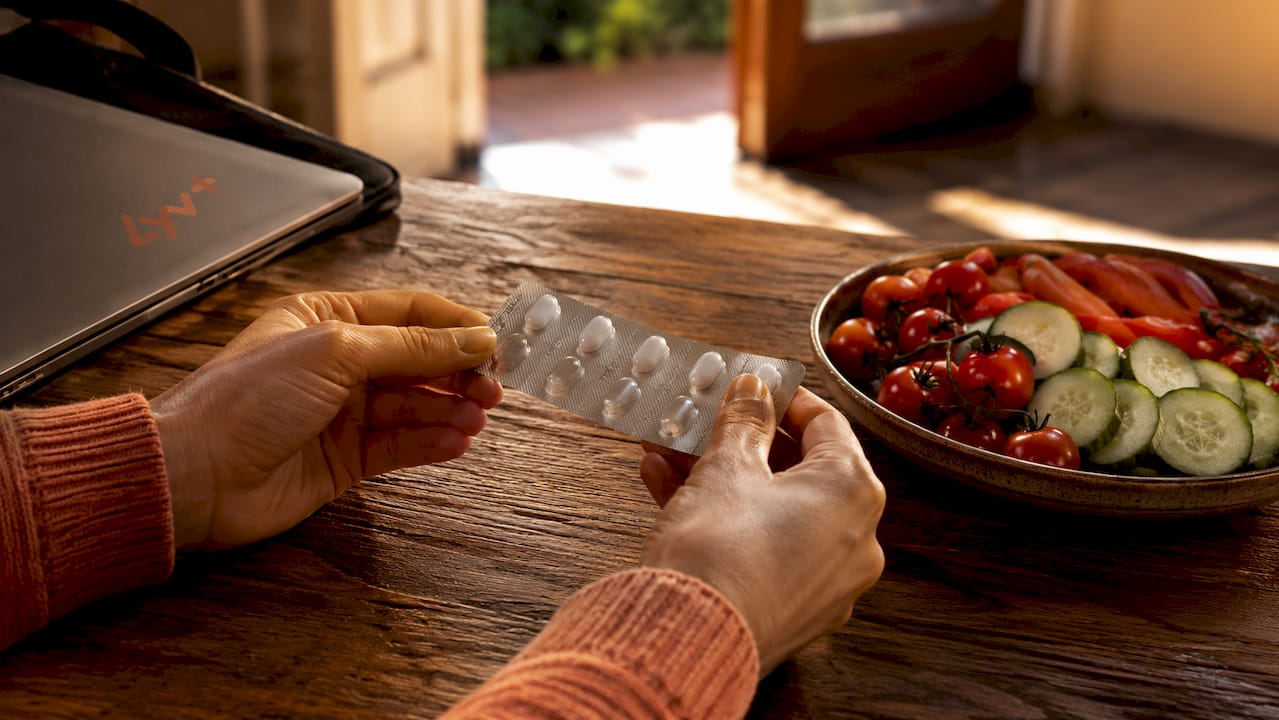
Traditional diets work differently. They rely on calorie restriction, macronutrient manipulation, and behavioural change to create an energy deficit. Low-carb diets, for example, stabilise blood sugar and reduce insulin-driven hunger. VLCDs cut calories dramatically to force rapid fat loss. These approaches work, but they depend entirely on your ability to maintain them. Metabolic adaptation, hunger hormones like ghrelin, and psychological fatigue all push back against sustained restriction.
Here is the key distinction: GLP-1 drugs remove the friction of hunger. Traditional diets ask you to fight through it.
Pro Tip: If you are already on a GLP-1 medication, a low-carb or high-protein diet amplifies results by working alongside the medication's appetite suppression rather than against your hunger.
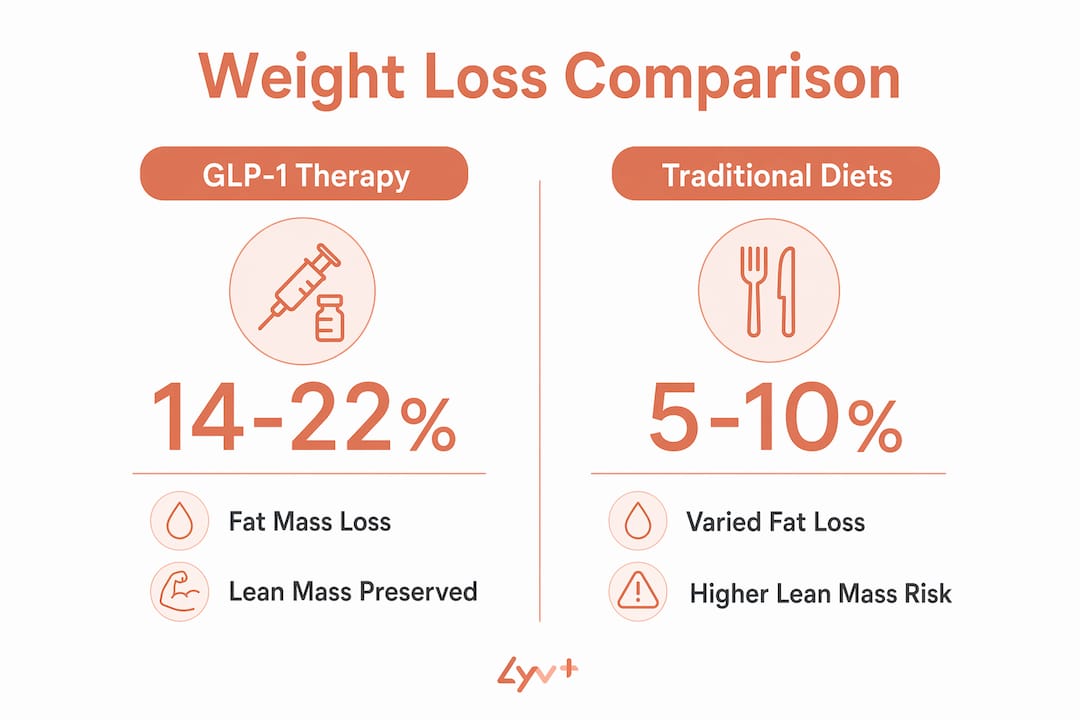
The numbers tell a compelling story. GLP-1 medications produce 14–22% weight loss in clinical trials. Traditional diet alone achieves 5–10%. That gap is significant, and it reflects the pharmacological power of appetite suppression at a neurological level.
The combination approach is even more striking. Semaglutide combined with a VLCD produces weight loss of 11–13% of baseline bodyweight, with greater fat mass reduction than medication alone. Semaglutide monotherapy achieves approximately 6% baseline bodyweight reduction. The difference matters because fat mass loss, not just total weight, is the marker that improves metabolic health.
Long-term maintenance is where both approaches struggle independently. Medication alone often results in weight regain after cessation. Traditional diets face the same problem through metabolic adaptation. The body defends its set point aggressively. This is precisely why the combination of medication and structured nutrition is now the medical consensus for patients with a BMI of 30 or above.
Nutrition on GLP-1 therapy is not the same as nutrition on a standard calorie-restricted diet. The rules shift because the medication changes how your body processes food and signals hunger.
The most critical priority is protein. GLP-1 friendly diets must prioritise protein and fibre to maintain muscle mass and energy during weight loss. Rapid weight loss from GLP-1 medications can cause muscle wasting if protein intake is insufficient. This is the physiological basis of what has been colloquially called "Ozempic face," where facial volume loss reflects broader lean tissue depletion. Aim for at least 1.2–1.6g of protein per kilogram of bodyweight daily.
GLP-1 medications also slow gastric emptying, which means food sits in your stomach longer. This reduces appetite effectively, but it also increases the risk of constipation and digestive discomfort. Hydration becomes more important, not less, even though the medication can blunt your thirst sensation.
Practical nutritional priorities for GLP-1 patients:
Traditional diets, by contrast, typically focus on calorie counting or macronutrient ratios. The risk there is different: nutrient deficits from overly restrictive eating, poor compliance over time, and the psychological burden of constant tracking.
Pro Tip: Structured nutrition plans that include meal replacements with essential amino acids can preserve muscle during pharmacotherapy, making them a smart addition to GLP-1 treatment.
Neither GLP-1 therapy nor traditional dieting is without its challenges. Knowing the limitations of each helps you plan more realistically.
GLP-1 medications carry well-documented side effects. Nausea, constipation, and fatigue are common, particularly in the early weeks of treatment. These typically reduce as your body adjusts to the medication. More seriously, stopping medication without building sustainable habits leads to weight regain. GLP-1 drugs chemically quiet appetite but do not teach the behavioural skills needed for long-term dietary success. The medication creates a window of opportunity. What you do with that window determines your long-term outcome.
Traditional diets face a different set of challenges:
"The GLP-1 'quiet period' should be used to establish lasting food literacy and habits, not treated as a permanent solution in itself." — Weight loss jabs versus low-carb diets
The most sustainable outcomes come from using GLP-1 therapy as a scaffold. You build the habits while the medication reduces the friction. Then, when you taper off, the habits carry you forward.
The current medical consensus is clear: medication plus structured lifestyle modifications is the recommended approach for most patients with a BMI of 30 or above. The two approaches are not competing. They are complementary.
GLP-1 therapy lowers the appetite friction that makes dietary adherence so difficult. When you are not fighting constant hunger, following a structured nutrition plan becomes genuinely manageable. That is the practical power of combining the two.
Here is how to integrate them effectively:
Integrating GLP-1 therapies with structured nutrition mitigates lean muscle loss and optimises long-term weight maintenance. This is not a shortcut. It is a medically supported strategy that gives you the best possible foundation for lasting change.
Pro Tip: Comparing specific GLP-1 medications matters too. Understanding the differences between Wegovy and Mounjaro helps you and your clinician choose the right option for your physiology and goals.
GLP-1 medications combined with structured dietary strategies produce superior and more sustainable weight loss than either approach alone.
Combination is superior
GLP-1 plus structured diet produces 11–22%+ weight loss versus 5–10% from diet alone.
Protein is non-negotiable
Aim for 1.2–1.6g of protein per kg of bodyweight to prevent muscle loss on GLP-1 therapy.
Medication is a tool, not a cure
Use the appetite-suppression window to build lasting dietary habits before tapering off.
Hydration and fibre matter
Slowed gastric emptying requires deliberate water intake and fibre management daily.
Clinician guidance is essential
A supervised plan protects muscle mass, manages side effects, and supports long-term results.
The framing of GLP-1 versus traditional diets as an either/or choice is the biggest misconception I see. These two approaches target different physiological systems. GLP-1 medications address the neurological and hormonal drivers of hunger. Diet addresses the nutritional environment your body operates in. Treating them as rivals misses the point entirely.
What I have observed is that people who use GLP-1 therapy without any dietary structure often lose weight quickly but struggle to maintain it. Conversely, people who rely solely on dietary restriction frequently hit a wall around months three to six, when metabolic adaptation and hunger hormones undermine their efforts. Neither group is failing through lack of effort. They are simply using incomplete tools.
The patients who achieve the most durable results are those who treat the medication as a period of reduced friction, not a permanent solution. They use that quieter appetite to learn what genuinely nourishing eating feels like, without the constant noise of cravings. That is a skill that stays with you long after the medication stops.
My view is this: if you are eligible for GLP-1 therapy, do not wait to sort out your diet first. Start both together, with clinical support. The medication makes the dietary work feel possible in a way that willpower alone rarely does.
— Lyv
If this article has helped you understand the difference between GLP-1 therapy and traditional dieting, the logical next step is getting a proper clinical assessment.
Lyvpharmacy offers clinician-led access to prescription GLP-1 treatments including Wegovy and Mounjaro, with fast online assessments, medical oversight, and discreet home delivery across the UK. Every patient receives personalised guidance, not a generic plan. You can explore the full range of weight loss treatments online or read more about GLP-1 medications in depth before you decide. Real results start with the right support.
Recommended