Registered Pharmacy100% OnlineNew here? Use code: WELCOME10 for 10% OFFFree Shipping Over £50Fully Inspected & Regulated ServicesApproved UK-licensed TreatmentsRegistered Pharmacy100% OnlineNew here? Use code: WELCOME10 for 10% OFFFree Shipping Over £50Fully Inspected & Regulated ServicesApproved UK-licensed Treatments
28 Aug 2026

9min read
Contents

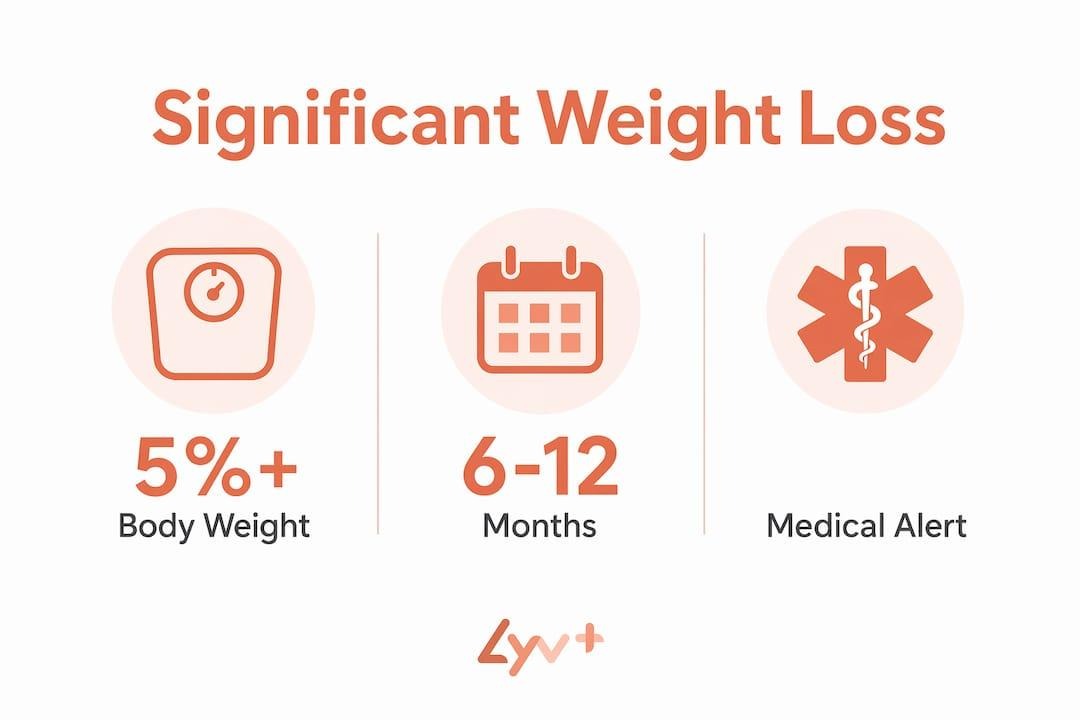
Significant weight loss is defined as losing more than 5% of your usual body weight within 6 to 12 months without trying. For a person weighing 11 stone (70 kg), that is roughly 3.5 kg. For someone at 14 stone (90 kg), it is closer to 4.5 kg. This threshold is the standard clinical benchmark used by the NHS and major medical bodies to distinguish normal weight fluctuation from a change that warrants investigation. Understanding what qualifies as significant weight loss is the first step in knowing whether your body is sending you a signal worth acting on.
Clinicians define significant unintentional weight loss using a percentage of body weight, not an absolute number. The 5% threshold over 6–12 months is the accepted starting point for investigation. This matters because a 5 kg loss means very different things for a person weighing 60 kg versus one weighing 120 kg.

Clinicians look for a persistent downward trend in weight rather than a single low reading. Daily weight fluctuates naturally due to hydration, illness, and stress. A single weigh-in tells you very little. What matters is a consistent pattern over weeks and months.
The 5% rule is a screening trigger, not a diagnosis. It flags that further investigation is needed. It does not, on its own, confirm any specific condition. Clinicians always consider the full clinical picture, including age, medical history, and any accompanying symptoms.
Pro Tip:Keep a simple weight log on your phone. Record your weight at the same time each morning, once a week. This gives your GP a clear trend to work with rather than a single number.
Unintentional weight loss has a wide range of underlying causes. The NHS notes that weight loss over 5% of body weight is associated with increased mortality risk and prompts investigation for serious conditions. The causes broadly fall into four categories.
Physical health conditions:
Mental health and psychological causes:
Medication and treatment effects:
Social and environmental factors:
The unintentional nature of the loss is the critical distinction. If you are not trying to lose weight and the scale is dropping, that warrants attention. You can read more about conditions affecting weight to understand how underlying health issues interact with body weight.
Not all significant weight loss carries the same level of urgency. Certain accompanying symptoms raise the clinical priority considerably. The NHS identifies night sweats, persistent fever, and unexplained pain as red flag symptoms that, when combined with significant weight loss, require rapid evaluation.
The following symptoms should prompt you to contact your GP promptly rather than waiting:
Beyond the symptom list, the type of tissue being lost matters. Loss of lean muscle mass is more clinically concerning than fat loss. Muscle loss is linked to worse health outcomes, reduced immune function, and slower recovery from illness. Yet standard scales cannot distinguish between the two. A GP may use additional assessments, such as blood tests or body composition analysis, to clarify what is actually being lost.
One important caveat: oedema can mask weight loss by retaining fluid. A person with heart failure or kidney disease may be losing lean mass while the scale stays flat or even rises. This is why clinical assessment goes beyond the number on the scale.
Pro Tip:If you notice any of the red flag symptoms above alongside unexplained weight loss, do not wait for your next routine appointment. Contact your GP within a few days. Early investigation almost always leads to better outcomes.
The answer is straightforward. See your GP if you have lost more than 5% of your usual body weight over 6 to 12 months without trying, particularly if you cannot explain the loss through a change in diet or activity. The unintentional nature of the loss is what makes it a medical concern rather than a lifestyle outcome.
Here is a practical guide to when and how to seek help:
Clinician-guided assessment is the most reliable path to understanding what is driving unexplained weight loss. Self-diagnosis based on symptoms alone is rarely accurate and can delay appropriate treatment.
Significant weight loss is more common in older adults. Involuntary weight loss affects up to 20% of elderly adults and up to 60% of nursing home residents. If you are supporting an older relative, monitoring their weight regularly is one of the most practical things you can do for their health.
Significant unintentional weight loss, defined as more than 5% of body weight over 6–12 months, is a medical alert that requires professional evaluation, not a wait-and-see response.
Point - Details
Clinical definition
Losing more than 5% of usual body weight over 6–12 months without trying meets the threshold.
Measurement approach
Track weekly trends over time rather than relying on a single weigh-in.
Common causes
Cancer, digestive disorders, hormonal conditions, depression, and medication side effects are all established causes.
Red flag symptoms
Night sweats, fever, unexplained pain, and appetite loss alongside weight loss require prompt GP review.
Muscle vs fat loss
Losing lean muscle mass carries greater health risk than fat loss and may not be visible on a standard scale.
Weight loss is one of those topics where the cultural narrative and the clinical reality pull in opposite directions. Most people associate losing weight with positive outcomes. The scale going down feels like progress. That assumption is understandable, but it is also where things can go wrong.
What I find most striking, having spent time working in this space, is how often people dismiss unexplained weight loss as a good thing. They attribute it to stress, a busy period, or eating less without really thinking about it. The 5% threshold exists precisely because the body does not shed weight without reason. Something is always driving it, whether that is a change in behaviour or a change in physiology.
The other thing worth saying plainly: seeking help for unexplained weight loss is not an overreaction. The diagnostic process is straightforward. A blood test panel covers most of the common causes. Getting checked is not catastrophising. It is sensible self-care.
Weight loss that is intentional, medically guided, and supported by clinical oversight is a different matter entirely. That kind of loss, achieved through evidence-based approaches, is genuinely positive. The distinction between the two is not always obvious from the outside. But it is the most important distinction in this whole conversation.
— Lyv
If your weight loss is intentional and you are looking for a medically supported path forward, Lyvpharmacy offers clinician-led access to prescription treatments including GLP-1 medications such as Wegovy and Mounjaro.
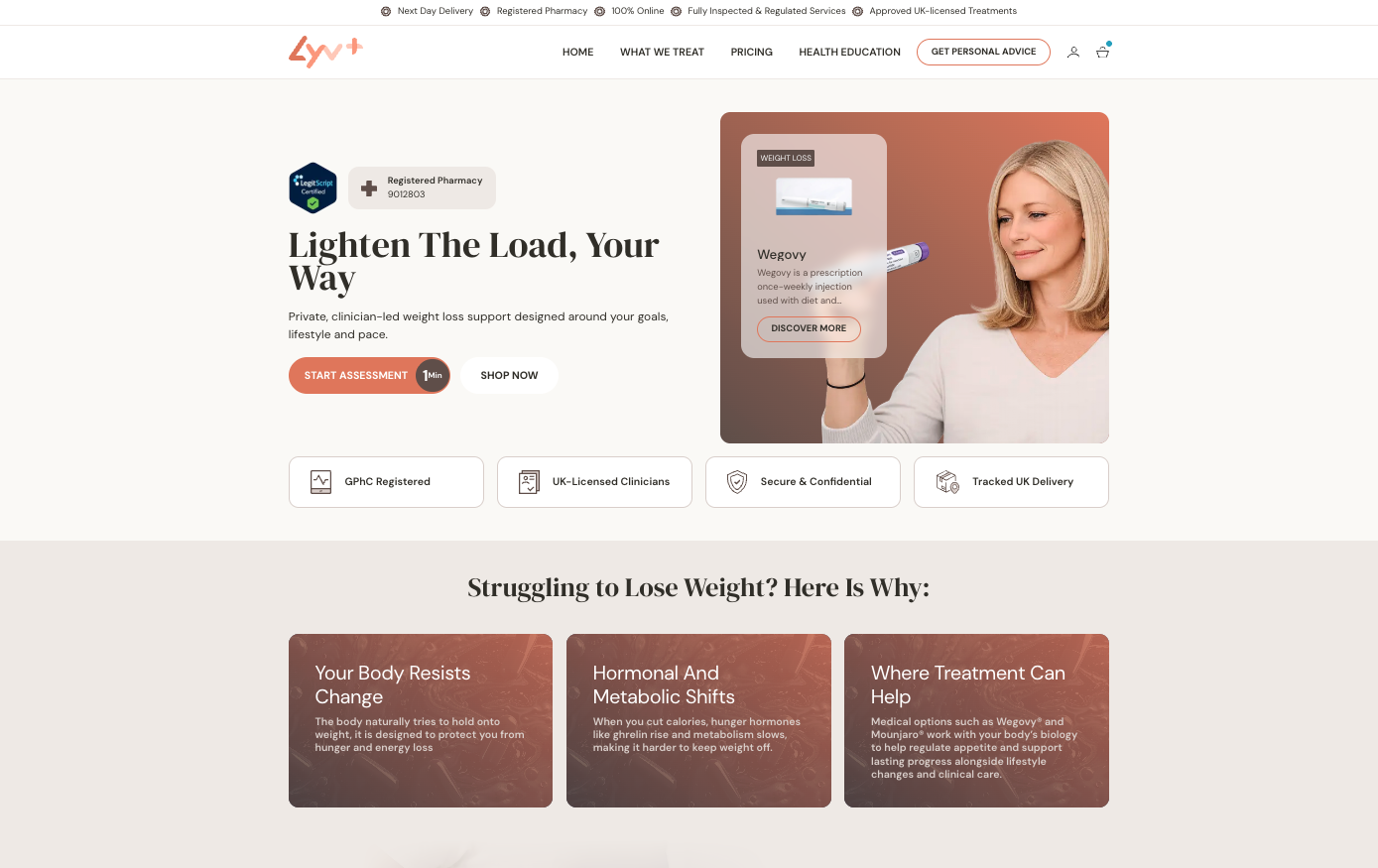
These treatments work by regulating appetite and supporting sustainable weight reduction under medical supervision. Lyvpharmacy combines online clinical assessments, rapid prescribing decisions, and discreet home delivery into one straightforward process. Every prescription is reviewed by a qualified clinician, so you are never managing your health without professional oversight. If you want to understand your options, the weight loss treatments page is the clearest place to start. You can also read more about how GLP-1 medications work before making any decisions.


.jpg)