Registered Pharmacy100% OnlineNew here? Use code: WELCOME10 for 10% OFFFree Shipping Over £50Fully Inspected & Regulated ServicesApproved UK-licensed TreatmentsRegistered Pharmacy100% OnlineNew here? Use code: WELCOME10 for 10% OFFFree Shipping Over £50Fully Inspected & Regulated ServicesApproved UK-licensed Treatments
23 Aug 2026

10min read
Contents

A weight management plan is a structured, personalised strategy that combines dietary changes, physical activity, and behavioural support to help you lose weight safely and keep it off long term. The clinical term used by bodies such as the NHS and the National Institute of Diabetes and Digestive and Kidney Diseases (NIDDK) is a "multi-component weight management programme." Understanding what is a weight management plan means recognising it is not a single diet or a quick fix. It is an ongoing, evidence-based approach built around your individual health needs, lifestyle, and goals. Done correctly, it produces gradual, sustainable results rather than the rapid losses that almost always reverse.
A weight management plan works because it addresses the three pillars that drive body weight: what you eat, how much you move, and how you think and behave around food. Remove any one pillar and the structure becomes unstable.
The dietary foundation of any weight control programme is a calorie deficit. A daily deficit of around 500 calories produces steady loss without triggering the muscle breakdown or metabolic slowdown that crash diets cause. Dietary variety matters as much as the deficit itself. Eliminating entire food groups increases the risk of nutritional deficiencies and makes long-term adherence far harder. A balanced plate, not a restricted one, is the goal.

The NIDDK recommends at least 150 minutes of moderate-intensity aerobic activity per week as part of an effective weight loss programme, rising to 300 or more minutes for long-term maintenance. Aerobic exercise burns calories during the session. Resistance training does something equally valuable: it preserves muscle mass during a calorie deficit, which counteracts the metabolic rate reduction that typically accompanies weight loss. Both forms of exercise belong in a complete plan.
Behaviour change is where most people underestimate the effort required. Effective multi-component programmes include at least 14 counselling sessions over 6 months. That frequency matters because it keeps accountability high and allows rapid adjustment when motivation dips. Support can come from a clinician, a registered dietitian, or a structured group setting.
The core components of an effective plan include:
Pro Tip: Set up your environment before you rely on willpower. Move calorie-dense snacks out of sight, keep fruit on the counter, and batch-cook meals on Sundays. Small environmental changes reduce the number of decisions you need to make each day.
Generic, one-size-fits-all diets fail most people because they ignore the individual factors that determine whether a plan is actually liveable. Personalised plans that account for preferences, cultural needs, and health conditions produce significantly better long-term adherence than standardised programmes. The reason is straightforward: a plan you can follow is infinitely more effective than a perfect plan you abandon after three weeks.
Personalisation means accounting for factors that generic programmes overlook entirely:
Plateaus are normal and predictable. As you lose weight, your body requires fewer calories to function, which means the same deficit that worked at the start produces less loss over time. A personalised plan evolves with you. It adjusts calorie targets, shifts exercise intensity, and revisits behavioural strategies when progress stalls. That ongoing evolution is what separates a genuine weight management strategy from a temporary diet.
Pro Tip: When you hit a plateau, resist the urge to slash calories further. Instead, review your activity levels first. Adding two short walks per day can reignite progress without making your eating plan feel more restrictive.
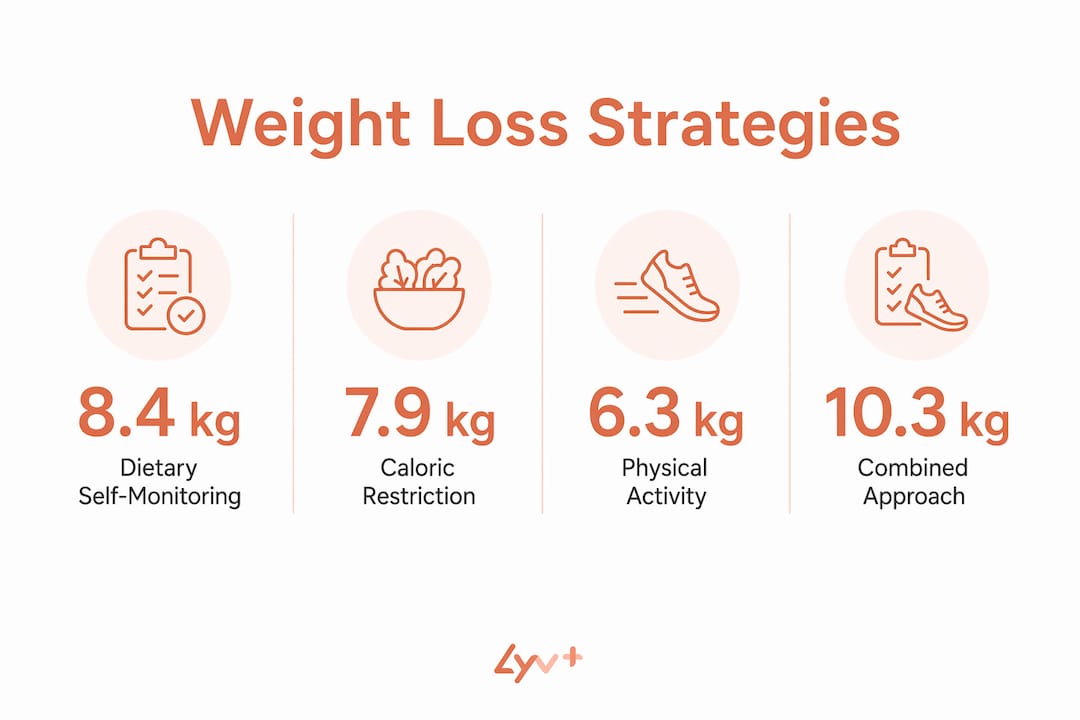
Dietary self-monitoring produces the strongest single-intervention result. That finding surprises many people, because tracking feels passive compared to exercise. The explanation is that most adults significantly underestimate how much they eat. Tracking closes that gap with precision. Structured caloric restriction delivers comparable results by creating the deficit directly. Physical activity alone produces more modest losses at 12 months, but its contribution to metabolic health, cardiovascular fitness, and long-term maintenance is substantial and should not be judged by weight loss figures alone.
The combined approach is the most effective weight loss strategy because the mechanisms stack. You eat less, burn more, and stay aware of both. A science-based weight loss plan integrates all three rather than asking you to choose between them.
Modest weight loss also delivers meaningful health benefits well before you reach your goal weight. Losing just 5–10% of total body weight produces measurable reductions in blood pressure and improvements in blood glucose control. That means the health gains begin early, which is a powerful motivator to keep going.
Knowing the components of a plan and actually living them are two different things. These steps translate the evidence into daily practice.
Pro Tip: Focus on metabolic health markers, not just the number on the scales. Blood pressure, resting heart rate, and energy levels often improve weeks before significant weight loss shows up. Tracking these keeps motivation high when the scales feel slow.
A weight management plan succeeds when it combines a calorie deficit, regular physical activity, behavioural support, and personalised adjustments that evolve with your progress over time.
Point - Details
Gradual loss is the target
Aim for 0.5–1 kg per week to preserve muscle and support long-term maintenance.
Three pillars work together
Diet, exercise, and behavioural support each contribute; removing one reduces overall effectiveness.
Self-monitoring drives results
Dietary tracking produces an average loss of 6.4 kg at 12 months, the strongest single-intervention outcome.
Personalisation reduces dropout
Plans tailored to health conditions, culture, and psychology achieve far better adherence than generic programmes.
Small losses matter clinically
Losing 5–10% of body weight improves blood pressure and glucose control before goal weight is reached.
Most people start a weight loss strategy by choosing a diet. They pick the one that sounds most appealing or that a friend recommended, and then they try to fit their life around it. That is the wrong order entirely.
The plan should fit your life, not the other way around. I have seen people follow technically perfect diets for six weeks and then abandon everything because the plan ignored their work schedule, their family meals, or their relationship with food. A plan that scores ten out of ten on paper but a three out of ten for livability will always lose to a plan that scores seven out of ten on both.
The other thing I would push back on is the obsession with speed. The desire to lose weight fast is completely understandable. But the evidence is clear: gradual, clinician-guided weight loss produces results that last, while rapid loss almost always reverses. The body is not a problem to be solved quickly. It is a system to be worked with, steadily and patiently.
Weight management is also not a solo endeavour. Support systems including clinicians, peer groups, and accountability partners reduce early dropout significantly. Asking for help is not a sign that your willpower is weak. It is a sign that you understand how behaviour change actually works.
Finally, move away from the all-or-nothing mindset. One difficult week does not erase three good ones. Setbacks are part of the process, not evidence that the process has failed. The people who succeed long term are not the ones who never slip. They are the ones who have a plan for what to do when they do.
— Lyv
If you have read this far, you already understand that effective weight management is more than willpower and a calorie app. It requires clinical knowledge, personalised guidance, and access to treatments that are proven to work.
Lyvpharmacy is a clinician-led online provider built for exactly this. From your first assessment through to ongoing prescriptions, every step is medically overseen. Treatments such as Wegovy and Mounjaro are GLP-1 medications that reduce appetite and support significant weight loss when used as part of a structured plan. You can explore clinically approved weight loss treatments and read about how GLP-1 medications work to understand whether they are right for your situation. Discreet delivery, rapid approvals, and real medical oversight: that is what Lyvpharmacy offers.
Recommended