Registered Pharmacy100% OnlineNew here? Use code: WELCOME10 for 10% OFFFree Shipping Over £50Fully Inspected & Regulated ServicesApproved UK-licensed TreatmentsRegistered Pharmacy100% OnlineNew here? Use code: WELCOME10 for 10% OFFFree Shipping Over £50Fully Inspected & Regulated ServicesApproved UK-licensed Treatments
21 Aug 2026

9min read
Contents

A weight loss journey is the deliberate, ongoing process of reducing excess body weight through balanced nutrition, physical activity, and emotional resilience, with the goal of lasting health improvement. Clinicians refer to this more formally as weight management, a term that captures the long-term nature of the process rather than a single diet or short-term fix. Understanding what a weight loss journey truly involves, including its physical demands, emotional challenges, and realistic timelines, is what separates people who sustain results from those who cycle through repeated attempts. This guide covers the full picture, from the first steps to the habits that keep progress going.
A weight loss journey is not a single event. It is a structured, ongoing commitment to changing the habits that affect your body weight, your energy, and your overall health. The CDC and Harvard Health both frame sustainable weight loss as a gradual process, not a rapid transformation.
The safe rate of weight loss is 0.5 to 1 kilogram per week, achieved by maintaining a daily calorie deficit of 500 to 750 calories. That pace matters because it preserves muscle mass and makes the changes far easier to sustain over months and years.
The process involves three core components. First, nutrition: understanding what you eat, how much, and why. Second, physical activity: building movement into your daily life in a way that fits your ability and schedule. Third, emotional support: managing the mindset shifts, setbacks, and motivation dips that every person faces. The biology and willpower behind weight management are more intertwined than most people realise, which is why addressing only the physical side rarely produces lasting results.

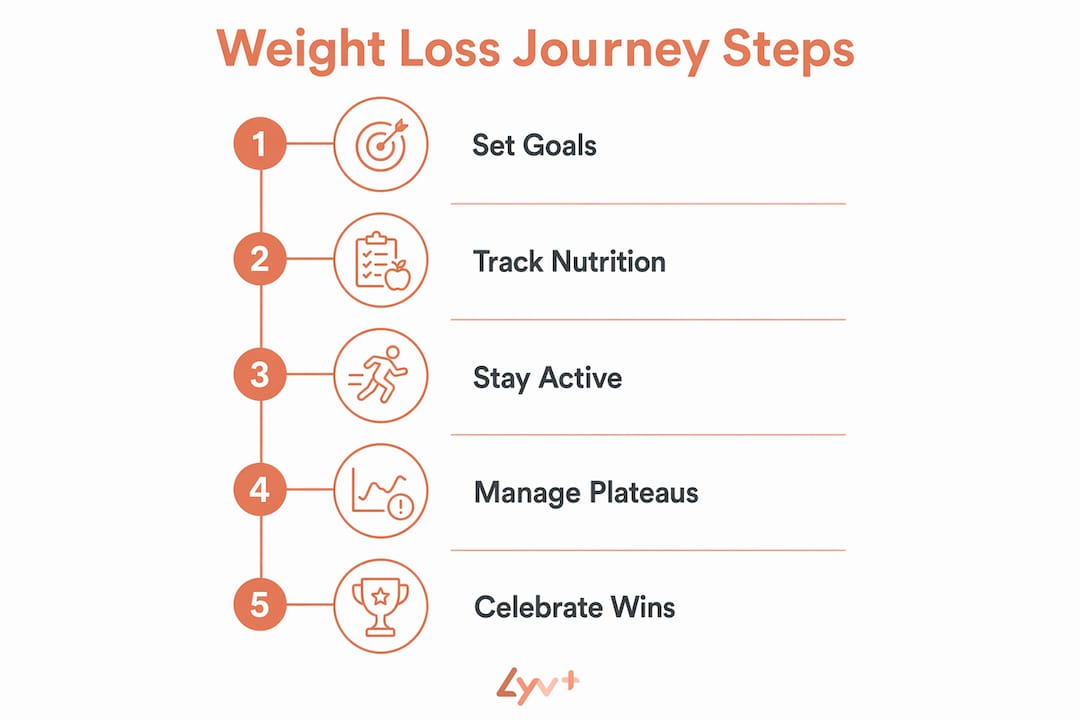
A structured approach produces far better outcomes than starting without a plan. The steps below reflect evidence-based guidance from the NIDDK and Cleveland Clinic.
Pro Tip: Set a monthly review date in your calendar. Reviewing your progress on a fixed schedule stops you from making reactive changes based on a single bad week.
The emotional side of weight loss is where most people struggle most. Frustration, self-doubt, and the urge to quit are not signs of weakness. They are predictable responses to a process that takes months, not weeks.
Plateaus feel discouraging, but they are a normal part of the process. Progress is rarely steady, and a week without movement on the scale does not mean the process has stopped working. Recognising this early prevents the kind of all-or-nothing thinking that leads people to abandon their plans entirely.
Labelling foods as "off-limits" creates a cycle of guilt that undermines consistency. Restrictive food labels increase the risk of setbacks, whereas a flexible approach to eating supports long-term adherence. Allowing yourself to enjoy food without guilt is not a weakness. It is a strategy.
Non-scale victories are real markers of progress. The Cleveland Clinic identifies better sleep and increased energy as vital success indicators beyond weight alone. If you are sleeping better, moving more freely, or feeling less breathless on the stairs, that counts. Focusing on these wins prevents discouragement during slower phases.
Pro Tip: Keep a weekly note of one non-scale win. It could be walking further, sleeping better, or simply feeling less tired. These notes become your evidence that the process is working.
Plateaus are the most common obstacle people face, and they have a clear biological explanation. As you lose weight, your resting metabolic rate decreases, meaning your body burns fewer calories at rest. What worked in month one may not be enough by month four.
Weight loss plateaus are expected biological responses, not personal failures. The professional advice from Cleveland Clinic is to recalculate your calorie needs based on your new weight and increase your physical activity. A small adjustment, such as adding a 20-minute walk three times a week, can be enough to restart progress.
Setbacks are equally predictable. Missing a week of exercise or overeating at a social event does not erase progress. Long-term weight management is a chronic condition requiring consistent habits, not a perfect record. The goal is to return to your plan quickly, not to punish yourself for the lapse.
Setting flexible goals also helps. Rigid targets create pressure that makes setbacks feel catastrophic. A goal framed as "I will be more active this week" is more resilient than "I will exercise every day without fail."
Sustainable weight loss depends on habits you can maintain for years, not weeks. The science-backed approach to maintenance requires mindfulness, support, and an expectation that lapses will happen. Building habits that accommodate real life is what makes the difference.
The habits that stick are the ones that fit your life. Perfection is not the target. Consistency is.
A weight loss journey succeeds when it combines realistic goals, consistent habits, and the resilience to manage setbacks without abandoning the plan.
Point - Details
Safe rate of loss
Aim for 0.5–1 kg per week via a 500–750 calorie daily deficit.
Realistic first goal
Target 5–10% of starting body weight over six months for measurable health gains.
Activity baseline
150 minutes of moderate aerobic exercise plus two strength sessions per week.
Plateaus are biological
Recalculate calorie needs and increase activity when progress stalls.
Non-scale victories count
Better sleep, energy, and mood are valid markers of progress.
The biggest misconception I see is that a weight loss journey has a finish line. People reach their target weight and stop doing the things that got them there. The weight returns, and they blame themselves rather than the plan.
Weight management is genuinely a long-term condition. The NIDDK is clear on this: sustainable success depends on realistic lifestyle changes, not quick fixes. That is not a discouraging message. It is a liberating one. It means you do not need to be perfect. You need to be consistent.
The people who do best are not the ones who follow the strictest plan. They are the ones who build flexibility into their approach, celebrate small wins, and seek support when they hit a wall. Patience is not passive. It is the active choice to keep going when the results are not yet visible.
If you are at the start of this process, the most useful thing you can do is lower your expectations for speed and raise them for sustainability. The scale will move. It just needs time and a plan that fits your life.
— Lyv
Lifestyle changes form the foundation of any weight loss plan, but some people need additional support to see meaningful results. Lyvpharmacy provides clinician-led access to prescription GLP-1 treatments, including Wegovy and Mounjaro, for adults in the UK who meet the clinical criteria. These medications work by reducing appetite and supporting significant weight reduction when combined with dietary and lifestyle changes. Every patient goes through a clinical assessment before any prescription is issued. If you want to understand whether medical treatment could support your plan, the weight loss treatments page at Lyvpharmacy is a clear starting point. You can also read more about GLP-1 medications and how they work before making any decisions.
Recommended



.jpg)
.png)