Registered Pharmacy100% OnlineNew here? Use code: WELCOME10 for 10% OFFFree Shipping Over £50Fully Inspected & Regulated ServicesApproved UK-licensed TreatmentsRegistered Pharmacy100% OnlineNew here? Use code: WELCOME10 for 10% OFFFree Shipping Over £50Fully Inspected & Regulated ServicesApproved UK-licensed Treatments
16 Aug 2026

8min read
Contents

Weight loss trends in 2026 are defined by one clear shift: the focus has moved from rapid results to long-term, sustainable management. This is not a minor adjustment in thinking. It represents a fundamental change in how clinicians, researchers, and patients approach obesity as a chronic condition rather than a cosmetic problem. Global obesity medicine sales are forecast to reach $92 billion in 2026, with market growth now driven by comorbidity benefits and differentiated patient profiles rather than headline weight loss numbers. Three forces are shaping this moment: new oral pharmacotherapies, procedural maintenance strategies, and a measurable shift in consumer behaviour towards metabolic health.
The most significant 2026 weight loss prediction is the arrival of oral GLP-1 receptor agonists as a credible alternative to injections. Until recently, GLP-1 therapies like semaglutide (Wegovy) and tirzepatide (Mounjaro) required weekly injections, which created a real barrier for many people. That barrier is now being dismantled.

Aleniglipron, an oral small-molecule GLP-1 receptor agonist, demonstrated mean weight loss of 16.2% at week 56 in the Phase 2b ACCESS trial, with no plateau observed through the open-label extension. That result matters because it shows oral delivery can match injectable efficacy over a sustained period, not just in the short term. For people who have avoided injections due to anxiety or inconvenience, this changes the calculation entirely.
Beyond aleniglipron, the pipeline includes:
The obesity treatment market is moving away from a one-size-fits-all model. Segmentation by BMI, comorbidities, and patient preferences is now central to prescribing decisions. This means the best weight loss strategies in 2026 are increasingly personalised, not generic.
One area gaining serious clinical attention is muscle and bone preservation during weight loss. Earlier GLP-1 trials showed that a significant proportion of weight lost was lean mass, not just fat. Newer agents and dosing protocols are being designed with this in mind, prioritising the quality of weight loss alongside the quantity.
Pro Tip: If you are considering a GLP-1 therapy, ask your prescriber specifically about lean mass preservation. Resistance training alongside medication significantly reduces muscle loss and supports better long-term outcomes.
One of the most pressing challenges in obesity medicine is what happens when someone stops their medication. Weight regain after stopping drugs like semaglutide and tirzepatide is well-documented and can occur within months. This is not a willpower issue. It reflects the biological reality that GLP-1 therapies suppress appetite hormonally, and when the drug is removed, those signals return.
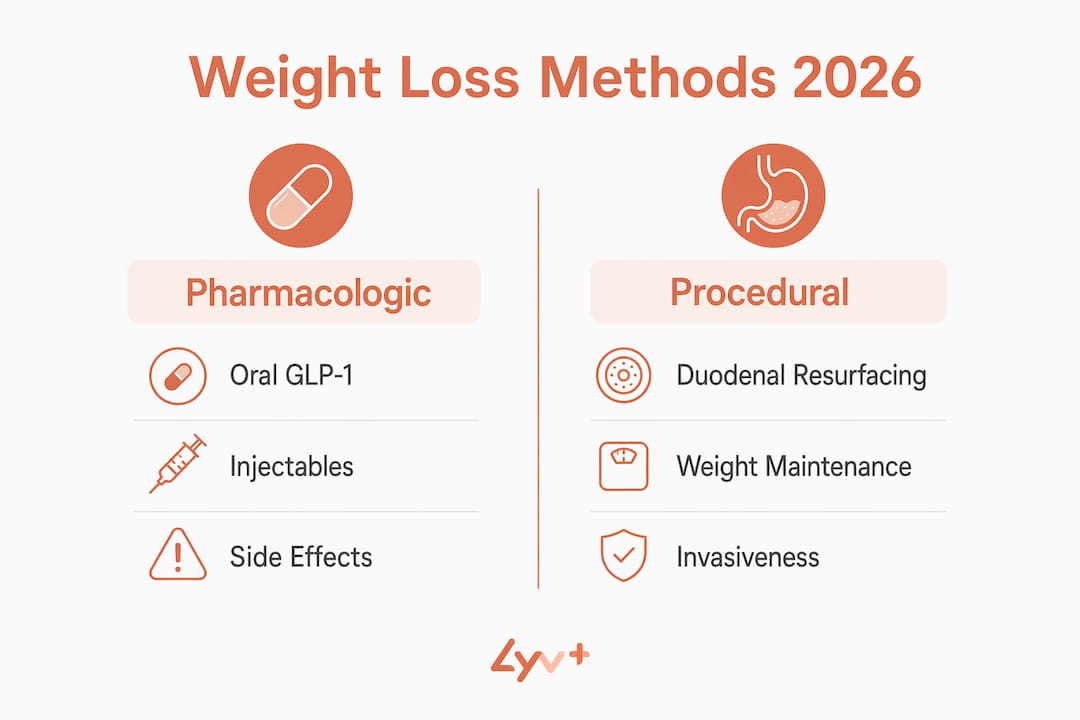
The REMAIN-1 trial findings show that resetting the biology of the duodenal lining, the first section of the small intestine, can help sustain the metabolic improvements gained during pharmacotherapy. This is not a replacement for medication. It is a bridge that may allow some patients to reduce or stop their GLP-1 treatment without the typical rebound.
Pro Tip: DMR is not yet widely available and is best suited to patients who have achieved meaningful weight loss on GLP-1 therapy and want a structured exit plan. It works best when combined with ongoing dietary support and behavioural coaching.
The pharmacology is advancing fast, but the behavioural picture is equally telling. A Morningstar survey found that over 82% of adults changed their eating habits as part of their weight management approach, and more than 72% of GLP-1 users intended to continue treatment long-term. The goal is no longer fitting into a smaller size. It is managing blood sugar, reducing cardiovascular risk, and feeling well day to day.
This shift in motivation is changing how people approach their diets. The emerging diet trends of 2026 are less about restriction and more about what researchers call "low-lift nutrition", dietary changes that are easy to maintain without constant effort or planning. Key patterns include:
The integration of lifestyle changes with pharmacologic treatment is now considered central to long-term success, not optional. Medication can reduce appetite and improve metabolic markers, but it works best when paired with consistent dietary habits and physical activity. You can read more about practical approaches in this weight management overview from Lyvpharmacy.
The psychological dimension is also receiving more attention. Cognitive behavioural approaches, motivational interviewing, and structured support programmes are being integrated into clinical weight management pathways, recognising that behaviour change is not simply a matter of information.
Understanding the difference between available methods helps you set realistic expectations. The obesity treatment landscape in 2026 is genuinely diverse, and the right approach depends on your starting point, health profile, and how you define success.
Method - Mechanism - Primary goal - Key benefit - Main challenge
The differentiation between methods by mechanism matters because it shapes what you can realistically expect. A GLP-1 therapy works while you take it. A procedural intervention like DMR resets physiology. Lifestyle change builds the foundation that supports everything else. The best outcomes in 2026 come from combining approaches rather than treating them as competing options.
For those exploring GLP-1 medications for the first time, understanding how these treatments work within a broader plan is the most important starting point. Clinician-guided care, where a qualified prescriber reviews your health profile and monitors your progress, remains the gold standard for safe and effective weight management.
The most effective weight loss strategies in 2026 combine pharmacological treatment, procedural maintenance where appropriate, and sustained behavioural change within a clinician-guided framework.
Point - Details
Oral GLP-1 therapies are arriving
Aleniglipron achieved 16.2% weight loss at 56 weeks, offering a needle-free alternative with strong efficacy.
Rebound risk is real and manageable
Stopping GLP-1 medication without a plan leads to significant regain; procedural options like DMR can help.
Metabolic health drives motivation
Over 82% of adults now prioritise health outcomes over appearance, reshaping how diets and goals are framed.
Personalisation is the new standard
Treatment selection in 2026 is segmented by BMI, comorbidities, and patient preference, not one-size-fits-all.
Lifestyle change remains non-negotiable
Medication and procedures work best when supported by consistent dietary habits and behavioural strategies.
The pace of change in weight loss medicine right now is genuinely exciting, but I want to be honest with you about something. The headlines about new oral GLP-1 drugs and procedural off-ramps can make it sound like the hard work is being done for you. It is not.
What I have seen, working in this space, is that the people who do best are those who treat medication as a tool rather than a solution. Aleniglipron and tirzepatide are remarkable. The REMAIN-1 data on duodenal mucosal resurfacing is some of the most promising maintenance research in years. But neither of those things replaces the need to build habits that outlast any treatment course.
The rebound data is the part I think deserves more honest conversation. Stopping a GLP-1 therapy without a structured plan is not a neutral act. Biology pushes back, and it pushes back hard. The shift towards maintenance-focused thinking in 2026 is the right one, but it requires patients and clinicians to have that conversation early, not after the weight has returned.
My honest view is this: the best outcomes come from people who go in with realistic expectations, stay engaged with their prescriber, and treat dietary and behavioural change as permanent rather than temporary. The new therapies make that process more achievable. They do not make it effortless.
— Lyv
If you are researching weight loss innovations in 2026 and wondering where to begin, the most important step is getting the right clinical oversight from the start. Lyvpharmacy offers direct access to prescription weight loss treatments including GLP-1 therapies, with fast clinical assessments, regulated prescribing, and discreet home delivery across the UK.
You do not need to navigate this alone or wait months for an NHS referral. Lyvpharmacy's clinician-led process means you get a proper health review, a treatment plan that fits your profile, and ongoing support as you progress. If you want to understand what clinician-guided weight loss actually looks like in practice, that is a good place to start.
Recommended