Registered Pharmacy100% OnlineNew here? Use code: WELCOME10 for 10% OFFFree Shipping Over £50Fully Inspected & Regulated ServicesApproved UK-licensed TreatmentsRegistered Pharmacy100% OnlineNew here? Use code: WELCOME10 for 10% OFFFree Shipping Over £50Fully Inspected & Regulated ServicesApproved UK-licensed Treatments
17 Sep 2026

8min read
Contents

Clinical assessments are defined as structured, multidisciplinary evaluations that establish whether a weight loss treatment is safe, suitable, and appropriately matched to your individual health profile. They are not a formality. They are the foundation on which every effective weight management plan is built. Without a thorough assessment, treatments risk being applied to the wrong person, at the wrong dose, for the wrong reasons. Understanding the role of clinical assessments in weight loss means understanding why personalised care consistently outperforms generic programmes, and why the NHS and NICE both place assessment at the centre of their weight management frameworks.
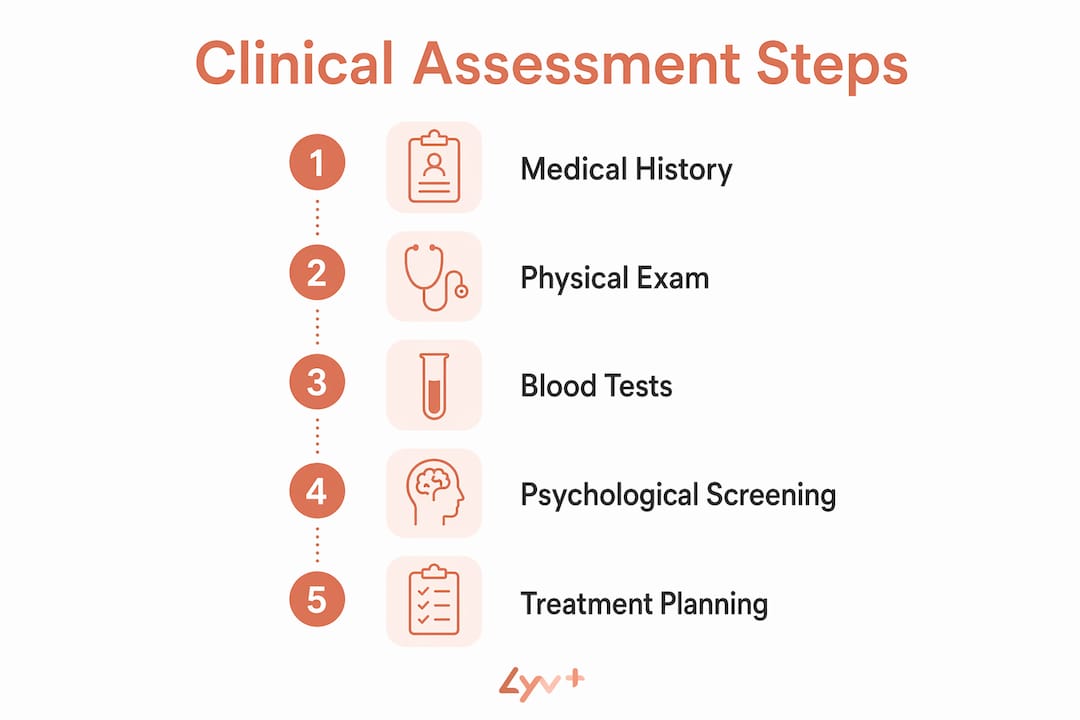
A clinical weight loss assessment covers far more than stepping on a scale. Initial consultations typically last 30–60 minutes and gather a detailed picture of your physical and psychological health. That time matters because shortcuts at this stage lead to poor treatment choices later.
The core components of a weight loss assessment include:
Each of these data points serves a specific purpose. HbA1c results, for example, directly influence whether a GLP-1 medication such as Wegovy or Mounjaro is clinically appropriate. A lipid panel flags cardiovascular risk that might change the treatment priority entirely.
Pro Tip: Ask your clinician to explain what each blood test result means for your specific treatment plan. Understanding your own numbers builds confidence and improves adherence.

The patient's own story is also a formal part of the assessment. Five to seven minutes should be reserved specifically for listening to the patient's narrative. Structured questionnaires miss the nuance that a conversation surfaces, including previous weight loss attempts, emotional triggers, and life circumstances that shape behaviour.
Safe weight management relies on a structured process, not individual clinical intuition alone. A six-stage consultation framework is widely used in UK weight management practice to ensure nothing critical is missed.
The six stages are:
This framework improves clinical confidence and patient engagement simultaneously. It also creates a clear audit trail, which matters for regulatory compliance.
Documentation of clinical reasoning and consent is not optional. Proper records demonstrate how risks were considered and decisions made, protecting both patients and practitioners. Safe assessment practice is a professional and ethical responsibility, not an administrative task.
Clinical assessments are interpretive processes, not tick-box exercises. A clinician must weigh conflicting information, such as a patient reporting good dietary habits alongside rising HbA1c levels, and make a reasoned judgement. That interpretive skill is what separates a meaningful assessment from a superficial one. Ongoing reassessments are equally important. Weight management is not a single event. Monitoring how your body responds to treatment, adjusting doses, and reviewing bloodwork at intervals are all part of what makes a clinical pathway effective over time.
Access to clinical weight loss assessments in the UK is not consistent. Regional variation in the commissioning and delivery of NHS specialist weight management services is well documented, despite alignment with NICE guidance. The gap between policy and practice creates real barriers for patients who need support.
Key challenges include:
Challenge - Impact on patients
Regional commissioning gaps
Unequal access to Tier 3 services across the UK
Resource constraints
Shorter consultations, reduced assessment depth
Communication failures
Incomplete clinical picture at point of treatment
Clinician training gaps
Inconsistent prescribing and monitoring of new medications
These disparities mean that where you live significantly affects the quality of assessment you receive. That is a systemic problem, and it is one reason why clinician-led online providers have grown in relevance for patients who cannot access timely NHS pathways. You can read more about what clinician-guided care actually involves to understand what good looks like.
A thorough assessment does not just identify risk. It actively shapes the treatment you receive. Weight management success depends on integrating clinical findings with tailored behavioural, dietary, and pharmacological interventions. One plan does not fit all, and the assessment is what makes personalisation possible.
Your assessment findings influence treatment in specific ways:
Shared decision-making is central to this process. When you understand why a specific treatment has been recommended based on your results, you are far more likely to follow through. That understanding comes directly from a well-conducted assessment.
Pro Tip: Before your consultation, write down your three most recent weight loss attempts, what you tried, and why it stopped working. This gives your clinician the context they need to avoid repeating the same approach.
Patient-centred assessment that prioritises listening also surfaces psychological factors critical to long-term success. Emotional eating, stress-related weight gain, and low self-efficacy are not visible in bloodwork. They emerge in conversation. A clinician who listens well builds the trust that makes patients honest, and honest patients get better care. You can explore how science-based weight loss plans use these principles to support sustainable results.
Clinical assessments are the single most important step in any weight loss programme because they determine whether treatment is safe, appropriate, and genuinely personalised to you.
Point - Details
Assessments cover more than weight
Blood tests, psychological screening, and medical history all shape treatment decisions.
A six-stage framework guides safe practice
Patient story, clinical history, measurement, education, consent, and follow-up are all required.
UK access is unequal
Regional NHS commissioning gaps mean assessment quality varies significantly by location.
Personalisation depends on assessment depth
Findings like HbA1c and eating history directly determine which interventions are appropriate.
Documentation protects you
Recorded clinical reasoning and consent create accountability and support ongoing care.
People focus on the medication or the diet plan. They rarely ask about the quality of the assessment that preceded it. In my view, that is where most weight loss programmes quietly fail.
The most common pitfall I see is the assessment that looks thorough on paper but skips the patient's story. A clinician who spends 45 minutes on bloodwork and five minutes listening has the data but not the context. Inadequate clinical assessment is a leading cause of treatment failure and adverse events in weight management. That is not a minor concern. It is the reason regulatory bodies place such emphasis on thorough evaluations.
What I have also observed is that patients who receive a genuinely thorough assessment feel different about their treatment. They feel seen, not processed. That shift in experience translates directly into better adherence and more honest reporting at follow-up appointments. You are not a case file. A good assessment treats you like a person with a specific history, not a set of metrics to be categorised.
The evolution of pharmacotherapy, particularly GLP-1 medications, makes this even more pressing. These are powerful treatments with real contraindications. Prescribing them without a rigorous assessment is not just poor practice. It is dangerous. As guidelines continue to evolve, the clinicians who invest in structured assessment training will be the ones delivering the best outcomes.
— Lyv
Lyvpharmacy was built on the principle that access to proper clinical oversight should not depend on where you live or how long you can wait.
Every patient who comes to Lyvpharmacy goes through a clinician-led assessment before any treatment is recommended. That means your health history, current medications, and individual risk profile are reviewed before a prescription is issued. Treatments like Wegovy and Mounjaro are only appropriate for the right patients, and the assessment is how we determine that. If you are ready to take a medically supported path forward, explore Lyvpharmacy's weight loss treatments and see what a properly assessed, clinician-guided plan looks like in practice.
Recommended



.jpg)