Registered Pharmacy100% OnlineNew here? Use code: WELCOME10 for 10% OFFFree Shipping Over £50Fully Inspected & Regulated ServicesApproved UK-licensed TreatmentsRegistered Pharmacy100% OnlineNew here? Use code: WELCOME10 for 10% OFFFree Shipping Over £50Fully Inspected & Regulated ServicesApproved UK-licensed Treatments
16 Sep 2026

9min read
Contents

Safe use of GLP-1 injections means following your prescribed dose, staying under medical supervision, knowing the warning signs, and integrating treatment with real lifestyle changes. These are not over-the-counter supplements. They are prescription medicines with a strong evidence base and a clear set of protocols that exist for good reason.
The key principles are straightforward:
Pro Tip: Keep a brief symptom diary during the first few weeks of treatment. Noting when nausea or discomfort occurs relative to your injection day helps your clinician adjust your dose or timing far more precisely than memory alone.
GLP-1 receptor agonists mimic glucagon-like peptide-1, a hormone your gut releases naturally after eating. By activating GLP-1 receptors, these medicines trigger a cascade of effects: insulin secretion rises, glucagon secretion falls, gastric emptying slows, and you feel full sooner and for longer. The result is reduced calorie intake and, in people with type 2 diabetes, improved blood sugar control.
Licensed UK GLP-1 medicines currently include:
The same mechanism that makes these medicines effective also explains why the administration rules matter. Delayed gastric emptying, for instance, is beneficial for appetite control but creates a genuine anaesthesia risk if you need surgery. Understanding how the drug works helps you follow the safety guidance with real conviction rather than just compliance.

GLP-1 receptor agonists are prescription-only medicines licensed for specific groups. For weight management, the MHRA-approved criteria are a BMI of 30 kg/m² or above, or a BMI of 27 kg/m² or above alongside a weight-related condition such as cardiovascular disease or type 2 diabetes. For diabetes management, eligibility depends on your treatment pathway and other medications.
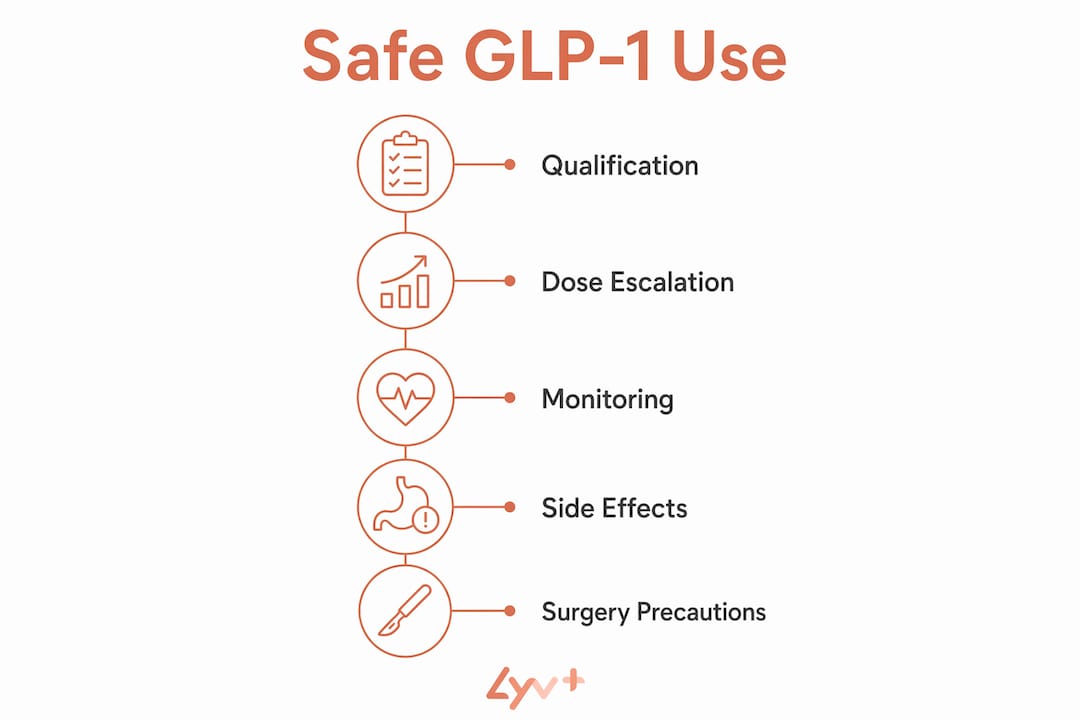
Dose escalation is built into every GLP-1 protocol deliberately. Starting low and titrating upward over several weeks gives your body time to adapt, which is the primary way gastrointestinal side effects are kept manageable. NICE guidelines recommend stepwise titration with monitoring of metabolic responses throughout.
A few additional points worth knowing before you start:
Most people experience some gastrointestinal symptoms, particularly in the early weeks. The MHRA confirms that nausea, vomiting, and diarrhoea affect more than 1 in 10 patients and are the most common reasons for hospitalisation when left unmanaged. They are usually transient and most pronounced after a dose increase.
Common side effects:
Staying well hydrated is one of the most practical things you can do. Dehydration from vomiting or diarrhoea can escalate quickly and is a leading cause of GLP-1-related hospital admissions.
Serious but less common risks:
Pancreatitis: what the data shows. Between 2007 and 2025, the MHRA received 1,296 Yellow Card reports of pancreatitis associated with GLP-1 receptor agonists, including 19 fatal and 24 necrotising cases. The overall frequency remains uncommon, but the severity of some cases is why the MHRA strengthened product warnings in early 2026.
One concern you may have read about is psychiatric effects. A thorough MHRA safety review found no causal link between GLP-1 use and depression or suicidal ideation. Monitoring is still recommended for any patient with a relevant mental health history, but the evidence does not support the concern as a class-wide risk.
The MHRA has issued several specific safety updates for GLP-1 users in the UK, and being aware of them is part of responsible treatment.

Before any surgical procedure or sedation:
GLP-1 medicines slow gastric emptying, which means food and liquid can remain in your stomach longer than normal. Standard pre-operative fasting guidelines may not be sufficient to prevent pulmonary aspiration during general anaesthesia. The MHRA update on aspiration risk makes clear that anaesthetists need to know you are on a GLP-1 medicine so they can carry out an individual risk assessment. If your GLP-1 was obtained privately, it may not appear in your NHS records, so you must disclose it yourself.
Pro Tip: If you are scheduled for surgery, tell your surgical team about your GLP-1 medicine at the earliest opportunity, ideally at your pre-operative assessment. Your anaesthetist may recommend pausing the injection for a period beforehand.
Ongoing monitoring while on treatment:
Storage, handling, and disposal:
Reporting side effects:
The MHRA's Yellow Card scheme is the UK's system for reporting suspected adverse reactions. Reporting helps build the national safety database and can trigger regulatory reviews that protect future patients. You can report via the Yellow Card website or app, and your prescriber can do so on your behalf.
Drug interactions to discuss with your prescriber:
Accessing GLP-1 treatment safely starts with a proper clinical assessment, and that is exactly where Lyvpharmacy begins. Every patient goes through a clinician-led review before any prescription is issued. There are no shortcuts in that process.
Here is what the Lyvpharmacy model looks like in practice:
The Wegovy vs Mounjaro comparison on the Lyvpharmacy site is a useful starting point if you are weighing up which medicine might suit your situation. Both are available through the platform, and a clinician will help you decide based on your health profile rather than preference alone.
If you have been researching GLP-1 injections and want access that is fast, regulated, and backed by real clinical oversight, Lyvpharmacy offers a direct route. The difference here is not just convenience. It is the combination of a proper medical assessment, a registered prescriber, and a GPhC-registered pharmacy, all in one place.
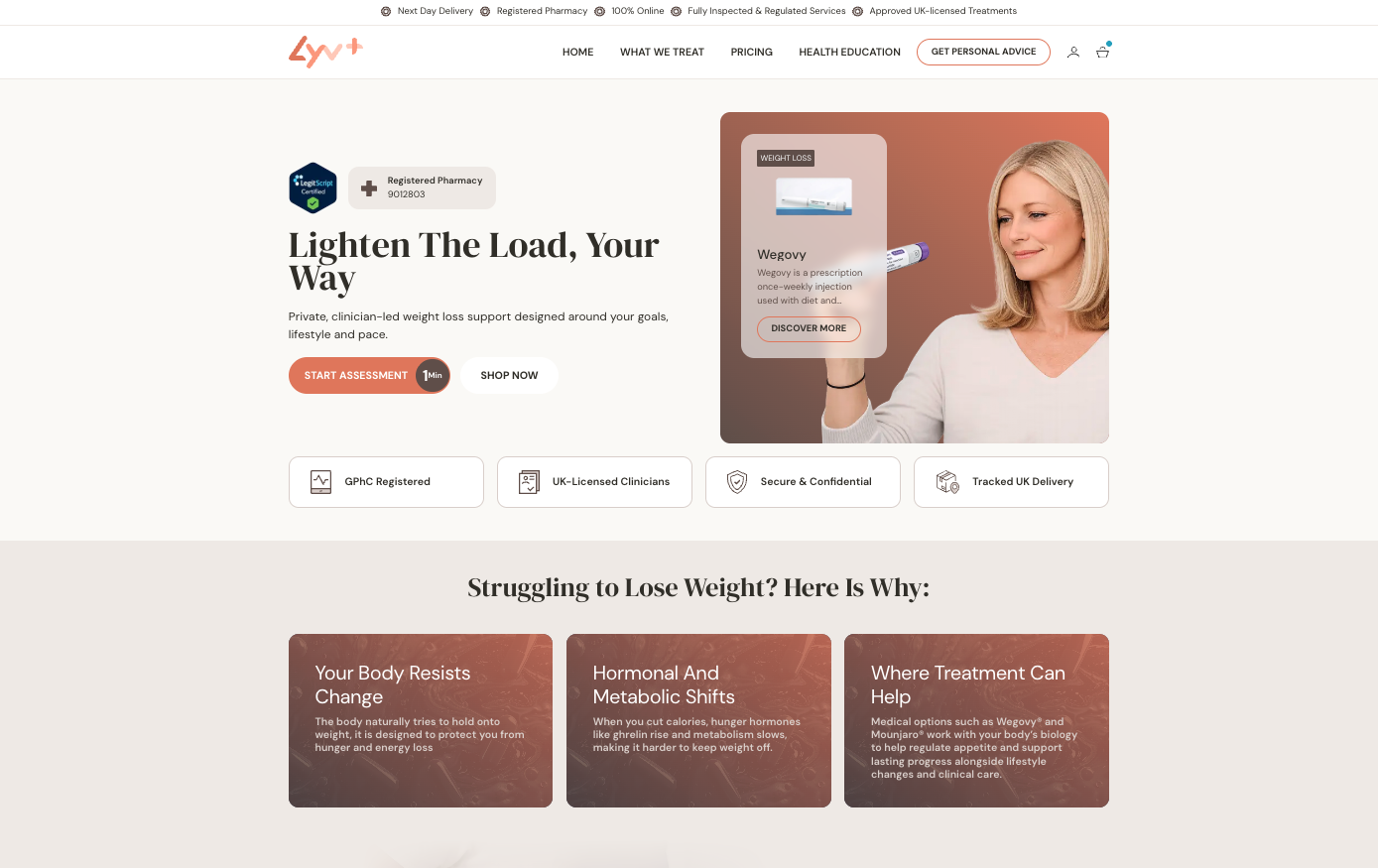
You will not be handed a prescription and left to figure out the rest. Lyvpharmacy's clinical team supports you from your first assessment through to ongoing treatment, with clear guidance on dosing, side effect management, and when to seek further help. Both Wegovy and Mounjaro are available, and the process is designed to get you started without unnecessary delays. Visit the weight loss treatments page to see your options and begin your clinical assessment today.
Safe GLP-1 injection use requires medical supervision, proper technique, dose titration, and awareness of serious risks including pancreatitis, with all UK patients advised to follow MHRA guidance throughout treatment.
Point - Details
Medical supervision is non-negotiable
GLP-1 medicines are prescription-only; a registered clinician must assess eligibility before treatment starts.
Dose escalation protects you
Titrating slowly over weeks reduces gastrointestinal side effects and is a built-in safety feature, not optional.
Pancreatitis is rare but serious
The MHRA received 1,296 Yellow Card pancreatitis reports from 2007–2025, including 19 fatal and 24 necrotising cases; persistent abdominal pain needs urgent attention.
Disclose GLP-1 use before surgery
Delayed gastric emptying increases aspiration risk under anaesthesia; always inform your surgical team, especially for privately obtained prescriptions.
Lyvpharmacy offers regulated access
Clinician-led assessments, GPhC-registered dispensing, and ongoing support make Lyvpharmacy a safe route to Wegovy or Mounjaro in the UK.