Registered Pharmacy100% OnlineNew here? Use code: WELCOME10 for 10% OFFFree Shipping Over £50Fully Inspected & Regulated ServicesApproved UK-licensed TreatmentsRegistered Pharmacy100% OnlineNew here? Use code: WELCOME10 for 10% OFFFree Shipping Over £50Fully Inspected & Regulated ServicesApproved UK-licensed Treatments
09 Jul 2026

10min read
Contents

Fast prescription approval is achievable when you master three things: complete documentation, electronic prior authorisation (ePA), and proactive follow-up. The formal term for this process is prior authorisation (PA), and in 2026, over 78% of specialty drug prescriptions require it before a pharmacist can dispense your medication. Standard processing averages 14.8 business days. That is a long time to wait, particularly if you are seeking treatment for weight management with clinically proven medications like Wegovy or Mounjaro. Knowing how to get fast prescription approval means understanding exactly where delays happen and cutting them off before they start.
The single biggest cause of slow approvals is missing or incorrect documentation. Incomplete documentation, such as missing ICD-10 diagnosis codes or outdated lab results older than 90 days, is the most common automatic denial trigger in the prior authorisation process. That means your request can be rejected before a human even reviews it.
Before you contact your prescriber or submit anything, gather the following:
Each of these items serves a purpose. Lab results prove your clinical need. Treatment history demonstrates that simpler options have already been considered. Signed forms prevent administrative holds. If even one element is missing, your request stalls.
Using insurer-specific templates and completing every field accurately removes a major bottleneck. Generic forms submitted without payer-specific detail are frequently returned or deprioritised.
Pro Tip:Prepare your documentation pack before your appointment, not after. Ask your GP’s receptionist to confirm which lab results are on file and whether your insurance details are current. This one step alone can shave days off your approval timeline.
Yes, and the difference is significant. ePA reduces processing time by up to 69%, with automatic approvals averaging under four minutes when the system processes them without manual review. Compare that to traditional faxing, which can take several days just to confirm receipt.
Electronic prior authorisation works by integrating directly into Electronic Health Record (EHR) systems such as Epic and Cerner. When your prescriber submits a PA request through these platforms, it reaches the insurer’s system instantly, with structured data that is easier to process. Faxed requests arrive as unstructured images that require manual data entry on the insurer’s side, introducing both delay and error.

Approximately 68% of insurers now support ePA. If your GP’s surgery is still faxing, ask them to contact their EHR vendor about enabling ePA. It is a reasonable request and one that benefits everyone involved.
For weight loss medications specifically, telehealth platforms offer a particularly fast route. The UK prescription process has evolved to accommodate digital consultations, and clinician-led online providers can issue prescriptions the same day in many cases.
Pro Tip: Ask your prescriber directly: “Do you submit prior authorisation requests electronically?” If the answer is no, request it. You are entitled to ask, and it could cut your wait time from two weeks to hours.
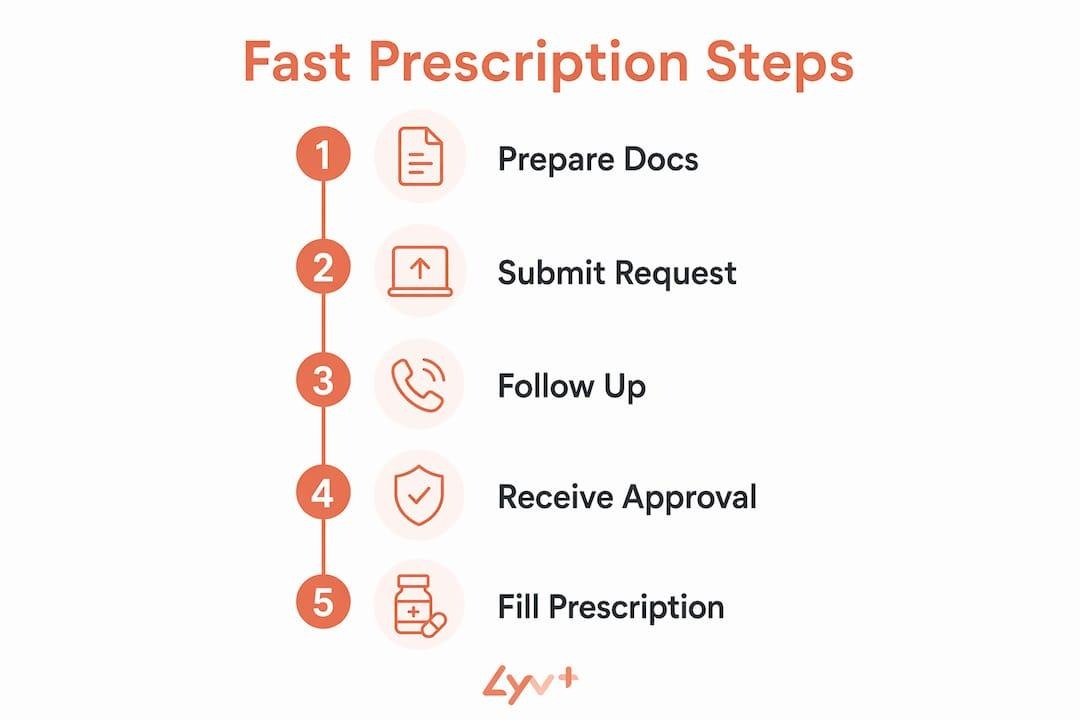
Following a clear sequence removes guesswork and prevents the most common errors. Here is the process that consistently produces the fastest results.
Two mistakes to avoid:
Pro Tip:Keep a simple log: submission date, reference number, follow-up date, and the name of whoever you spoke to. This record becomes your evidence if the request is delayed or disputed.
Denials are not the end. About 50% of appeals result in the original decision being overturned when clinical guidelines and step therapy failures are clearly documented. That is a strong success rate, and it means appealing is almost always worth doing.
The most common causes of delays and denials include:
When you receive a denial, read it carefully. The denial letter must state the specific reason. That reason tells you exactly what to fix or challenge.
For appeals, follow these principles:
A collaborative approach between you and your prescriber consistently produces better outcomes than leaving the process entirely to the clinic. Confirm your provider has submitted the appeal, ask for a copy, and follow up at regular intervals.
Weight loss medications such as Wegovy and Mounjaro sit in the specialty drug category, which means they almost always require prior authorisation. Understanding how to qualify for weight loss medication before you begin the approval process saves significant time.
Several additional routes can help you get prescriptions quickly:
For anyone considering GLP-1 treatments, understanding the approval process for weight loss medication in detail is the most efficient starting point. The more you know before you begin, the fewer surprises you encounter along the way.
Fast prescription approval depends on complete documentation, electronic submission, and consistent follow-up rather than luck or waiting.
Documentation is the foundation
Missing ICD-10 codes or outdated labs are the most common automatic denial triggers.
ePA cuts approval time dramatically
Electronic prior authorisation reduces processing time by up to 69% compared to manual faxing.
Follow up at five days
A proactive call at the five-day mark prevents requests from stalling in pending queues.
Appeals succeed nearly half the time
Around 50% of denials are overturned when clinical evidence and step therapy failure are documented.
Telehealth offers a fast alternative
Clinician-led online services can issue prescriptions the same day, often within two hours.
I have seen the same pattern repeat itself more times than I can count. Someone waits three weeks for a prescription approval, frustrated and confused, only to discover the request was sitting in a pending queue because one form field was left blank. The system did not fail them. Nobody told them how it worked.
The honest truth about prior authorisation is that it rewards the organised and the persistent. Clinicians are busy. Insurers process hundreds of requests daily. Your request does not automatically rise to the top. You have to put it there, politely and consistently.
What I find genuinely encouraging is how much technology has shifted this balance in the patient’s favour. ePA systems, digital portals, and telehealth platforms have made it possible to compress a two-week process into hours, provided you know which levers to pull. The tools exist. Most people simply do not know to ask for them.
My strongest advice: do not treat the approval process as something that happens to you. Treat it as something you participate in. Confirm your submission. Follow up. Ask about ePA. Request a peer-to-peer review if you are denied. These are not aggressive moves. They are normal, reasonable steps that the system expects informed patients to take.
For weight loss medications specifically, the stakes feel higher because the need feels more personal. You have made a decision about your health. You deserve a clear path forward, not weeks of administrative uncertainty. The role of modern weight loss clinics has evolved precisely because traditional routes were not meeting that need.
Stay organised. Stay engaged. The approval is within reach.
— Lyv
If you are looking for a faster, clearer route to prescription approval for weight loss treatment, Lyvpharmacy is built for exactly that. The process starts with a short online clinical assessment, completed in minutes, reviewed by a qualified clinician the same day.
Lyvpharmacy offers direct access to clinician-led weight loss treatments including Wegovy and Mounjaro, with prescriptions issued following a thorough but efficient review. There are no long waits, no unnecessary referrals, and no confusion about next steps. Discreet home delivery follows once your prescription is confirmed. If you are ready to move forward with a medically supported weight loss plan, Lyvpharmacy removes the friction and gets you started with confidence.



.jpg)