Registered Pharmacy100% OnlineNew here? Use code: WELCOME10 for 10% OFFFree Shipping Over £50Fully Inspected & Regulated ServicesApproved UK-licensed TreatmentsRegistered Pharmacy100% OnlineNew here? Use code: WELCOME10 for 10% OFFFree Shipping Over £50Fully Inspected & Regulated ServicesApproved UK-licensed Treatments
24 Sep 2026

17min read
Contents

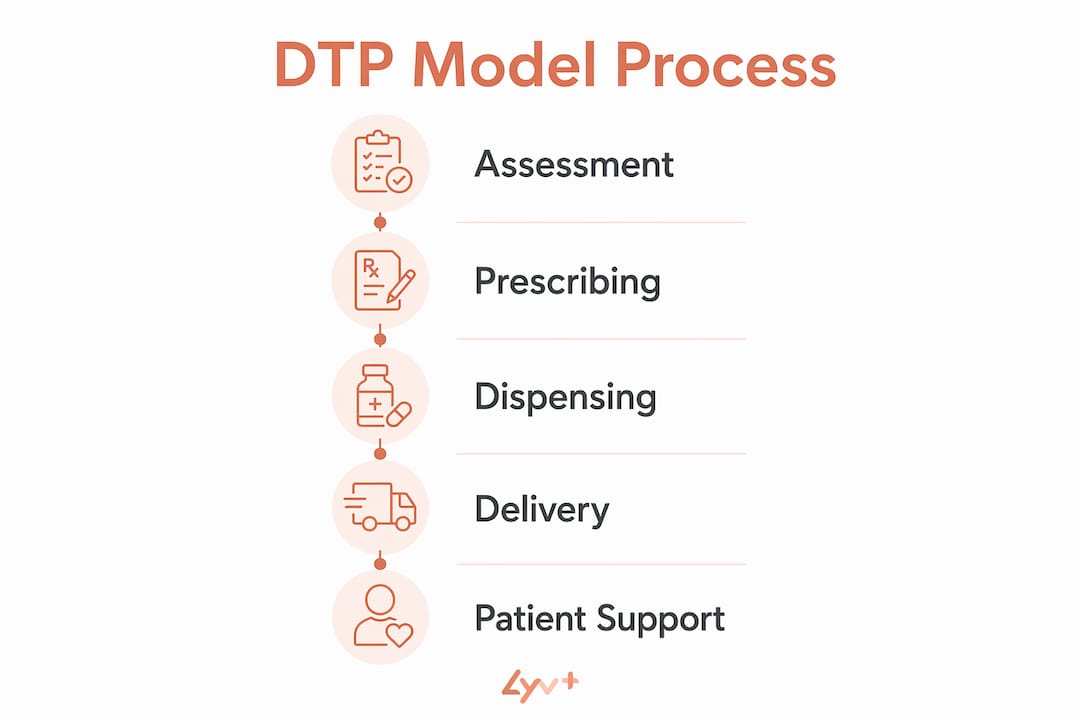
A direct-to-patient (DTP) model is a clinical delivery model that joins telehealth assessment, prescribing, regulated dispensing and logistics to get medicines into patients' hands outside traditional clinic or hospital settings. The core components are a digital front door for triage, a prescribing layer (private or delegated), a GPhC-registered pharmacy for dispensing, temperature-controlled fulfilment, and a data layer that ties the whole pathway together. The prime benefit is a shorter time to therapy and improved access for patients who would otherwise face long waits or geographic barriers.
There is a critical UK regulatory boundary you need to understand from the outset. Manufacturers cannot ship prescription-only medicines directly to patients. Every compliant DTP programme in the UK must partner with GPhC-registered pharmacies for dispensing and CQC-regulated prescribers or private-prescribing pathways for the clinical decision. That legal split shapes every contract, every governance structure, and every technology integration in a UK DTP programme.

The forces driving DTP adoption are structural, not cyclical. BCG's analysis identifies regulatory initiatives, rising consumer expectations and AI-enabled digital platforms as the primary accelerants, and notes there is no single DTP model — only guiding principles for patient-centred design.
Several drivers are converging at once:
The expected benefits map neatly onto these drivers. Speed to therapy improves when patients bypass referral queues. Adherence tends to increase when medicines arrive at home with structured follow-up built in. Personalised care becomes achievable when a data layer captures patient behaviour and flags non-adherence early. For manufacturers, DTP can reduce patient acquisition cost where demand is already high. For health systems, reduced emergency presentations linked to poor adherence represent a meaningful, if harder-to-quantify, saving.
Statistic callout: Remote pharmaceutical care and home delivery increase access and adherence for many patients — but may reduce time available for comprehensive pharmaceutical care, particularly for those requiring complex counselling. That trade-off must be designed out, not ignored.
Not every therapy is a natural fit. The programmes that generate sustainable return on investment tend to share a few characteristics: high patient demand, a condition where adherence directly affects outcomes, and a supply chain that can be validated for home delivery.
Decentralised and hybrid clinical trials are one of the fastest-growing DTP use cases in the UK. Direct-to-patient delivery of investigational medicinal products must be explicitly documented in the approved protocol, with robust risk assessment, patient consent and validated temperature-controlled logistics. When those controls are in place, DTP reduces participant burden, improves recruitment in rare disease populations, and supports retention across geographically dispersed cohorts. The Health Research Authority's decentralised trial toolkit from the Association of Clinical Research Organisations provides practical resources for sponsors designing these pathways.
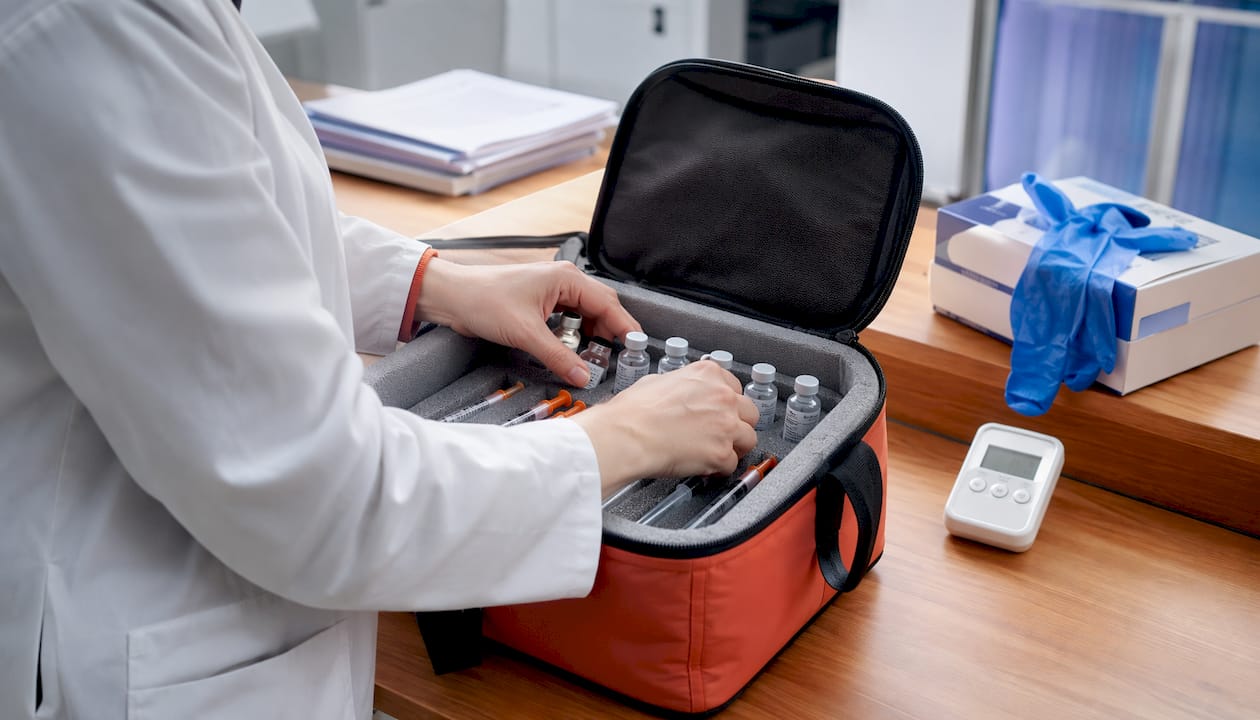
Hub-and-spoke models for speciality medicines are a well-established DTP variant. A central clinical hub manages complex initiation, monitoring and adverse event reporting; home delivery handles ongoing supply. The patient avoids repeated hospital visits for stable therapy. This model suits biologics, immunosuppressants and orphan medicines where the clinical complexity sits at initiation rather than maintenance.
Conditions such as hypertension, type 2 diabetes, and hypothyroidism are strong candidates. The clinical assessment is straightforward, monitoring can be done remotely or via periodic blood tests, and the consequence of a missed dose is measurable. Structured follow-up built into the DTP pathway — automated reminders, pharmacist check-ins, dose titration support — can meaningfully improve adherence rates compared with a standard repeat-prescription model.
Weight management is the clearest current example. Demand for GLP-1 weight loss treatments has outpaced NHS capacity, and private DTP services have stepped in to provide clinician-led assessment, private prescribing and home delivery at scale. The same pattern is visible in erectile dysfunction, hair loss and certain dermatology indications.
Where DTP is a poor fit: conditions requiring complex initiation with face-to-face monitoring, therapies with narrow therapeutic indices where remote monitoring is insufficient, controlled drugs with strict dispensing requirements, and any indication where the patient population has low digital literacy or unreliable internet access.
Pro Tip: Pharmaphorum's five-question framework is a useful starting screen: define what DTP means for your programme, clarify who owns the patient relationship, assess product fit, map your infrastructure, and agree how you will measure success before committing to a build.
Think of a DTP programme as three layers sitting on top of a shared data spine: a clinical layer, a fulfilment layer, and an analytics layer. Successful providers orchestrate the full patient journey using data and modular service blocks rather than building a monolithic system.
Pro Tip: The prescribing-to-dispensing handoff is the most common point of clinical risk in a DTP programme. Define in your governance documentation exactly who holds clinical accountability at each handoff — and make sure that person is reachable when something goes wrong.
The legal boundary is non-negotiable. Manufacturers are prohibited from dispatching prescription-only medicines directly to patients in the UK. The compliant route is a partnership model: a manufacturer or programme sponsor orchestrates the pathway, while a GPhC-registered pharmacy dispenses and a CQC-regulated prescriber issues the prescription. Understanding the UK prescription process is foundational before designing any DTP pathway.
Beyond registration and licensing, a compliant DTP programme needs:
Regulatory note: The MHRA, GPhC, CQC and ICO each publish guidance relevant to DTP programmes. Treat their published standards as the floor, not the ceiling, of your compliance framework.
DTP is not a risk-free shortcut to market. The programmes that fail tend to underestimate clinical risk, overestimate logistics reliability, or ignore the equity implications of a digital-first model.
Remote pharmaceutical care can widen inequalities if the digital front door excludes patients with low digital literacy, unreliable internet access, or disabilities that make online assessment difficult. Geographic coverage gaps in courier networks can leave rural patients underserved. Monitoring equity metrics from day one is not optional — it is a governance responsibility.
Red flags to include in partner contracts: defined SLAs for cold-chain integrity, explicit liability allocation for dispensing errors, mandatory adverse event reporting timelines, and a right to audit pharmacy operations.
The decision is not binary. Most programmes benefit from a structured go/no-go assessment before committing to a full build. Industry commentary consistently warns against adopting DTP solely for optics; programmes that address a specific access friction and have measurable return on investment tend to be the ones that survive beyond the pilot phase.
Lyvpharmacy operates as a clinician-led online pharmacy in the UK, and its model illustrates what a compliant, patient-centric DTP pathway looks like in practice for high-demand indications.
The pathway runs as follows: a patient completes a structured online clinical assessment, reviewed by a registered clinician who determines eligibility based on defined clinical criteria. Where appropriate, a private prescription is issued. Dispensing is carried out by a GPhC-registered pharmacy, and medicines are dispatched for next-day delivery in appropriate packaging. Follow-up is built into the pathway, not appended.
The governance features that make this model compliant and credible include:
For healthcare and pharma professionals evaluating DTP design, Lyvpharmacy's approach to clinician-guided care demonstrates that speed and clinical rigour are not mutually exclusive. The model also shows how online healthcare safety can be maintained when governance is treated as a design requirement rather than a compliance afterthought.
Note: Lyvpharmacy operates as a private prescribing service. Clinical eligibility criteria apply to all patients.
Sustainable DTP models invest in clinical governance, data-driven monitoring and ongoing patient services — not just dispatch volume. That investment is what separates programmes that scale from those that stall after the pilot.
A direct-to-patient model is only as strong as its clinical governance: UK law requires GPhC-registered dispensing and CQC-regulated prescribing, and programmes that treat these as design requirements rather than compliance boxes tend to deliver better patient outcomes and longer commercial viability.
Point - Details
Legal boundary is fixed
UK manufacturers cannot ship prescription-only medicines directly to patients; GPhC and CQC partnerships are mandatory.
Fit before build
Assess condition suitability, monitoring complexity and supply chain feasibility before committing to a DTP programme.
Governance is the differentiator
Programmes that invest in clinical governance, audit trails and follow-up outperform those optimised for dispatch volume alone.
Equity must be monitored
Digital exclusion and geographic coverage gaps can widen inequalities; track equity metrics from day one.
Lyvpharmacy as a working model
Lyvpharmacy demonstrates compliant DTP delivery with registered clinicians, GPhC dispensing, and next-day UK delivery for high-demand indications.
The most common mistake is treating DTP as a logistics problem. It is not. It is a clinical delivery problem that happens to involve logistics. Programmes designed around dispatch efficiency — fast, cheap, high volume — tend to run into clinical governance failures within 12–18 months. A prescribing error that goes undetected because there is no follow-up pathway, or a cold-chain breach that is not escalated because no one owns the protocol, can end a programme faster than any commercial headwind.
The second blind spot is the equity question. Digital-first models naturally attract digitally confident patients. That is fine commercially, but it creates a systematic gap for patients with lower digital literacy, disabilities, or unreliable connectivity. If your programme is commissioned or publicly funded, that gap is a regulatory liability. Even in private-pay models, ignoring it narrows your addressable market and creates reputational risk.
Three practical actions for teams starting a DTP programme:
The regulatory duty of care does not end when the medicine leaves the pharmacy. In a DTP model, the clinical lead, the prescriber and the dispensing pharmacist all carry ongoing responsibilities. Designing those responsibilities into the governance structure from the start is what separates a programme that earns trust from one that merely processes orders.
If you are evaluating what a compliant, patient-centric DTP service looks like in practice, Lyvpharmacy offers a clear reference point. Every patient goes through a structured clinical assessment with a registered clinician before any prescription is issued. Dispensing is carried out by a GPhC-registered pharmacy, and medicines are delivered to patients' doors with next-day UK delivery as standard.
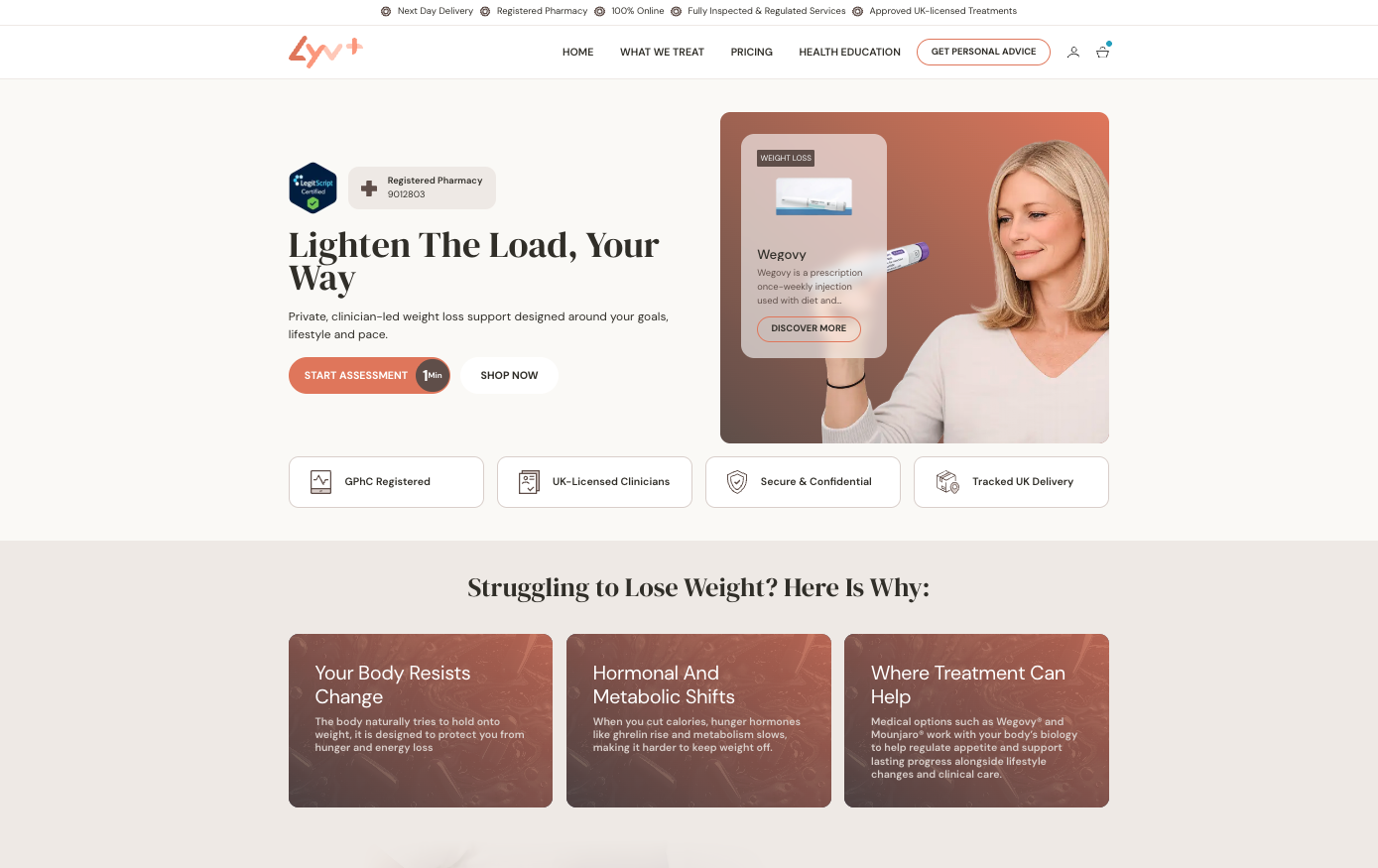
The model covers high-demand prescription treatments including GLP-1 weight loss medicines such as Wegovy and Mounjaro, alongside hair loss, erectile dysfunction and skincare treatments. Clinical eligibility criteria apply to every patient, and the pathway is designed around continuity of care rather than one-off dispensing. There are no mandatory subscriptions — patients pay per treatment, with the clinical assessment included in the treatment price.
For healthcare and pharma professionals looking to understand how a regulated DTP pathway operates in the UK, Lyvpharmacy's model demonstrates that fast access and clinical rigour can coexist. This service operates as a private prescribing pathway. Clinical eligibility criteria apply. Always confirm suitability with a registered clinician.
Explore Lyvpharmacy's treatments to see how a compliant, clinician-led DTP pathway is structured for UK patients.
Recommended


.jpg)