 Registered Pharmacy100% OnlineNew here? Use code: WELCOME10 for 10% OFFFree Shipping Over £50Fully Inspected & Regulated ServicesApproved UK-licensed TreatmentsRegistered Pharmacy100% OnlineNew here? Use code: WELCOME10 for 10% OFFFree Shipping Over £50Fully Inspected & Regulated ServicesApproved UK-licensed Treatments
22 Sep 2026

10min read
Contents

Offering prescription weight-loss drugs as prizes is illegal in the UK. Full stop. Medications like semaglutide (Wegovy) and tirzepatide (Mounjaro) are prescription-only medicines, which means they can only be supplied legally through a valid prescription issued by a qualified clinician and dispensed by a GPhC-registered pharmacy. The MHRA regulates medicines licensing and safety; the GPhC sets pharmacy standards. Neither permits prize-based supply. If you encounter such an offer, take these steps immediately:
Prize-based weight loss schemes push people towards extreme behaviours, and the clinical risks are real. When losing weight becomes a competition with a financial or material reward attached, the pressure to perform can override basic safety instincts.
The physical risks include:
The psychological risks are equally serious. Leading UK dietetic experts warn that gamified weight loss can exacerbate disordered eating and shift focus from long-term health to short-term weight metrics. For anyone with a history of restrictive eating or body-image concerns, a competitive incentive structure can be actively harmful.
Prize schemes also create an uneven playing field. People with higher baseline weight have a structural advantage, which can push leaner participants into disproportionate and dangerous behaviour changes to keep up.
Prescription-only medicines must be supplied via a valid prescription and dispensed through a licensed pharmacy. That is not guidance; it is a legal requirement under UK medicines law.
Three bodies share oversight of this space:
Offering prescription medicines as prizes, giveaways, or competition rewards is illegal supply under UK medicines law. Any company or individual doing so risks criminal prosecution, civil liability, and regulatory action from the MHRA.
Academic analysis of the commercial weight-loss sector highlights regulatory fragmentation that can allow risky marketing practices to persist in non-clinical services. That fragmentation is precisely why knowing which regulator to contact matters.
Illegal prize offers rarely look obviously criminal. Promoters use specific tactics to normalise what they are doing, and knowing the patterns makes them much easier to identify.
Common tactics include using the word "coaching" to disguise drug supply, running giveaways inside closed WhatsApp or Telegram groups, and using countdown timers or 24-hour deadlines to rush decisions. Investigations have found posts instructing entrants to add friends and follow accounts, with winners selected by random generators, mimicking the structure of a legitimate competition.
Red flags to watch for:
Verification steps before trusting any supplier:
Pro Tip: Any social media post offering weight-loss injections that does not mention a prescription requirement is a red flag. Legitimate pharmacies are legally required to obtain a valid prescription before dispensing.
If you have been offered or have already received weight-loss medication through a prize or giveaway, act in this order:
If you have injected an unknown substance and feel unwell, call 999 or go to your nearest A&E. Do not wait to see if symptoms resolve on their own.
The safe route is straightforward: clinician assessment, then a valid prescription, then dispensing through a registered pharmacy. Every step matters, and skipping any one of them creates risk.
NHS pathway: Referral via your GP to a specialist weight management service, typically requiring a BMI of 30 or above (or 27.5 for certain ethnic groups) plus at least one weight-related comorbidity such as type 2 diabetes or hypertension. NHS waiting times for specialist services can be lengthy in many areas.

Private clinician-led pathway: Faster access for those who meet clinical eligibility criteria. A qualified clinician conducts a full assessment, checks contraindications, and issues a prescription if appropriate. The medication is then dispensed by a GPhC-registered pharmacy and delivered to your home.
What clinician oversight actually involves:
The Wegovy pill (oral semaglutide) received MHRA approval on 11 June 2026 and is now available through private pharmacies, subject to a medical consultation, though it is not yet available on an NHS prescription.
Lawful access timing varies considerably. NHS pathways can involve waits of months; private routes are faster but carry direct costs.
Common private cost factors:
For context, structured incentive trials in the UK have used cash rewards to motivate weight loss with measurable results. The NHS-funded "Game of Stones" trial offered men cash incentives with varied average payouts among participants. An earlier NHS pilot, the "Pounds for Pounds" scheme, reported clinically significant weight loss (5% or more of starting weight) in a substantial proportion of participants, with an estimated moderate mean weight loss at 12 months.
44.8% achieved ≥5% weight loss; mean loss 4.0 kg at 12 months
These were structured, monitored research programmes, not unregulated giveaways. The support elements and clinical monitoring are what made the difference, not the prize itself.
Typical private pathway timeline: initial assessment (same day to 48 hours with a private provider) → prescription approval → first medication delivery → monthly or quarterly monitoring check-ins.
Prescription weight-loss drugs offered as prizes are illegal in the UK, unsafe without clinical oversight, and should be reported to the MHRA, Action Fraud, or Trading Standards immediately.
Point - Details
Prize offers are illegal
Prescription-only medicines cannot be legally supplied as prizes; doing so breaches UK medicines law.
Clinical oversight is non-negotiable
Safe use of GLP-1 medications requires BMI assessment, dose titration, and scheduled follow-ups.
Report suspicious offers
Use MHRA Yellow Card, Action Fraud, or Trading Standards; preserve screenshots and payment evidence.
Incentive trials show context matters
NHS-funded trials like Game of Stones used monitored cash rewards, not unregulated giveaways, to achieve results.
Lyvpharmacy offers a lawful route
Lyvpharmacy provides clinician-led assessments, GPhC-registered dispensing, and prescription GLP-1 medications with discreet UK delivery.
The appeal of a prize is understandable. Weight loss is hard, and external motivation can feel like a useful push. But the prize model gets the incentive structure backwards.
Clinical care focuses on what is happening inside your body: how your hormones respond, whether a dose needs adjusting, whether a side effect is emerging. A prize focuses on the number on the scales at a fixed deadline. Those two things are not the same goal, and optimising for one can actively undermine the other.
The ethical dimension matters too. Prize schemes that reward the largest percentage loss in a set period create structural pressure on people who are already vulnerable. Someone with a history of restrictive eating does not need a countdown timer and a cash reward to push them further. Competitive incentives can trigger exactly the behaviours that clinical care is designed to prevent.
What actually works, according to the evidence, is structured support: a clinician who knows your baseline, a titration schedule that keeps side effects manageable, and follow-up that catches problems early. That is not a prize. It is a clinical pathway. The two are not interchangeable.
If you are ready to pursue prescription weight-loss treatment through a safe, lawful route, Lyvpharmacy offers exactly that. No giveaways, no shortcuts, no unregulated substances.
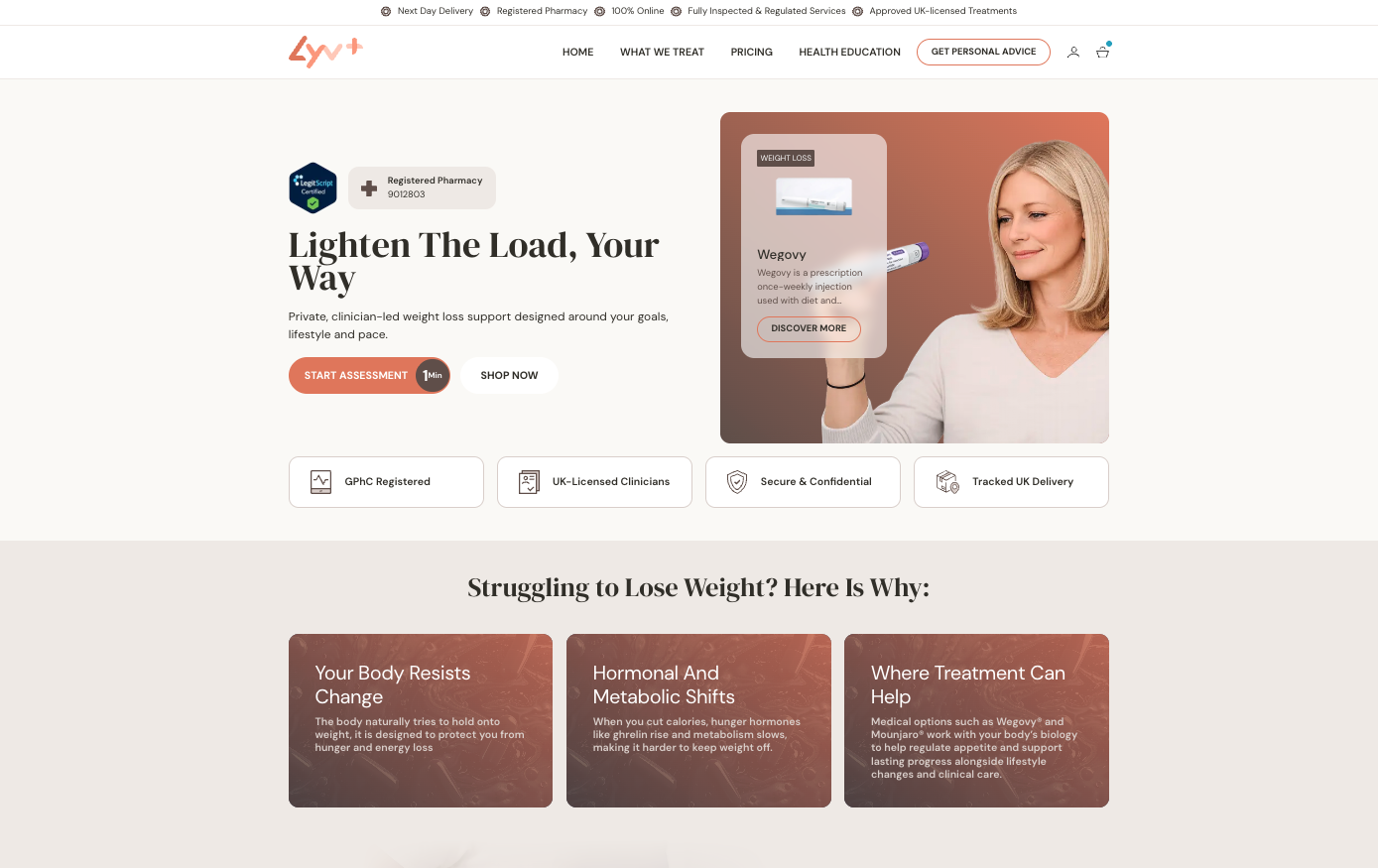
Lyvpharmacy provides clinician-led assessments, prescription supply of GLP-1 medications including semaglutide (Wegovy) and tirzepatide (Mounjaro), and discreet next-day delivery across the UK. Every order requires a clinical assessment and a valid prescription. Dispensing is handled by a GPhC-registered pharmacy, with monitoring and aftercare built in.
The process is straightforward: complete your online assessment, receive clinician approval if eligible, and have your medication delivered to your door. Browse prescription weight-loss treatments at Lyvpharmacy to see current options and pricing, and start your clinical assessment today.
Check licence and registration status:
Report an unsafe offer or adverse event:
When reporting, include screenshots of the offer, the seller's contact details, any product packaging or labelling, and proof of payment if applicable.
Seek urgent medical help if you have taken an unknown injectable product and feel unwell. Call 999 or attend A&E. Do not delay.
This article is general information, not medical or legal advice. For guidance specific to your situation, consult a qualified clinician or check directly with the MHRA or GPhC.




.png)

.jpg)