 Registered Pharmacy100% OnlineNew here? Use code: WELCOME10 for 10% OFFFree Shipping Over £50Fully Inspected & Regulated ServicesApproved UK-licensed TreatmentsRegistered Pharmacy100% OnlineNew here? Use code: WELCOME10 for 10% OFFFree Shipping Over £50Fully Inspected & Regulated ServicesApproved UK-licensed Treatments
11 Aug 2026

9min read
Contents

A weight loss nutrition list is a curated selection of foods that prioritises protein, fibre, and essential nutrients to maximise fullness and support sustained fat loss. Unlike generic healthy eating advice, a well-built list gives you a repeatable framework: specific foods, clear portions, and a structure that makes calorie control feel manageable rather than miserable. The best dietary choices for weight loss centre on foods that work harder per calorie, keeping hunger low and energy stable. This guide covers the top food categories, how to combine them into balanced meals, and how to snack without undoing your progress.
Protein is the most filling macronutrient, and it also has the highest thermic effect, meaning your body burns more calories digesting it than it does digesting fat or carbohydrate. For anyone building a healthy meal plan around fat loss, protein is non-negotiable.
Foods with satiety scores of 8–9 out of 10 include grilled chicken breast, egg whites, and steamed cruciferous vegetables. That score reflects how well a food suppresses hunger per calorie consumed. Chicken breast delivers roughly 35g of protein per 4 oz serving, making it one of the most calorie-efficient proteins available.
Top high-protein foods for your list:
Meal plans targeting 90–140g protein daily consistently outperform lower-protein plans for satiety and energy stability. That protein range is achievable across three meals without relying on supplements.
Pro Tip: Choose two or three versatile proteins, such as chicken breast, eggs, and Greek yoghurt, and rotate them across the week. Variety prevents boredom without adding planning complexity.
Fibre slows digestion, stabilises blood sugar, and keeps you full between meals. Nutrition guidance recommends at least 30g of fibre daily for adults, yet most people in the UK fall well short of that target. Closing that gap with whole foods rather than supplements is the most effective approach.
A 28g serving of chia seeds provides 9.75g of fibre alongside essential minerals including magnesium and manganese. That is a significant contribution from a single ingredient that mixes easily into yoghurt or porridge. Leafy greens, broccoli, cauliflower, and berries round out the top tier of nutrient-dense plant foods for fat loss.
Food - Calories (per 100g) - Fibre - Key nutrients
Broccoli - 34 kcal - 2.6g - Vitamin C, folate, potassium
Spinach - 23 kcal - 2.2g - Iron, vitamin K, magnesium
Chia seeds - 486 kcal - 34.4g - Omega-3, calcium, manganese
Lentils (cooked) - 116 kcal - 7.9g - Protein, iron, folate
Oats (rolled) - 389 kcal - 10.6g - Beta-glucan, B vitamins, zinc
Blueberries - 57 kcal - 2.4g - Antioxidants, vitamin C, manganese
Chickpeas (cooked) - 164 kcal - 7.6g - Protein, iron, phosphorus
Oats are worth highlighting specifically. Their soluble fibre, beta-glucan, forms a gel in the gut that slows glucose absorption and prolongs satiety. That makes oats one of the most practical whole grain options for a weight loss breakfast.
Nutrient-dense foods low in added sugar and unhealthy fats offer superior bioavailability of essential micronutrients compared to supplements. Whole foods provide fibre, water, and synergistic compounds that no multivitamin can replicate.
Pro Tip: Keep a bag of frozen spinach, broccoli, or mixed vegetables in the freezer. Frozen vegetables retain their nutritional value and eliminate the risk of fresh produce going to waste mid-week.
Knowing which foods to eat is only half the work. The other half is putting them together in a way that is repeatable, satisfying, and practical enough to sustain beyond the first week.
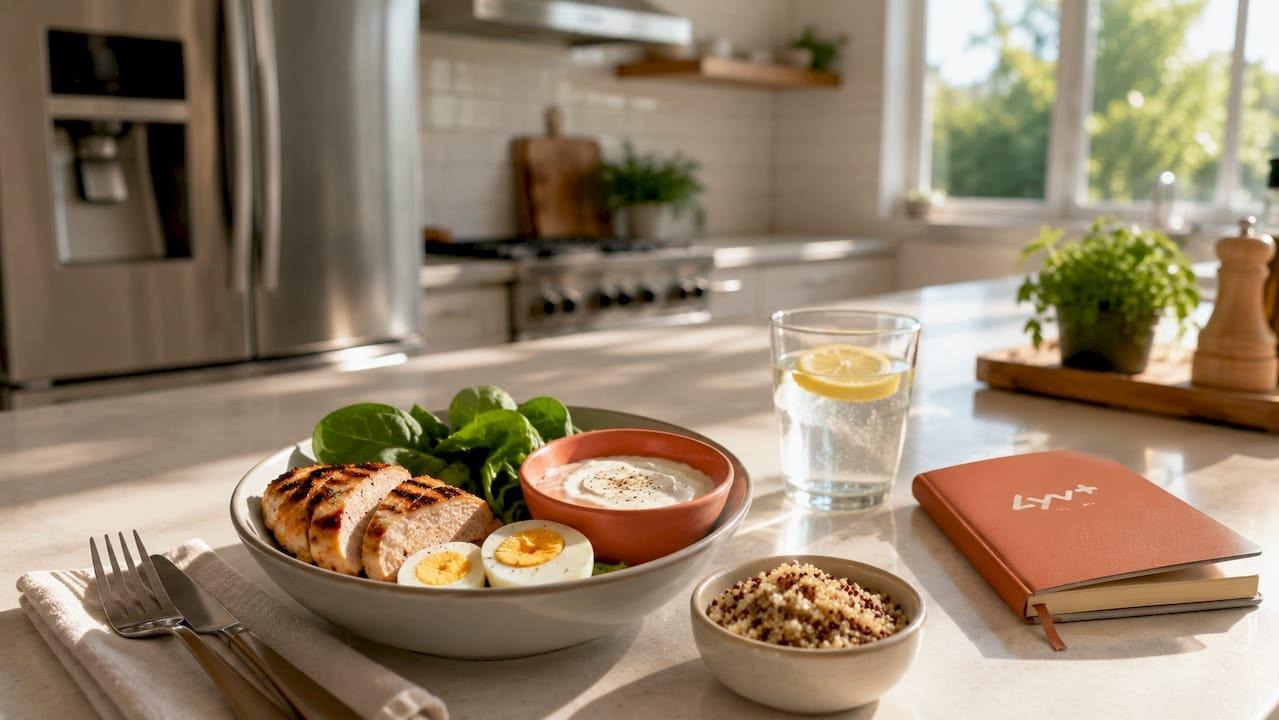
A component-based meal planning framework works well here: build each meal from one protein, one grain or starch, one vegetable, and a simple sauce or seasoning. This structure reduces decision fatigue and makes batch cooking straightforward. You are not inventing a new meal each day; you are rotating components.
Practical meal-building steps:
Two simple meal examples that apply this framework: a chicken and quinoa bowl with roasted peppers and a tahini drizzle; or baked salmon with steamed broccoli and brown rice. Both take under 30 minutes and hit the protein and fibre targets your plan needs.
Pro Tip: Batch-cook your grains and proteins on a Sunday. Storing them separately in the fridge means you can assemble different meals throughout the week without cooking from scratch each time.
Smart snacking prevents the blood sugar dips that lead to impulsive eating. The goal is not to eliminate snacks but to choose ones that deliver protein or fibre, keep calories controlled, and genuinely satisfy hunger rather than just occupying your hands.
A balanced snack list for weight loss includes Greek yoghurt, string cheese, measured portions of nuts, dark chocolate at 70% cocoa or above, and protein bars meeting specific criteria. For protein bars, look for more than 15g of protein, fewer than 250 calories, and fewer than 8g of sugar per bar. Those parameters separate genuinely useful snacks from glorified confectionery.
Strong snack options to keep on hand:
What you choose not to buy matters as much as what you do buy. If crisps and biscuits are not in the house, you cannot eat them at 10 pm. Controlling your food environment is more reliable than relying on willpower alone.
A weight loss nutrition list built around high-protein, high-fibre, nutrient-dense foods is the most evidence-backed approach to sustained fat loss and hunger control.
Point - Details
Prioritise protein
Aim for 90–140g daily using chicken, eggs, Greek yoghurt, and tinned fish.
Hit 30g fibre daily
Use chia seeds, lentils, oats, and leafy greens to reach the target through food.
Build meals by component
Combine protein, grain, vegetable, and sauce to simplify planning and reduce waste.
Plan six days, not seven
Leave one flexible day to accommodate real life without abandoning your plan.
Control your food environment
Stock high-satiety snacks and avoid keeping high-calorie trigger foods at home.
The most common mistake I see is treating a weight loss nutrition list as a rigid prescription. People print it out, follow it perfectly for four days, hit one difficult evening, and conclude the whole plan has failed. That is not a nutrition problem. That is a planning problem.
The foods on this list work. Chicken breast, leafy greens, oats, Greek yoghurt, and lentils are not complicated or expensive. What makes them effective is consistency, not perfection. Personalised balanced meals that combine lean protein, whole grains, and vegetables increase calorie deficit adherence far more reliably than any restrictive protocol.
The other thing worth saying plainly: supplements do not replace food quality. Whole foods provide nutrient synergy that no multivitamin can match. Fibre, water content, and bioavailable micronutrients work together in ways that isolated compounds simply cannot replicate. Spend your money on quality ingredients before you spend it on a supplement stack.
Build a list that suits your actual preferences. If you dislike salmon, use tinned tuna or chicken. If oats do not appeal, try rye bread or quinoa. The framework matters more than the specific foods. Get the structure right, keep the environment supportive, and give yourself one flexible day per week. That combination is far more durable than any seven-day plan that leaves no room for real life.
— Lyv
Nutrition is the foundation, but for many people it is not the whole picture. If you have been eating well and exercising consistently without seeing the results you expect, there may be a clinical reason worth exploring.
Lyvpharmacy provides clinician-led access to prescription weight loss treatments including GLP-1 medications such as Wegovy and Mounjaro, which are proven to reduce appetite and support significant fat loss when used alongside a healthy eating plan. The process is straightforward: a clinical assessment, a rapid decision, and discreet home delivery. No long waiting lists and no unnecessary friction. If you want to understand how medical support fits alongside the dietary choices you are already making, Lyvpharmacy’s clinician-guided approach explains exactly what that looks like in practice.
Recommended





.jpg)