Registered Pharmacy100% OnlineNew here? Use code: WELCOME10 for 10% OFFFree Shipping Over £50Fully Inspected & Regulated ServicesApproved UK-licensed TreatmentsRegistered Pharmacy100% OnlineNew here? Use code: WELCOME10 for 10% OFFFree Shipping Over £50Fully Inspected & Regulated ServicesApproved UK-licensed Treatments
29 Jul 2026

9min read
Contents

Home delivery for weight loss is defined as the use of structured meal delivery services, including ready-to-eat meals, portion-controlled meal kits, and grocery delivery programmes, to support calorie management and dietary adherence. The role of home delivery in weight loss has grown considerably as clinical evidence catches up with consumer demand. A 2026 trial called GoFreshRx found that free heart-healthy grocery deliveries reduced systolic blood pressure by 5 mm Hg compared to a control group over 12 weeks. That is not a trivial result. It suggests that getting the right food to someone’s door does more than save time. It changes health outcomes in measurable ways.
The core mechanism is simple: when food decisions are made for you in advance, you make fewer poor choices in the moment. Dietitian-designed meal delivery reduces the cognitive burden of meal planning, which is one of the most underestimated barriers to sustained weight loss. When you are tired, stressed, or short on time, willpower alone rarely wins. Removing the decision entirely is a more reliable strategy.
Structured delivery programmes address several specific behaviours that derail diets:
The research also shows that delivery works best when paired with professional support. Experts consistently stress that combining delivery with dietary counselling teaches you the why behind the food choices, not just the what. That understanding is what carries you forward once the subscription ends.
Pro Tip:If your delivery plan includes a dietitian consultation, use it. Even one session can help you understand the macronutrient logic behind your meals, which makes it far easier to replicate those choices independently.

Not all delivery services are built the same, and choosing the wrong type is one of the most common reasons people abandon their plans. The three main categories are ready-to-eat meals, portion-controlled meal kits, and grocery delivery. Each sits at a different point on the convenience and effort spectrum.
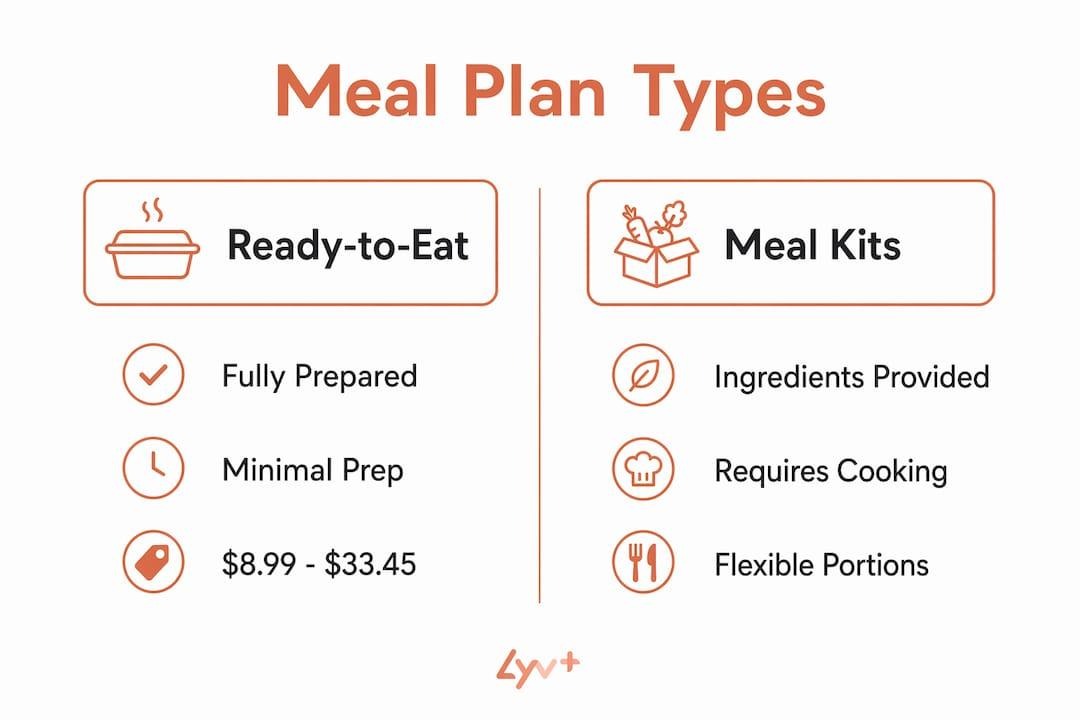
Pricing across delivery plans ranges from approximately $8.99 to $33.45 per day depending on preparation level and number of meals included. That range reflects a genuine difference in what you are paying for. Ready-to-eat services absorb the labour cost so you do not have to.
One of the most overlooked pitfalls is misunderstanding what a plan actually requires. Ready-to-eat and portion-controlled kits are not the same thing, and confusing the two leads to subscription fatigue quickly. If you sign up expecting meals that arrive fully prepared but receive ingredients and instructions instead, the friction alone can derail your commitment within a week.
Intermittent fasting delivery plans represent a more specialised category. A 12-week pilot trial using an OIF programme delivered low-calorie fasting meals and achieved 2.4 to 2.7 kg weight loss in participants weighing 80 to 90 kg. That translates to roughly 3% of initial body weight, which aligns with clinically meaningful early-stage targets. These plans work well for people who already understand fasting principles and want the structure of delivery to support their protocol.
The honest advice here is to match the service to your actual lifestyle, not your aspirational one. If you rarely cook, a kit that requires 30 minutes of preparation will feel like a chore by week two. Choose the level of convenience that you will genuinely maintain.
The benefits of weight loss meal delivery extend well beyond saving time in the kitchen. The most significant gains are behavioural and cardiometabolic, and they are documented in peer-reviewed research rather than brand marketing.
The GoFreshRx trial is worth revisiting here. Participants who received home-delivered healthy groceries alongside standard medical therapy saw systolic blood pressure drop by up to 7 mm Hg more than those receiving counselling alone over three months. For someone managing hypertension alongside weight loss, that is a clinically meaningful difference that reduces cardiovascular risk.
“Food delivery interventions show real promise in improving cardiometabolic health, but sustained maintenance of healthy habits post-intervention remains the central challenge.” — Dr Juraschek, commenting on scalable grocery delivery models for health improvement.
On the behavioural side, structured meal delivery programmes reduce both emotional eating and uncontrolled eating. Studies using the Three-Factor Eating Questionnaire (TFEQ) show that cognitive restraint increases when meals are pre-planned and pre-portioned. You are not white-knuckling your way through hunger. You are simply not in a position where impulsive choices are available.
Blood glucose stability is another underappreciated benefit. Consistent meal timing through delivery schedules moderates glucose fluctuations throughout the day, which directly reduces hunger-driven overeating. This is particularly relevant for people with insulin resistance or pre-diabetes, where glucose spikes and crashes drive appetite in ways that feel impossible to control.
Pro Tip:Track your hunger levels for the first two weeks of a delivery plan. Most people notice a significant reduction in mid-afternoon cravings once meal timing becomes consistent. That pattern is worth noting because it shows you what structure can do, and you can replicate it later without the delivery service.
The long-term picture matters too. Improvements in dietary habits from delivery do not automatically persist once a subscription ends. The research is clear that combining delivery with active behavioural counselling produces more durable results than delivery alone. Think of the service as a training period, not a permanent solution.
Getting real results from a diet delivery service requires more than placing an order. Here is how to use these tools effectively:
Home delivery meal services work best when treated as a structured behavioural tool combined with professional guidance, not as a standalone solution.
Point - Details
Delivery reduces cognitive load
Pre-planned, portioned meals remove the daily decisions that lead to poor food choices.
Cardiometabolic benefits are real
Clinical trials show blood pressure reductions of up to 7 mm Hg with structured food delivery.
Service type must match lifestyle
Ready-to-eat, kit, and grocery delivery differ significantly in effort and cost. Choose honestly.
High protein protects your metabolism
Meals with 30 to 55g of protein per serving prevent muscle loss during caloric restriction.
Delivery is a training tool, not a crutch
Use the portion sizes and timing to build habits you can maintain independently.
Here is what I have observed working in this space: most people treat meal delivery as a passive solution. They sign up, receive the food, eat it, and expect the weight to come off. And it often does, for a while. But the moment the subscription lapses or life gets in the way, the old patterns return. That is not a failure of the service. It is a failure of how the service was used.
The people who get lasting results from home delivery meal plans are the ones who treat the first eight to twelve weeks as a curriculum. They pay attention to what a 400-calorie meal actually looks like on a plate. They notice how they feel when they eat at consistent times. They start to understand which foods keep them full and which ones leave them hungry an hour later. That knowledge does not disappear when the deliveries stop.
There is also something worth saying about the emotional side of this. Many people who struggle with weight have a complicated relationship with food preparation. Cooking can feel like a minefield of temptation and failure. Delivery removes that friction entirely, which gives people breathing room to focus on the behavioural patterns underneath the eating. That is genuinely valuable, and it is not talked about enough.
The future of this space, in my view, is delivery services that integrate digital behavioural coaching alongside the food. Not just a recipe card, but actual guidance on why you are eating what you are eating and how to carry those principles forward. That combination of convenience and education is where the real long-term results live. For now, the best thing you can do is use delivery intentionally, with that end goal in mind.
— Lyv
If you are serious about weight loss and want more than a meal plan, Lyvpharmacy offers clinician-led support that works alongside the nutritional changes you are making. From clinical assessments to prescription GLP-1 treatments like Wegovy and Mounjaro, everything is designed to give you medically proven tools alongside the dietary structure you are building. Explore weight loss treatments online to see what is available to you. If you want to understand what clinician-guided weight loss actually involves before you commit, the Lyvpharmacy guide on what clinician-guided means is a good place to start.