 Registered Pharmacy100% OnlineNew here? Use code: WELCOME10 for 10% OFFFree Shipping Over £50Fully Inspected & Regulated ServicesApproved UK-licensed TreatmentsRegistered Pharmacy100% OnlineNew here? Use code: WELCOME10 for 10% OFFFree Shipping Over £50Fully Inspected & Regulated ServicesApproved UK-licensed Treatments
08 Sep 2026

7min read
Contents

Following weight loss protocols effectively comes down to three things: a structured plan, realistic expectations, and consistency over time. The NHS Weight Loss Plan recommends aiming to lose weight at a safe and sustainable pace through a combination of calorie control, regular movement, and behavioural change. That is not a slow pace. It is the pace that actually sticks.
Here is what a well-structured weight management protocol looks like in practice:
Calorie control is the foundation of any weight loss plan, but it does not mean eating as little as possible. The NHS framework sets daily calorie targets tailored for women and men within a structured programme lasting several weeks. These targets create a deficit without leaving you depleted.
What you eat within those calories matters just as much as the number itself. Fill roughly half your plate with vegetables at main meals, include a protein source at each sitting (beans, eggs, fish, or lean meat), and keep starchy foods like pasta and rice to no more than a third of your daily intake. Choosing wholegrain versions helps you feel fuller for longer.
Avoid cutting entire food groups. Eliminating carbohydrates or fats entirely tends to backfire, creating nutrient gaps and making the plan unsustainable. Focus instead on replacing high-calorie options with nutrient-dense alternatives.
A few practical habits make a real difference:
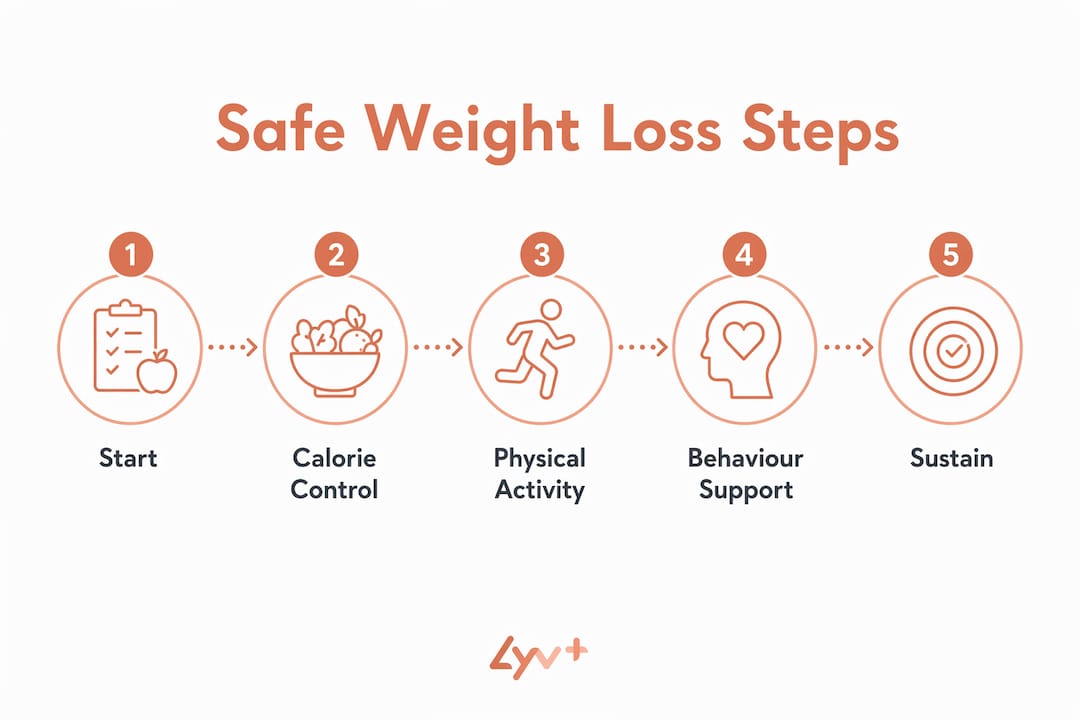
Movement supports weight loss and, crucially, helps you keep the weight off once you have lost it. NHS guidelines recommend at least 150 minutes of moderate-intensity activity each week for adults aged 19–64. That works out to roughly 20–30 minutes most days, which is far more manageable than it sounds.

You do not need a gym membership. Walking, cycling, swimming, and dancing all count. The key is choosing activities you genuinely enjoy, because enjoyment is what turns a two-week effort into a lasting habit. Combining aerobic exercise with muscle-strengthening activities (such as bodyweight exercises or resistance training) produces better results than cardio alone, since muscle tissue burns more calories at rest.
Breaking activity into shorter sessions works just as well as one long block. Even 10 minutes of brisk walking three times a day meets the threshold and is far easier to fit around work and family life.
Pro Tip: Start with whatever feels manageable this week, even if that is just a 15-minute walk. Increase duration or intensity by roughly 10% each week rather than jumping straight to an hour-long session. Gradual progression reduces injury risk and keeps motivation intact.
The most effective weight loss strategies combine diet, physical activity, and behavioural support together. Changing what you eat while ignoring the habits and emotions driving your choices tends to produce short-term results at best.

Accountability from friends, family, or support groups strongly predicts weight loss success. Sharing your plan with someone you trust gives you a reason to show up on the days when motivation dips. It does not need to be formal; a weekly check-in with a friend works. Mindful eating is one of the most underused tools in weight management. Eating without distractions, whether that is the television or your phone, helps you recognise satiety signals before you have overeaten. It sounds simple, but most people eat at least one meal a day while scrolling.
Pro Tip: Poor sleep and chronic stress both raise cortisol, which increases appetite and makes fat loss harder. Prioritising 7–9 hours of sleep and building even a short wind-down routine into your evening supports your weight loss efforts as directly as any dietary change.
Accountability matters. Returning to your routine immediately after a setback, without guilt or self-criticism, is one of the most evidence-backed ways to prevent emotional eating from derailing long-term progress.
The NHS recommends losing weight at a safe and sustainable pace. Faster losses through very restrictive diets often lead to muscle loss, nutritional deficiencies, and rapid weight regain once normal eating resumes. The science on why crash diets fail consistently points to the same problem: they change what you eat without changing how you relate to food.
A 12-week protocol is a common starting point precisely because new habits take time to solidify. The goal of the first three months is not just weight loss. It is building routines, such as meal planning and progress tracking, that carry you beyond the programme itself.
Weight loss plateaus are normal and not a sign of failure. When progress stalls, the usual culprits are a gradual increase in portion sizes, reduced activity, or the body adapting to a lower calorie intake. Adjusting one variable at a time, such as adding 20 minutes of activity per week or tightening portion sizes, is more effective than overhauling everything at once.
Common pitfall - Why it happens - What to do instead
Skipping meals - Thinking it saves calories - Eat regular meals to prevent overeating later
Cutting food groups - Seeking faster results - Focus on portion control and food swaps
Unrealistic goals - Comparing to others - Aim for 0.5–1kg per week, as recommended by the NHS.
Emotional eating - Stress, boredom, habit - Identify triggers; return to routine without guilt
Stopping after a plateau - Frustration - Adjust one variable and give it two weeks
Always speak to a GP or healthcare professional before starting a structured weight loss protocol, particularly if you have an existing medical condition, take regular medication, or have a history of disordered eating. For some people, clinician-guided options including prescription treatments may be appropriate alongside lifestyle changes.
Following weight loss protocols safely requires combining calorie control, regular physical activity, and behavioural support within a structured plan, aiming for a steady loss of 0.5–1kg per week, as recommended by the NHS.
Point - Details
Use a structured framework
The NHS 12-week plan sets clear calorie targets: 1,400kcal for women, 1,900kcal for men.
Move at least 150 minutes weekly
Break activity into daily sessions; combine aerobic and strength-based exercise.
Avoid food group elimination
Focus on portion control and nutrient-dense swaps rather than cutting entire categories.
Behavioural support improves adherence
Accountability, mindful eating, and prompt recovery from setbacks all strengthen long-term results.
Adjust rather than abandon
Plateaus and setbacks are normal; tweak one variable at a time and keep going.
Structured protocols work for most people, and the steps above give you a solid foundation. But if you have been following a plan consistently and progress has stalled, or if your BMI and health history suggest a higher level of support is appropriate, clinician-guided options exist.
Lyvpharmacy offers clinician-led weight loss treatments including prescription GLP-1 medications such as Wegovy and Mounjaro, with online clinical assessments, fast approvals, and discreet home delivery across the UK. These treatments work alongside the lifestyle changes covered in this article, not instead of them. If you want to understand whether a medically supervised route is right for you, Lyvpharmacy makes it straightforward to find out.





.jpg)