Registered Pharmacy100% OnlineNew here? Use code: WELCOME10 for 10% OFFFree Shipping Over £50Fully Inspected & Regulated ServicesApproved UK-licensed TreatmentsRegistered Pharmacy100% OnlineNew here? Use code: WELCOME10 for 10% OFFFree Shipping Over £50Fully Inspected & Regulated ServicesApproved UK-licensed Treatments
03 Sep 2026

10min read
Contents

Evidence-based weight management is defined as the use of scientifically validated, individually tailored strategies to achieve and sustain a healthy weight over the long term. This approach draws on systematic research, clinical guidelines, and personalised care rather than popular trends or restrictive fads. The 2025 NICE guideline NG246 sets the current gold standard in the UK, directing clinicians and patients alike towards flexible, multi-component programmes. If you have been searching for what is evidence-based weight management and what it actually looks like in practice, this guide covers the core pillars, the latest guidelines, and how to put it all together.
Evidence-based weight management integrates research-backed strategies with personalised clinical care to produce safe, lasting results. The term comes from the broader medical principle of evidence-based practice, which means applying the best available research to individual patient decisions. In weight management, this translates to programmes that combine behavioural change, nutrition, physical activity, and, where appropriate, pharmacotherapy or surgery.
In England, official clinical pathways recommend intervention for adults with a BMI of 30 or above, or 27.5 or above for specific ethnic minority groups who carry higher metabolic risk at lower body weights. These thresholds are not arbitrary. They reflect decades of research linking excess weight to conditions including type 2 diabetes, cardiovascular disease, and certain cancers.

The key distinction between evidence-based and non-evidence-based approaches is individualisation. A generic calorie-restriction plan is not evidence-based simply because it produces short-term weight loss. A truly evidence-based programme accounts for your medical history, cultural background, food preferences, and psychological relationship with eating.
Clinical guidelines confirm that effective weight management spans five categories: behavioural interventions, nutrition, physical activity, pharmacotherapy, and surgery. Each plays a distinct role depending on the individual's profile.
Behaviour change sits at the core of every evidence-based programme. Techniques such as self-monitoring, goal setting, cognitive restructuring, and stimulus control have the strongest long-term evidence behind them. These are not soft skills. They are structured psychological tools that help you identify triggers, build new habits, and maintain progress when motivation dips.
No single diet wins across all evidence. The research supports multiple dietary patterns, including Mediterranean, low-carbohydrate, and higher-protein approaches, provided they are sustained and suited to the individual. The goal is not perfection. The goal is finding a way of eating that fits your life well enough to maintain for years, not weeks.
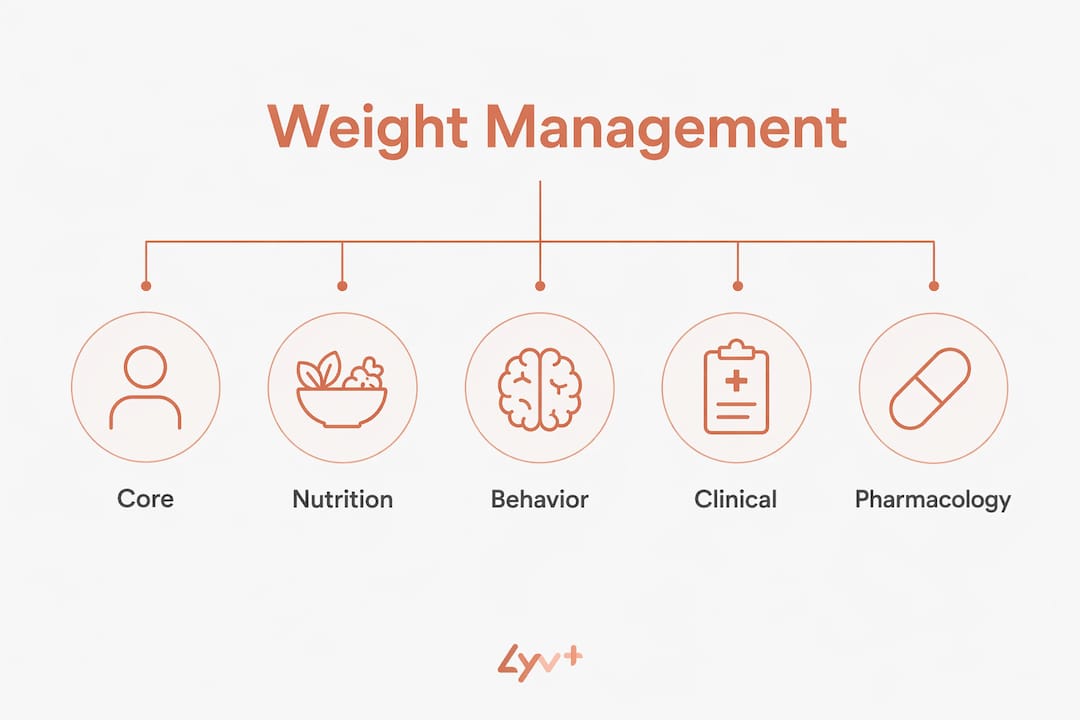
Pharmacotherapy becomes relevant when lifestyle changes alone are insufficient. Prescription GLP-1 receptor agonists such as Wegovy and Mounjaro are now part of the evidence-based toolkit for eligible adults. You can read more about clinician-guided weight loss to understand how these treatments fit within a supervised plan.
Pro Tip: If you are unsure whether you qualify for pharmacotherapy, a structured clinical assessment is the right first step. Self-referral to a digital programme or a GP conversation can open that pathway.
The 2025 NICE guideline NG246 achieved the highest possible AGREE II score of 7 out of 7, making it the most rigorously developed obesity management guideline currently available. The AGREE II tool evaluates guidelines on transparency, stakeholder involvement, methodological rigour, and applicability. A perfect score means clinicians and patients can trust the recommendations are grounded in the best available evidence.
One of the most significant shifts in NG246 is its explicit move away from prescribing a single dietary approach. Instead, the guideline directs healthcare professionals to support patients in finding nutritional patterns that align with their preferences, cultural background, and health conditions.
"The 2025 NICE guidelines mark a significant step towards empowering patients with multiple dietary options and personalised care plans, recognising that sustainable outcomes depend on individual fit rather than universal prescription."
The NHS Digital Weight Management Programme translates these guidelines into accessible care. It operates at three intensity levels, from self-guided digital content through to structured coaching, matching the level of support to the patient's needs. This tiered model reflects the guideline principle that one size does not fit all.
Programme level - Format - Coaching involvement
Level 1 - Self-guided digital content - None
Level 2 - Digital with light-touch support - Occasional check-ins
Level 3 - Structured digital programme - Regular behaviour change coaching
Despite these frameworks, GP referral rates to recommended weight management programmes remain lower than guidelines suggest they should be. This gap between policy and practice means many adults who qualify for support never receive it. Knowing your BMI threshold and asking your GP directly about tier 2 referrals is often the most effective way to access the system.
Dietary flexibility is not a compromise. It is a clinical recommendation. NICE NG246 explicitly recommends nutrition plans tailored to individual preferences, culture, personal circumstances, and comorbidities rather than a single prescribed diet. This represents a meaningful departure from older guidelines that often defaulted to low-fat or very low-calorie approaches.
The evidence behind this shift is clear. Sustainable outcomes are consistently linked to flexible dietary patterns rather than rigid restriction. When people follow a plan that fits their actual life, including their food culture, cooking habits, and social eating patterns, they are far more likely to maintain it beyond the first few months.
Highly restrictive diets create a binary mindset. You are either on the plan or off it. One meal outside the rules becomes a reason to abandon the whole effort. This pattern, sometimes called the abstinence violation effect in behavioural science, is one of the most common drivers of weight regain. Evidence-based approaches deliberately avoid this trap by building in flexibility from the start.
Dietary choice also depends on your health profile. A person managing type 2 diabetes may benefit most from a lower-carbohydrate approach that supports blood glucose control. Someone with a history of disordered eating may need a less structured, more intuitive framework. A clinician or registered dietitian can help you identify which pattern gives you the best chance of long-term success. Understanding why crash diets fail is a useful starting point before committing to any plan.
Dietary approach - Best suited to - Evidence strength
Mediterranean - Cardiovascular risk, general population - Strong
Low-carbohydrate - Type 2 diabetes, insulin resistance - Strong
Higher-protein - Muscle preservation, satiety - Moderate to strong
Intermittent fasting - Those who prefer time-based structure - Moderate
Pro Tip: The best diet for weight management is the one you can sustain for two years, not two weeks. Start with what fits your existing food culture and adjust from there.
The NHS Digital Weight Management Programme delivers behaviour change coaching at three intensity levels, combining self-guided content with varying degrees of professional support. Digital delivery makes evidence-based care accessible to people who cannot attend in-person clinics due to geography, work schedules, or caring responsibilities. That scalability is one of its greatest strengths.
However, digital programmes are not without limitations. Coaching effectiveness varies considerably, and participants from minority ethnic groups have reported that some coaching formats feel less convenient or culturally relevant. This matters because the groups most likely to meet BMI thresholds for intervention are also the groups most likely to disengage from programmes that do not reflect their lived experience.
Key factors that determine whether a digital programme works for you:
The most effective digital programmes combine the scalability of technology with the human element of skilled coaching. Neither alone is sufficient. A well-designed app without a trained coach behind it is just a food diary. A skilled coach without a structured programme lacks the consistency that evidence-based care requires.
Evidence-based weight management works because it combines research-backed strategies, personalised dietary flexibility, and clinical oversight rather than relying on any single intervention or diet.
Point - Details
BMI thresholds guide access
Adults with BMI ≥30, or ≥27.5 for some ethnic groups, qualify for evidence-based NHS pathways.
NICE NG246 sets the standard
The 2025 guideline scored 7/7 on AGREE II, making it the most rigorous obesity framework available.
Dietary flexibility improves outcomes
Sustainable weight loss depends on matching nutritional patterns to individual preferences and health conditions.
Digital programmes need cultural sensitivity
Coaching quality and cultural relevance determine whether digital weight management programmes succeed.
Proactive self-advocacy closes care gaps
GP referral rates fall short of guidelines, so asking directly about tier 2 referrals is often necessary.
I have watched the conversation around weight management shift considerably over the past decade. For a long time, the clinical world defaulted to calorie counting and willpower. Guidelines were rigid. Patients who did not respond were often blamed rather than supported. The arrival of NG246 feels like a genuine turning point.
What strikes me most is the acknowledgement that there is no universally superior diet. That sounds obvious, but it took years of accumulated evidence to move guidelines away from prescribing a single approach. The practical implication is significant. You are no longer expected to fit yourself into a plan. The plan is supposed to fit you.
Where I think the system still falls short is in the gap between guideline and practice. GP referral rates to tier 2 programmes remain lower than they should be. Many adults who qualify for support, including pharmacotherapy, never receive it because the conversation never happens. If you are reading this and you have not yet spoken to a clinician about your options, that conversation is worth having. You are not a case file. You are someone with a specific set of circumstances, and the evidence now supports a plan built around those circumstances rather than against them.
The role of GLP-1 medications in this picture is also worth acknowledging honestly. They are not a shortcut. They are a clinically validated tool for people who meet the criteria, and when used within a supervised programme, the evidence behind them is strong. Seeking that support is not giving up. It is using the best available science.
— Lyv
If you are ready to move from understanding the evidence to acting on it, Lyvpharmacy offers clinician-led access to prescription weight loss treatments including Wegovy and Mounjaro.
Every patient starts with a clinical assessment to confirm eligibility and build a personalised plan. There are no generic programmes here. Lyvpharmacy combines medical oversight with discreet home delivery, so you get the right treatment, reviewed by a qualified clinician, without the delays that often come with traditional routes. Browse the full range of approved weight loss treatments and find out whether a GLP-1 medication is the right next step for you. If you want to understand how GLP-1 medications work before you decide, that resource is there too.